#308: The Animal Issue 🐶 🐱 🦔 🐋 🐙 🐤

Now for an entirely different experience, let’s talk about animals.

Newer subscribers might be asking, “Why does a newsletter that focuses on race, education, and culture also include pictures of pets?” The official answer is, I don’t know! But ever since Indie graced these pages more than five years ago in Issue #29, loyal readers have sent in photos every week, and they’ve brought us joy and brought our reading community closer together.

So this week, for the first time ever, I’m dedicating an entire issue on great articles about animals. Don’t like animals? That’s OK. The pieces are deep and thought provoking regardless. My favorite is the one about hedgehogs. How about you? Please feel free to let me know!

Eating The Whale

In this moving piece about the effects of climate change and the power of lineage, former restaurant critic Wyatt Williams travels to Utqiagvik, Alaska, because he wants to eat whale. He does, at a nalukataq, a festival of the hunting season. But instead of feeling affirmed by the community celebration, Mr. Williams turns melancholy. “I wanted to tell people that if only we could eat more like the whalers, sharing the food of our own communities, we’d probably be better off,” he writes. “But I knew it wouldn’t really matter. The world would go on continuing to end.” (26 min)

Millennials Are Obsessed With Dogs

Since last year’s pandemic pet surge, Millennials have now surpassed Baby Boomers as the generation most likely to own dogs. How come? According to Amanda Mull, herself a chihuahua lover, the reasons are systemic (wage stagnation, student loan debt, other ills of late-stage capitalism), Millennial (e.g., delayed marriage, delayed parenthood) and personal (e.g., the desire for touch and companionship). Most viscerally, Ms. Mull says, taking care of Midge (her “booboo”) is a way “to soothe the psychic wounds of modern life” and “a balm for purgatorial anxieties.” (11 min)

The Incredible Mind Of The Octopus

Years before the Netflix documentary My Octopus Teacher, Sy Montgomery got to know and appreciate Athena, a Pacific octopus. Athena is 5 feet long, weighs 40 pounds, has a brain the size of a walnut, and can slither inside small holes and change shape and texture. Most amazing, though, is Athena’s ability to connect through touch. (Each arm includes 200 suckers and millions of neurons.) “Meeting an octopus is like meeting an intelligent alien,” Ms. Montgomery writes. But if humans and octopuses diverged 500 million years ago from our common ancestors, how did both species become so smart? (22 min)

A Dog’s Inner Life: What A Robot Pet Taught Me About Consciousness

This week on my commute (a book a week!), I’m reading Klara and the Sun, by Kazuo Ishiguro, about an “Artificial Friend” and her ability to love. While artificial intelligence has not yet brought us human companions, robot dogs – that bark and play and respond to touch – are already here, thanks to Sony. This article by Meghan O’Gieblyn begins playful but then delves deeply (and creepily, I must add) into issues of consciousness, free will, and whether machines can have inner lives. (16 min)

Looks That Quill: The Dark Side of Hedgehog Instagram

Mr. Pokee, an African pygmy hedgehog, has 1.9 million Instagram followers and enjoys taking pictures out in nature and inside ice cream cones. He’s cute, and so are Cinnamon and Maple and Lionel. But there’s a dark underbelly to the hedgehog craze, as Noelle Mateer reveals in this piece. Since 2017, thousands of people have made exotic hedgehogs their pets without knowing how to take care of them. The poop, the high rate of cancer, and wobbly hedgehog syndrome have left many hedgehogs abandoned, with states cracking down on their distribution and ownership. (14 min)

The Surprise Hit Board Game That’s Transforming An $11 Billion Industry

I’m not a birder, though I appreciate people who know about and appreciate birds. So when VIPs Phoebe and Peter introduced me to Wingspan, by Elizabeth Hargrave, I didn’t know what to expect from the game. But the experience turned out calming and delightful, as this article explains, a respite from the stress of the outside world – and a great way to connect with the people you love, uncompetitively, while you place your birds in their habitats, make sure they’re fed, and remind yourself of the glory of nature. (17 min)

Thank you for reading this week’s issue of The Highlighter. Did you enjoy the theme? Or do you think we should go back to the regular format (fewer animals, more race / education / culture)? Let me know by clicking on “Yes” or ”No” below. I like hearing from you.

To our new subscribers Lauren, David, and Jenny, I hope you find the newsletter a solid addition to your email inbox. To our long-time subscribers (Eunice! Emily! Eric!), you’re pretty great, too.

If you like The Highlighter, please help it grow. I appreciate your support. Here are a few ways you can help:

On the other hand, if you no longer want to receive this newsletter, please unsubscribe. See you next Thursday at 9:10 am PT!

#307: Actions > Words

Hi loyal readers. I’m very grateful that you opened today’s issue of The Highlighter. It’s a good one: focusing on race (as usual) and exploring the theme of words vs. actions. More than a year after George Floyd’s murder, and after a year of protest and (some) change, our country has (mostly) returned to the same script. Let’s talk about equity and antiracism, but let’s not do very much. Besides, we’re too busy yelling about masks, wishing the pandemic would go away, worrying about our children at school, and avoiding the news in Afghanistan and Haiti. Many of us are exhausted. We’re languishing in our cocoons. We’re practicing self-care.

Lately, I’ve found myself there, too – resting, reflecting, and reading in an effort to determine my next steps. This week’s articles helped me get unstuck, and I hope you’ll appreciate them, too. “We Talk About Racial Inequality But Do Little About It“ reminds us that this year’s pause on racial equality is not unique, that white Americans have long advocated for fairness as long as justice does not lead to personal inconvenience.

The other three pieces in this week’s newsletter build on those ideas. The second article explains the roots of anti-Asian hate on the West coast (recommended especially for history teachers), while the third and fourth selections explore various ways that Black Americans have acted – and the backlash they’ve endured – to promote a freer and fairer world.

Please enjoy. And let me know what you think! All you need to do is hit reply.

We Talk About Racial Inequality But Do Little About It

In 1944, the Nobel Prize-winning economist and sociologist Gunnar Myrdal published An American Dilemma, a two-volume study that explored the gap between nation’s ideals and its racial reality. He concluded, “The average white American does not want to sacrifice much himself in order to improve the living condition of Negroes.”

More than 75 years later, according to senior correspondent Janell Ross, not much has changed. We might be getting a little better at talking about race, but talk is cheap. Ms. Ross writes, “As the notion of white America’s inherent superiority is verbally rejected, very few are willing to use what power they have to shift the systems that have served them well. Some people who are used to winning are having trouble playing fair.” (10 min)

+ Is Time Magazine back? They’re publishing some solid articles lately.

The Anti-Asian Roots of Today’s Anti-Immigrant Politics

One reason it’s easier to talk change than enact change is that racism remains deeply embedded in our laws and institutions. This excellent history of the anti-Asian movement in California explains how white politicians and labor leaders pitted the white working class against Chinese and Japanese citizens, redefining Europeans as “native” and inventing the concept of “illegal immigrant” after the Chinese Exclusion Act of 1882. Writer Mari Uyehara points out that fear-mongering tactics worked then as they do now, as did political slogans like “The Chinese Must Go!” and “Keep California White.” So much for the California Dream. (20 min)

+ U.S. History teachers, this article is a good one.

Doing Equity Work While Black

One institution that prefers words over actions is our public school system. Even in affluent progressive districts like Bellevue, Washington, whose ample budget funds a “department of equity,” Black leaders like Shomari Jones find themselves “losing an arm” when facing white resistance. The district’s director of equity and strategic engagement, Mr. Jones described his job this way: “I put on the flak jacket and I knew I was going to take some hits. And you get hit and you get hit, and you’re cool because you got the jacket on. But when you get hit enough times, the jacket doesn’t work for you anymore. You’re hoping there are other people who are willing to put on their jackets and take a hit for you, or alongside you. But if that day never comes, you have to decide, to what point am I willing to sacrifice myself?” (16 min)

For Black Women, Working From Home Meant Freedom From Microaggressions

Project manager Mary Smith loved working from home during the pandemic – but not because of the quick commute and the flexible schedule. Rather, she appreciated not having to worry about making sure her hair, clothes, and demeanor were presentable for her white colleagues. So when her employer called everyone back to the office, Mary quit. She’s not alone. A Gallup survey last Fall concluded what Black women already know: They’re less respected and treated less fairly in the workplace than any other demographic. And many are leaving. (10 min)

Thank you for reading this week’s issue of The Highlighter. Did you enjoy the theme? Or do you think we should go back to the regular format? Let me know by clicking on “Yes” or ”No” below. I like hearing from you.

To our new subscribers Ipek and Kait, I hope you find the newsletter a solid addition to your email inbox. To our long-time subscribers (Darlene! Dan! David!), you’re pretty great, too.

If you like The Highlighter, please help it grow. I appreciate your support. Here are a few ways you can help:

On the other hand, if you no longer want to receive this newsletter, please unsubscribe. See you next Thursday at 9:10 am PT!

#306: Journeys Of Grief

Welcome back to The Highlighter, and thank you for opening today’s issue! I’ve been hearing from many of you that you are enjoying how I’m experimenting with the format of the newsletter. One trend lately is that I’m paying closer attention to how articles talk to each other, trying to bring them together when it makes sense. Today’s issue, which focuses on the theme of grief, includes four outstanding pieces that explore the various ways we come to terms with losing someone we love.

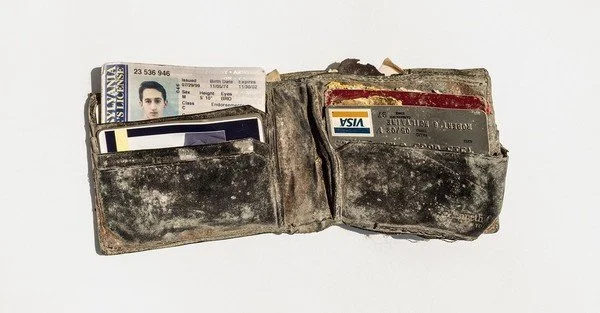
It’s hard to pick which article I’d urge you to read first. They’re all excellent. But I chose “One Family’s Struggle To Make Sense of 9/11” to lead this week’s issue because it’s a beautiful piece of writing. No matter how many articles you’ve read about 9/11, this one is different, and very powerful.

The rest of today’s newsletter is solid, too, with articles on grief as it intersects with artificial intelligence, social movements, and sibling relationships. Please enjoy!

+ Are you a teacher? (I know many of you are!) If so, I’d appreciate it if you shared The Highlighter with your colleagues as we begin the new school year. Thank you very much!
One Family’s Struggle To Make Sense of 9/11

Bobby McIlvaine was 26 years old when he died on September 11, 2001. He had a mom and a dad, a brother, and a girlfriend he loved deeply. He kept a diary and wrote drafts of novels on yellow legal pads. He was a dreamer, a charmer – ambitious but moody, ruminative and philosophical.

In this tender story, brilliantly told, Jennifer Senior captures the different ways that Bobby’s loved ones have mourned and made sense of his death. As we know about grief, each person has made their own path. “We are always inventing and reinventing the dead,” Ms. Senior writes. But at some point, she adds, “The dead abandon you; then, with the passage of time, you abandon the dead.” (58 min)

Love And Loss In The Age Of A.I.

Eight years after his fiancée Jessica died from a rare liver disease, 33-year-old Joshua Barbeau, still could not escape his anxiety and depression. The loss was too much to bear. So when he discovered Project December, a website that uses GPT-3 to manipulate human language, Joshua had to decide: Did he want to communicate with an A.I. version of Jessica, one that could replicate her style of speech, one that approximated her personality? Why, of course he did. (50 min)

+ Journalist Jason Fagone also wrote “The Lottery Hackers,” one of my favorite articles of 2018. He joined Article Club last July.

Grief Belongs In Social Movements. Can We Embrace It?

Malkia Devich-Cyril: “Death is a natural part of every life cycle. Our bodies will die. Our organizations will die. Our movements will die. Likewise, the specific conditions that oppress our families and communities will also come to an end. Endings are not to blame. Loss is simply an element of change. Change is the heartbeat of social movement. But, on either side of change is loss. Reimagining the world requires that we release the parts of the system and ways of being that are ready to die, and mourn the destructive losses that we could not control, despite our best efforts. Something is dying, and we are desperate for something new to be born.” (14 min)

My Brother’s Dinner With The President Of Sears

“It’s hard for me to admit that I didn’t really know my brother,” Marc Inman writes in this poignant essay. What begins as a playful account of growing up with a prevaricating older sibling grows darker as we learn about Jon’s mounting struggles of faith and sexuality and his capacity to inflict pain on his younger brother. Even still, Marc maintains empathy for Jon, hoping that they can rebuild their relationship – until it is too late. (22 min)

Thank you for reading this week’s issue of The Highlighter. Did you enjoy it? Let me know by clicking on “Yes” or ”No” below. I like hearing from you.

If you like The Highlighter, please help it grow. I appreciate your support. Here are a few ways you can help:

On the other hand, if you no longer want to receive this newsletter, please unsubscribe. See you next Thursday at 9:10 am PT!

#305: The Fight Over U.S. History

Happy August, loyal readers, and thank you for being here. This week I’m switching things up again, trying an experiment where I dedicate the whole newsletter to one great piece and encourage you all to take it in. My gut says that you’re going to like and appreciate it.

But first, a bit of context: Even though the title of this week’s newsletter is “The Fight Over U.S. History,” we won’t be talking about Critical Race Theory. As a former high school history teacher, I’m not going to pretend there’s an actual debate about whether CRT is being taught or if it has a place in our schools. All due respect, but that’s not worth our time here.

What I do find interesting, though, is how powerfully The 1619 Project, by Nikole Hannah-Jones and The New York Times, has shaped our construction of and discourse about American history. Two summers after its publication, we’re just starting to feel its effects.

That’s why I am grateful that Ms. Hannah-Jones and Ta-Nehisi Coates went on Ezra Klein’s show last week to discuss the following questions: What changes when a country’s sense of its own history changes? What changes when who gets to tell that story changes?

My hope is that you’ll find time this week to listen to this thoughtful conversation. If you do, and you want to talk about it, hit reply and let me know. If there is interest, I’d like to bring us together next Tuesday evening at 6 pm PT (details to come). Until then, please enjoy!

What’s Really Behind The 1619 Backlash?

In this 77-minute podcast episode, Nikole Hannah-Jones and Ta-Nehisi Coates speak with Ezra Klein about a number of topics, including their decision to join Howard University, their thoughts about the state of journalism, their beliefs about why The 1619 Project has caused such an uproar, and their perspectives on what young people should learn about their country’s history.

Instead of summarizing the conversation, I’m going to share four of my favorite excerpts from the conversation. Here’s the transcript if you’d like to read the whole thing (though listening is better, in my opinion).

On why there has been such a backlash about The 1619 Project:

Ms. Hannah-Jones: The entire reason the 1619 Project had to exist in the first place is that we have been willfully opposed to grappling with who we are as a country. What’s clear is that whether you are a progressive or a conservative, many, many white Americans have a vested interest in that mythology of American exceptionalism and greatness, and that we are a pure nation, right? And clearly, the 1619 Project intentionally was seeking to unsettle that narrative. What the 1619 Project does is it actually displaces white people from the center of American greatness and places Black people there.

And I think that is also part of what angers people so much. It is not just saying the men who founded us they did some pretty terrible things, like engaged in human bondage and human trafficking. But also, your whole idea about democracy actually comes from Black resistance. I think that’s just too much for people to accept.

On the centrality of slavery and how it changes the story of U.S. History:

Mr. Coates: What does it mean to know that without enslavement, without the destruction of Black families, without the exploitation of Black labor, without labor guaranteed through torture, [the founders] would not exist as we know them today? Thomas Jefferson wasn’t moonlighting as a slaveholder, George Washington wasn’t moonlighting as a slave holder. That was their career. That was how they garnered the resources to go off and do these other great things that we so admire and we praise. What does it mean to know your founder’s occupation was slave holding? What does it mean to have to accept the fact that the deadliest war in this country’s history for Americans was launched to preserve enslavement? It’s difficult. It changes the story. It decentralizes the individual; your individual goodness is irrelevant. There is a system at work here. There’s something larger than you, bigger than you.

On how we we should teach U.S. History to our young people:

Ms. Hannah-Jones: We can teach our children what George Washington did that was great, and we can also teach our children what George Washington did that was terrible. You can’t just put a person in a category as being good or bad, but that’s how we’ve wanted to teach the history of this country, and we have to be more honest. No one is responsible for what our ancestors did before us. We’re not responsible for the good things, so you don’t want to own up to slavery then also you can’t claim the Declaration because you also didn’t sign the Declaration of Independence. None of us are responsible for what our ancestors did. But we are responsible for what we do now.

And we do have the ability to build a country that is different, that is not held hostage to the past. But we won’t do that by denying that upon which we were built. Because that past is shaping us. It is shaping our country, our politics, our culture, our economics, whether we acknowledge it or not. And all I’m saying is let us acknowledge that upon which we were built so that we can try to actually become the country of these majestic ideals. And I do believe the ideals are majestic, we just have failed to live up to them.

On the future, hope, and how the imagination matters more than facts:

Mr. Coates: Obviously I believe in the importance of history, but some of this ain’t fact-based, man. Some of this is like back in the lizard brain or whatever brain we assign to deciding what the world should look like. This is rude to say, but there are people that I recognize I can never get to because their imagination is already formed. And when their imagination is formed, no amount of facts can dislodge them. The kids, however, the kids who are in the process of having their imagination formed, who in the process of deciding, or not even deciding but being influenced in such a way to figure out what are the boundaries of humanity, that’s an ongoing battle.

And so like I think about 2018 the movie “Black Panther,” and I think about seeing white kids dress up as the Black Panther. This sounds small. This sounds really, really small. And I want to be clear, there’s a way in which this kind of symbolism certainly can be co-opted and not tied to any sort of material events. But I keep going back to this, there’s a reason why in 1962 they raised the Confederate flag over the Capitol of South Carolina. The symbols actually matter because they communicate something about the imagination, and in the imagination is where all of the policies happen.

There’s a generation that is being formed right now that’s deciding what they will allow to be possible. What they will be capable of imagining. And I just I want to be a part of that fight.

That last sentiment – about the role of imagination – is one that I want to reflect on as I return to work today, as young people return to school in the coming weeks, as teachers choose which curriculum to put in front of their students, as parents decide what to listen for and what to talk about with their children at the dinner table. What will we allow to be possible? What are we capable of imagining? What fight do we want to be part of? (77 min)

Thank you for reading this week’s issue of The Highlighter. Did you enjoy it? Or do you think we should go back to the regular format? Let me know by clicking on “Yes” or ”No” below. I like hearing from you.

To our new subscribers Nabiha and C, I hope you find the newsletter a solid addition to your email inbox. To our long-time subscribers (Eileen! Emma! Eric!), you’re pretty great, too.

If you like The Highlighter, please help it grow. I appreciate your support. Here are a few ways you can help:

On the other hand, if you no longer want to receive this newsletter, please unsubscribe. See you next Thursday at 9:10 am PT!

#304: History And Legacy

Happy Thursday, loyal readers, and thank you for opening today’s issue of The Highlighter. Five weeks ago, in Issue #299, Prof. Matthew Karp argued that history isn’t a linear story with clear origins and defined root causes. He wrote, “We must come to see history not as what we dwell in, are propelled by, or are determined by, but rather as what we fight over, fight for, and aspire to honor in our practices of justice.”

But who is doing the fighting over history, the fighting for history, and the aspiring to honor history? This week’s articles explore how history has shaped our actions (or inactions) today. “His Name Was Emmett Till,” which I urge you to read, examines the default tendency among many of us to deny, erase, or do nothing about the painful history that lives in our back yards. The other three pieces – “The Free State of George Floyd,” “Built To Keep Black From White,” and “The Problem We All Live With“ – extend this theme to the history of state-sanctioned violence, housing segregation, and school segregation. There’s a lot in today’s issue. I hope it provokes your mind and your heart.

+ Our 18th Article Club discussion is in the books! We read and annotated Caitlin Flanagan’s “Private Schools Are Indefensible” and participated in four rollicking conversations. Thank you to everyone who participated, including VIPs Elise, Telannia, and Summer for facilitating. I’ll reveal this month’s article this Sunday. (It’s going to be good, because VIP López and Sarai are involved.) I invite you to check out Article Club.

+ Want to share your thoughts or talk about what comes up for you? I’d love to hear your perspective. All you need to do is hit reply or click here.

His Name Was Emmett Till

A native of Mississippi, Jeff Andrews had lived in Drew for most of his life when he jumped at a chance to buy a home in town with a beautiful view of the bayou. Next to the house stands the barn where 14-year-old Emmett Till was tortured and killed the morning of August 28, 1955. “We don’t think about it,” Mr. Andrews said. “It’s in the past.”

But Emmett’s murder is not in the past for Wheeler Parker, his cousin and the last living witness to the kidnapping. It’s not in the past for Patrick Weems, who wants to include the barn in a memorial to honor Emmett’s memory. And it wasn’t in the past for Willie Reed, who was 18 years old and on his way to work when he heard Emmett’s cries and later risked his life by testifying in the trial.

In this intimate article, Wright Thompson, who also grew up in Mississippi, follows those efforts to commemorate Emmett. But he also uncovers how white people in Drew, over the past 65 years, have dissociated themselves from the lynching. First they distanced themselves from the killers. Next they didn’t teach the event in their schools. Then they destroyed the evidence of the crime. “One of the central conflicts for white Mississippians,” Mr. Thompson writes, “is whether to shine a bright light on the past or move on.” But how to shine a bright light? How to move on? (34 min)

+ John Lewis said, “Emmett Till was my George Floyd. He was my Rayshard Brooks, Sandra Bland, and Breonna Taylor. He was 14 when he was killed, and I was only 15 years old at the time. I will never ever forget the moment when it became so clear that he could easily have been me.”

The Free State Of George Floyd

Last month, the City of Minneapolis removed the barricades that framed George Floyd Square, opening traffic for the first time in more than a year. For some Americans, Derek Chauvin’s conviction provided closure to last year’s murder. But Jay Webb, along with many Black Minnesotans, worry that “when the flowers die, and the helium is gone from the balloons, people will forget the entire case.” Amnesia runs high in the progressive state, which ranks high among the best places to live in the country, if you are white. (26 min)

Built To Keep Black From White

Eighty years ago, developers in Detroit decided that redlining wasn’t enough to protect white people and their home values from the Black people living nearby. So they built a 6-foot-high, 4-inch-thick, half-mile-long concrete barrier to separate the neighborhoods. The Birwood Wall (also known as the Eight Mile Wall) still stands today. “I don’t remember feeling any way about it except it was the same old, same old,” said Margaret Watson, 93. “I mean, I lived in Detroit all my life. Detroit has been segregated all my life.” (26 min)

The Problem We All Live With

Even if you’ve already listened to this podcast documentary by Nikole Hannah-Jones on the pernicious intractability of school segregation, I encourage you to revisit it. It’s a classic. “We have a system where white people control the outcomes, and the outcome that most white Americans want is segregation,” Ms. Hannah-Jones says. “White communities want neighborhood schools if their neighborhood school is white. If their neighborhood school is Black, they want choice.” (44 min)

+ 84% of Americans say they want integrated schools.

Thank you for reading this week’s issue of The Highlighter. Did you enjoy it? Let me know by clicking on “Yes” or ”No” below. I like hearing from you.

Also, to our new subscribers Mariam, Soumya and Quynh, I hope you find the newsletter a solid addition to your email inbox. To our long-time subscribers (like David! Darcy! Daneen!), you’re pretty great, too.

If you like The Highlighter, please help it grow. I appreciate your support. Here are a few ways you can help:

On the other hand, if you no longer want to receive this newsletter, please unsubscribe. See you next Thursday at 9:10 am PT!

#303: Black Male Valedictorians 🎓

For the first time in its 106-year history, Oakland Technical High School graduated its first Black male valedictorian. Ahmed Muhammad earned a 4.73 GPA, launched a STEM nonprofit, got accepted to 11 colleges, went on Ellen, and will enroll at Stanford in the Fall. Great story, right?

Not at all, says Mr. Muhammad in his valedictory address, this week’s lead article. Our media and society like feel-good stories of brilliance and resilience. We like prodigies who dazzle us with their intellect. Hard work and personal responsibility and grit: These are character traits we value.

But to be the exception is problematic. It means that structural inequities remain strong. This week’s issue features the experiences of three Black male scholars at Oakland Tech: Mr. Muhammad, and before him, Akintunde Ahmad and Samuel Getachew, who faced similar loneliness. You’ll read their perspectives and then listen to them reflect on Mr. Muhammad’s success, happy for their classmate while critical of the lack of systemic change.

+ After taking in today’s issue, if you’re moved, please share your thoughts. You can hit reply, email me, or leave a voice message. It would be great to hear your viewpoints and continue the conversation. Thank you!

I Won’t Be The Last

Ahmed Muhammad: “As some of you may have heard, I recently became the first Black male valedictorian in our school’s history. And I want to say something about that. Oakland Technical High School has been around for 106 years. And there is absolutely no way you can tell me I am the first Black person capable of being valedictorian. Not even close. So why me? Why do I get this honor? And why did I get the love, support and opportunity to do this? I don’t know.

“But for all of those who didn’t get to maximize their potential, for all those who had the ability but lacked the opportunity, I owe it to them to appreciate this history made by the people who put me in this position. We owe it to them to make sure that, while I may be the first young Black man to be our school’s valedictorian, I won’t be the last.” (7 min)

The Bleak Truth Behind My ‘Inspiring’ Path From Oakland To Yale

Akintunde Ahmad: “People look at my story and applaud me and wonder what I did to ‘beat the odds.’ I wish they were more curious about why my brother did not. I wish they would ask, ‘What trap lay before this talented, bright boy so that he was bound to fall into it?’ I wish they would see how difficult it is to grow up a Black man in America. My story is told as though it is a positive one, inspirational. But I see it as a grim one, the tale of a harsh reality that wrecks people. There is nothing positive about classifying me as an exception. When a person is exceptional for doing what I have done, the whole system is cruel to its core.” (9 min)

Black Valedictorians And The Toxic Trope Of Black Exceptionalism

Samuel Getachew: “We all owe it to those who follow in Mr. Muhammad and Mr. Ahmad’s footsteps to focus on removing the obstacles they will confront. And we owe it to them to be more dedicated to dismantling racism than to congratulating them for being among the few to thrive despite it. Highlighting stories of Black exceptionalism while neglecting to contextualize them simply perpetuates the inequities that make them unique to begin with. I don’t want to see yet another ‘inner city’ success story emerge from my community. I want these stories to be so common that they are unworthy of such coverage.” (6 min)

Inside The Toxic Mediasphere Of Black Exceptionalism In Oakland

In this thoughtful conversation, Mr. Ahmad and Mr. Getachew reflect on Mr. Muhammad’s achievement and the construction of Black exceptionalism. Mr. Getachew says, “After you graduated and went off to Yale, Ahmed and I still had to deal with being the only ones. We still had to deal with a school system that was not regularly sending students like us to schools like these. Part of that was like, Why are we underdogs in the first place? Why are we the only ones? We need to stop glorifying resilience without examining the circumstances that make people have to be resilient. I’m interested in getting to a world where we’re not remarkable.” (25 min)

Thank you for reading this week’s issue of The Highlighter. Did you enjoy it? Let me know by clicking on “Yes” or ”No” below. I like hearing from you.

Also, please don’t be shy: Feel free to nominate articles or podcast episodes to appear in the newsletter. And if you don’t have any articles but have a cute pet, what are you waiting for? Nominate away!

If you like The Highlighter, please help it grow. I appreciate your support. Here are a few ways you can help:

On the other hand, if you no longer want to receive this newsletter, please unsubscribe. See you next Thursday at 9:10 am PT!

#302: The Endless Robbing Of Native American Graves

For the first time in eight years, I have all of July off, a luxury, which means my friends are asking, “How are you spending your time?” The answer’s easy: Resting, relaxing, reflecting, recharging, reconnecting with friends, and reading. Another way to look at it: What I used to do in the early morning and late evening now happens during regular business hours. And I like it! (Maybe this is my version of lying flat, a grand protest of capitalism.)

The extra reading time yielded four great pieces this week, including this week’s lead article, “The Endless Robbing Of Native American Graves.” If you have time, read it in tandem with the second piece, which takes on the same topic from a different angle. Sadly, it turns out that our respect for the (Native American) dead is no match for pothunters wanting fame and fortune or for scientists wanting status and prestige.

The second half of this week’s newsletter takes a more hopeful turn, with a profile of an inspiring Black forager and a compassionate interview of poet Nikki Giovanni, who reminds us to find love. Please enjoy!

The Endless Robbing Of Native American Graves

When the FBI knocked on Don Miller’s door in Waldron, Indiana, seven years ago, he knew why they were there. His house was filled with cultural artifacts, sacred objects, and human remains – 42,000 items in all – excavated and stolen from Native American graves. But Mr. Miller did not believe he had done anything wrong. Hundreds of years of pothunting by white Americans had made the practice seem justified. But activism and legal challenges by American Indian tribes have propelled the federal government to crack down, sending pillagers to jail for their offenses.

Author Elizabeth Evitts Dickinson writes: “What compels a person to reach inside the grave of another and take what’s there? ‘There’s this notion that some people’s graves are for plunder because they are not considered to be fully people,‘ says Gabrielle Tayac, a member of the Piscataway Indian Nation and an associate professor of public history at George Mason University. ‘Everything can be owned, taken over and assumed by a conquering society.’ ” (25 min)

A Racist Scientist Collected Human Skulls. Should We Still Study Them?

If you visit the Smithsonians Museum of Natural History, you’ll encounter the remains of 30,000 Indigenous and enslaved people, gathered over the centuries by eugenicist Samuel Morton and his successors in biological anthropology. Since the murder of George Floyd, scientists like Janet Monge and Robin Nelson are leading efforts to question their field’s practices and to repatriate the specimens as a step toward healing and reconciliation. (15 min)

+ “These people did not ask to be prodded, they did not ask to be dissected, they did not ask for numbers and letters to be imprinted upon their remains. They had their lives stolen from them. They deserve rest.“

Foraging: Wild Food For All

Black forager Alexis Nikole Nelson brings an empty backpack to work every day so she can stuff it with burdock, mugwort, field garlic, and juneberries on her walk home in Columbus, Ohio. Despite bans on foraging that date back to Reconstruction and Indian Removal, Ms. Nelson and other BIPOC foragers are reclaiming the centuries-old tradition of searching for provisions to promote health and wellness. At the same time, they’re challenging the notion that foraging is only for the wealthy white elite. (10 min)

+ Big thanks to loyal reader and food connoisseur Kati for recommending this article.

Nikki Giovanni On 70 Over 70: “Everybody’s Job Changes”

In this warmhearted interview, poet, activist, and professor Nikki Giovanni tells stories from the Civil Rights Movement, gives respect to Black Lives Matter, and says she wants to learn how to make biscuits like her grandmother. She says, “I’m not scared of getting older, because I know this: I was born. I’m going to die. And the only thing I have to do in the middle is find someone to love.“ (43 min)

+ The episode begins and ends with tearjerkers: You’ll hear from Hiroshima survivor Howard Kakita and listen to how Ms. Giovanni misses her friend, Toni Morrison.

Thank you for reading this week’s issue of The Highlighter. Did you enjoy it? Let me know by clicking on “Yes” or ”No” below. I like hearing from you.

Also, to our new subscriber Karaitiana, I hope you find the newsletter a solid addition to your email inbox. To our long-time subscribers (like Jacob! Julie! Jennifer!), you’re pretty great, too.

If you like The Highlighter, please help it grow. I appreciate your support. Here are a few ways you can help:

On the other hand, if you no longer want to receive this newsletter, please unsubscribe. See you next Thursday at 9:10 am PT!

#301: Summerland

Happy Thursday, loyal readers, and thank you for opening up today’s issue of the newsletter. Before diving in, let me start by saying, “Wow, Nikole Hannah-Jones, wow.” Longtime subscribers know I’m a huge fan, so I was extremely happy this week when I found out she had declined a job offer from the University of North Carolina to accept a professorship at Howard University. Even more impressive was her statement explaining her decision. Someday, maybe Ms. Hannah-Jones will stop by and say hello to our reading community. Who knows: Maybe she’ll become a subscriber?

Aspirations aside, this week, I’m trying something new: spotlighting an outstanding author and dedicating an entire issue to their work. That author is Barrett Swanson. Many of you — I see you, Article Clubbers! — already know Mr. Swanson. But it’s altogether possible you’ve never heard of him. He’s remained mostly under the radar at The Highlighter, even though “Lost in Summerland,” this week’s lead piece, was one of my favorite articles last year. I was reading his book of essays this week (also outstanding), and it dawned on me: “This guy has been in The Highlighter a lot!” And so I did a search, and sure enough, Mr. Swanson’s work has appeared many times.

The reason? The guy knows how to write. No matter the topic (e.g., TikTok influencers, scary water parks, masculinity retreats), Mr. Swanson is funny, sensitive, and deep. He knows about longing, depression, postmodern neoliberalism, conspiracy theories, and the absurdities of life. You’ll want to keep a dictionary nearby (in a good way). Most of all, I like how Mr. Swanson has empathy for his subjects, never judging them, choosing instead to interrogate his own choices. And he loves his brother and isn’t afraid to cry.

I hope you’ll read one or all of Mr. Swanson’s pieces this week, and I’d love to know what you think. All you need to do is hit reply. Please enjoy.

+ This month at Article Club, join us for a discussion of “Private Schools Are Indefensible.” Writer and former teacher Caitlin Flanagan is both snarky and serious as she slams elite independent schools. I especially welcome you if you haven’t tried Article Club before. Here’s more information, and here’s where you can sign up.

Lost In Summerland

After recovering from a traumatic brain injury when he was 22 years old, Andy Swanson started hearing things at home: creaky footsteps in the hallway, stray voices in the closet. When his dad showed up, concerned, Andy’s first words were, “There’s someone in the room with us.” The chandelier in the room flickered on its own.

This article, told from the point of view of his little brother, Barrett, explores Andy’s developing identity as a psychic and a medium. Most of all, though, this is a story of two brothers, their relationship, and their trip one summer to Lily Dale, New York, where every year, 20,000 Spiritualists gather to perform readings, conduct seances, and build community.

At the retreat, Barrett notices his brother’s rising confidence and sense of calm. But he’s also aware of his own uneasiness, acknowledges his history of depression, and recounts an incident from his past, when his big brother’s powers may have saved his life. (44 min) (Issue #225)

Men At Work

If you’re a man, and you’re feeling despondent or purposeless, or you’re exhibiting signs of toxic masculinity, maybe it’s time for a retreat in the woods, away from your friends and family, where you and 50 (white) strangers can participate in “manhood-confirming adventures,” including holotropic breathwork and anger ceremonies.

No, I’m not a proponent of this behavior. But we know that men are hurting. They make up 79% of suicides and 80% of violent crime, and their life expectancy continues to decline.

That’s why Evryman and other men-centered self-help organizations have become increasingly popular. They promise a “new masculinity” by supporting men to connect with their feelings and build emotional intelligence. But Barrett Swanson wonders whether this approach does anything to ameliorate the structural causes of men’s malaise. (41 min) (Issue #218)

The Anxiety Of Influencers

Last year during the pandemic, English professor Barrett Swanson needed a vacation. His teaching had become less about analyzing James Baldwin and more about tending to his students’ anxieties and their comfort animals. Prof. Swanson wondered, Was there another way to support young people as they headed into adulthood? Indeed there was — at the Clubhouse for the Boys mansion, a collab house in Los Angeles where TikTok stars “hone their voice.” One of the owners says, “We really see ourselves as an influencer university.” Tons of layers here. (38 min) (Issue #294)

For Whom Is the Water Park Fun?

Need a break? No summer is complete without a visit to the local water park. Don’t concern yourself about potential dangers or tragedies. Turn a blind eye to the 2 million gallons of water they waste every day. Instead, simulate the effects of climate change at the Big Kahuna Wave Pool, with mammoth rogue waves and parents exhorting their children to save themselves. If fear or excess overwhelms you, distract yourself with a large funnel cake. (12 min) (Issue #201)

+ Audio: In addition to his writing, you might enjoy this recent interview of Mr. Swanson on the Longform Podcast.

Thank you for reading this week’s issue of The Highlighter. Did you enjoy it? Let me know by clicking on “Yes” or ”No” below. I like hearing from you.

Also, to our new subscribers Nan, Jared, and Lisa, I hope you find the newsletter a solid addition to your email inbox. To our long-time subscribers (like Terrie! Lisa! Michael!), you’re pretty great, too.

If you like The Highlighter, please help it grow. I appreciate your support. Here are a few ways you can help:

On the other hand, if you no longer want to receive this newsletter, please unsubscribe. See you next Thursday at 9:10 am PT!
#300: Race Realist

We did it, loyal readers. After six years and more than 1,200 articles, we’ve reached Issue #300. Can you believe it?

What began as an excuse to ply my friends with articles has become a robust community of thoughtful people who care about reading and discussing the best pieces on race, education, and culture. Thank you for being part of it.

When did you first subscribe? Was it before The Rebrand? Or maybe when the website launched? Did you attend the first HHH? Win some original merch? Are you the original VIP? Did your pet appear in the first calendar? Did you make a rowing video with all your Highlighter swag? Or maybe a timelapse video of your multiple-hour holiday reading session? Were you at the first Article Club with Jia Tolentino? Or at the First Annual Game Show? Or are you new, like Marcus, who signed up an hour ago? No matter when you joined, or how you have supported me and this venture, I am deeply grateful.

I’m especially proud that the newsletter has continued to grow over the past year. Since the pandemic started, nearly every new subscriber is a person I have never met before. I appreciate the trust that you place in me to find and share articles worthy of your time and attention. If you want to, and if you feel comfortable, please reach out. I’d like to learn more about you and what you care about.

Even though The Highlighter will always remain playful, we’re also very serious about the power of reading to improve our lives. We are better people when we take time to read well-written articles that urge us to pause, reflect, and act. We are better people when we connect with others and discuss great articles in community, both in affinity and across difference. Reading is a big deal, and I’m happy we’re reading together.

In this week’s issue, you’ll read about a white supremacist professor who teaches mostly first generation Black and Brown students in the Bay Area. Then with help from a film and media professor, you’ll analyze photographs from last summer’s protests for racial justice. Be ready for a gift in the middle of today’s newsletter, then scroll down to the bottom, where you’ll find two noteworthy pieces that illuminate opposing responses to capitalism. (I prefer the second choice.) Please enjoy!

+ I know I’m supposed to say this, but it’s really true: If you’re not participating in Article Club, you’re missing out! Last Sunday, writer and healer Amirah Mercer joined us for a conversation on her outstanding piece, “A Homecoming: How I Found Empowerment in the History of Black Veganism.” It was fun and insightful. Want to try it out?

+ Personal news: I’m starting a new job next month. It’s about reading. I can’t wait to tell you all about it. Until then, I’ll be resting (see below).

The ‘Race Realist’ On Campus

After decades teaching about government finance, health insurance markets, and other humdrum economics topics, Cal State East Bay professor Gregory Christainsen experienced an epiphany. It was time for a change. It was time to follow his true calling: to research and teach about eugenics.

In this well-written special report, journalist Jason Fagone reveals Prof. Christainsen’s racist ideas — for instance, that race predicts intelligence, and that white and Asian people are smarter than Black and Brown people — and wonders why it took challenges by BIPOC colleagues Pascale Guilton and Nazzy Pakpour before university officials interrogated (but did not change) their stances on academic freedom and free speech.

“It is absolutely remarkable how little negative feedback I have received,” Prof. Christainsen wrote in an email to Mr. Fagone. Though he retired from teaching a few years ago, he retains his emeritus status. (35 min)

+ If you prefer reading something entirely different, Mr. Fagone also wrote “Jerry and Marge Go Large,” about delightful septuagenarian lottery schemers. It was one of my favorite articles of 2018. I got to interview Mr. Fagone last July for Article Club.

Picturing Catastrophe: The Visual Politics Of Racial Reckoning

Prof. Rizvana Bradley: “The photographs from early June, which inaugurated the summer of 2020 as a moment of ‘racial reckoning,’ share a common representational ambition: to render Black life and the brutalities arrayed against it present in ways that elide the structural depth and historical intractability of anti-Black violence. The incessant cycling of images of multiracial solidarity alongside intimate images of Black grief and pain demands that singular experiences and expressions of Black suffering and anger, exhaustion and enervation become sutured to a politics of reconciliation. The viewer is confronted with an image of dissent, but it is a visual dissensus engineered in the interest of social consensus.“ (26 min)

Hard Bargain: How Amazon Turned A Generation Against Labor

If it’s true that the labor market is tight, and that wages are rising, then why did workers at the Amazon fulfillment center in Bessemer, Alabama, vote overwhelmingly in April not to unionize? To understand the answer, Daniel Brook writes, we must meet 23-year-old Carrington Byers, who comes from a union family but voted no because he believes Amazon is “family.” Besides, like most young people, he doesn’t see himself tied to this job. After all, Carrington Cosmetics, his nascent business, is where his future lies. (25 min)

Lying Flat: China’s Downwardly Mobile Millennials Are Throwing In The Towel

Having trouble motivating? Is the idea of going outside bringing you down? If so, you might be languishing. But if you’re young, critical of neoliberal capitalism, and pessimistic about your chances for economic mobility, you may want to join thousands of Chinese millennials who are practicing tang ping (躺平), or “lying flat.” This new philosophy champions constraining your desires, forgetting your ambitions, doing very little, and not trying anymore. As I head into a month of vacation, and as an advanced rester myself, I could get into this! (10 min)

Thank you for reading this week’s issue of The Highlighter. Did you enjoy it? Let me know by clicking on “Yes” or ”No” below. I like hearing from you.

I appreciate all of you, but as we finish up on Issue #300, I’d like to thank the newsletter’s 50 VIPs (aka “Magic Markers”) and its first 10 subscribers, who have been supporting me and The Highlighter ever since the beginning: Ben, Peter, Erin, Michele, Jessica, Stuart, Heidi, Clare, Marni, and Barbara. I am very grateful. Did you think I was going to just keep going and going? (Don’t answer that.)

If you like The Highlighter, please help it grow. I appreciate your support. Here are a few ways you can help:

On the other hand, if you no longer want to receive this newsletter, please unsubscribe. See you next Thursday at 9:10 am PT!

#299: If We Can Soar

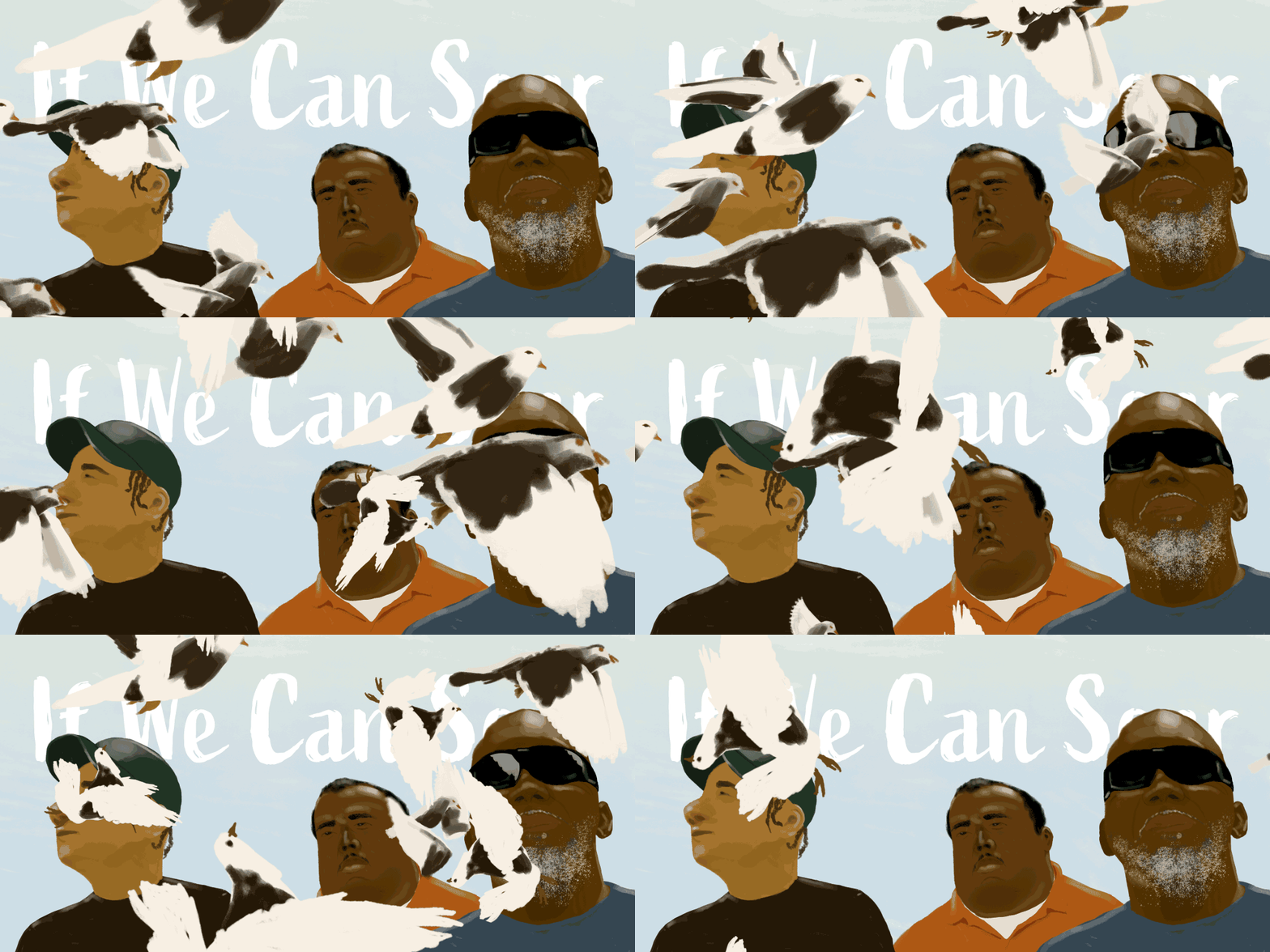
Good morning, loyal readers, and thank you for reading today’s issue of The Highlighter. If you like history, or acknowledge history’s impact on the present, you’ll appreciate how this week’s articles talk to each other. “If We Can Soar,” the lead article, focuses on flight and liberation, telling the story of Cornell Norwood and other fanciers of Birmingham Roller pigeons in South Central over the past 50 years. If you’ve never seen these birds roll, you’ll be astonished.

Scared of birds? No problem. Take in a thoughtful essay about what history is (and isn’t), or spend time with another thoughtful essay considering which history we should (and shouldn’t) teach. Or skip those pieces, head all the way down to the bottom, and celebrate one woman’s journey of body positivity. Please enjoy!

+ You can listen to Article Club favorite Barrett Swanson, author of Lost in Summerland, on this week’s episode of the Longform podcast. He talks about his new book, a compilation of articles, three of which I have featured in the newsletter. “Lost in Summerland” (#225) is still my favorite, but “The Anxiety of Influencers” (#294) and “Men at Work” (#218) are pretty great, too.

If We Can Soar

Shanna B. Tiayon: “Cornell Norwood was a renowned Birmingham Roller breeder in the South Central community. Cornell was introduced to pigeon fancying at age 12 by his older brother and made quite a name for himself in the Birmingham Roller space. He would become a mentor, big brother, second father figure, and friend for many other Black boys and young men in South Central between the 1970s and 1990s, ushering them into the magical world of the Birmingham Roller and offering them knowledge that unlocked their birds’ potential, and their own.

“When asked why they became interested in pigeons, many of the South Central men link their interest in the birds to the adrenaline rush of seeing the birds’ acrobatics, a thrill similar to watching a fast car or motorcycle, or to the perceived instinctive gravitation of children to animals. But there’s a deeper story behind what the birds offered them then and still offer today, with men entering their fifth and sixth decade raising Birmingham Rollers. A why shaped by race, place, and gender. A why that traces the plight of Black men in the U.S., landing us squarely in the prevailing systems of inequality that still exist today.” (30 min)

History As End

If you’re a conservative and believe in The 1776 Report, you’re wrong about history. But if you’re a liberal and believe in The 1619 Project, you’re also wrong. In this outstanding essay, Prof. Matthew Karp argues that we shouldn’t be fighting about whether Critical Race Theory should be taught in schools. Rather, we should understand that history isn’t a linear story with clear origins and defined root causes. “We must come to see history not as what we dwell in, are propelled by, or are determined by,” Prof. Karp writes, “but rather as what we fight over, fight for, and aspire to honor in our practices of justice.” (26 min)

The Importance Of Teaching Dred Scott

One of the biggest decisions as a teacher is what to include and what to leave out of the curriculum. For many reasons, you’ll no longer find Huck Finn and To Kill a Mockingbird on too many syllabi. But what about slavery, Jim Crow, and other challenging topics that may traumatize students and contribute to a racist narrative of history? Providing her reasoning why she begins her course with Dred Scott, law professor Jeannie Suk Gersen explains that the case emphasizes the founding injustices written into the Constitution and the false hero narrative of the Supreme Court. (11 min)

Why I Shared My Nude Photos On The Internet

Sam Juric spent most of her teenage years hiding behind oversized sweaters, turning from the mirror when she got dressed and wearing sports bras to avoid seeing the shape of her breasts. But in her late 20s, Ms. Juric wanted her relationship with her body to change. “I wanted to look at my naked body without wincing. I wanted to think about my naked body without thinking about a man and how he would perceive it. How and if he desired it. I wanted to explore a question I had always been too scared to seriously ask: Was I ugly? I wanted to not care about the answer.” So Ms. Juric did what felt right: She took nude photos of herself and posted them on Instagram. (10 min)

+ Reader Annotations: Loyal reader Matt shared that he appreciated last week’s article, “Abolish High School.” But he rightfully questioned the piece’s title, given that author Rebecca Solnit calls for reform rather than eradication. “I do see how using abolish in the title is much more gripping than reform or something of that nature,” Matt wrote. “But I feel like that word is too bold and has too many other morally significant associations historically than to use in this article’s context.” You’re right on it, Matt! Thank you for reading the piece closely and offering your perspective. Loyal readers, if an article moves you, hit reply and let me know.

Thank you for reading this week’s issue of The Highlighter. Did you enjoy it? Let me know by clicking on “Yes” or ”No” below. I like hearing from you.

Also, to our new subscribers Ben and Jonathan, I hope you find the newsletter a solid addition to your email inbox. To our long-time subscribers (like Carrie! Lashawn! Monique!), you’re pretty great, too.

If you like The Highlighter, please help it grow. I appreciate your support. Here are a few ways you can help:

On the other hand, if you no longer want to receive this newsletter, please unsubscribe. See you next Thursday at 9:10 am PT!