#298: Twelve Minutes And A Life

Happy Thursday, loyal readers! Thank you for opening today’s issue of The Highlighter. Even though I do my best to scour the Internet to find you the best articles every week, sometimes an outstanding piece slips by unnoticed. That’s the case with this week’s lead article, “Twelve Minutes And A Life,” about the murder of Ahmaud Arbery. Originally published last year, the piece won the Pulitzer Prize this week. Mitchell S. Jackson eulogizes Mr. Arbery and attacks systemic racism by directly challenging the (mostly white) readers of Runner’s World, where the article was published. I highly urge you to read this one.

If revisiting the murder of Mr. Arbery is triggering and retraumatizing, skip to the other great pieces this week. Topics range from abolishing the American high school to restoring the bison to Indigenous lands to recoiling from the disgust of the Australian mouse plague. Please enjoy!

+ The Highlighter is almost six years old, and Issue #300 is coming out soon! Do you have a Highlighter-related memory to share? I’d love to include your memory in our upcoming milestone issue.

Twelve Minutes And A Life

Mitchell S. Jackson: “Ahmaud Marquez Arbery was more than a viral video. He was more than a hashtag or a name on a list of tragic victims. He was more than an article or an essay or posthumous profile. He was more than a headline or an op-ed or a news package or the news cycle. He was more than a retweet or shared post. He, doubtless, was more than our likes or emoji tears or hearts or praying hands. He was more than an R.I.P. t-shirt or placard. He was more than an autopsy or a transcript or a police report or a live-streamed hearing. He, for damn sure, was more than the latest reason for your liberal white friend’s ephemeral outrage. He was more than a rally or a march. He was more than a symbol, more than a movement, more than a cause. He. Was. Loved.“ (26 min)

+ This article won the 2021 Pulitzer Prize for feature writing, “for a deeply affecting account of the killing of Ahmaud Arbery that combined vivid writing, thorough reporting, and personal experience to shed light on systemic racism in America.”

Abolish High School

Maybe the way to improve public education isn’t to reform it, or reimagine it, or reinvent it. Perhaps the answer isn’t more PBL and SEL, less SAT and ACT, or just the right amounts of CRT and CRT. If we listen to Rebecca Solnit (see mansplaining), who found middle school dangerous and earned her GED when she was 15, we might choose to get rid of high school altogether. She asks, Why are we trying to save the bastion of bullying and boredom? Let’s try something new. (11 min)

The Bison And The Blackfeet

The Indigenous land reclamation movement is gaining momentum: Thousands of acres of ancestral lands were returned to Native American tribes last year. The next step, according to science journalist Michelle Nijhuis, is to restore the buffalo to the American landscape. This article tells the story of the Blackfeet Nation’s efforts since the 1990s to rescue the bison from near extinction and return them to the Northern Rockies, where they can roam and graze again on the land. (17 min)

+ In case you missed it, “Return the National Parks to the Tribes” (#289), offers an excellent argument for reclamation.

First Came The Drought, Then The Floods, Now Millions Of Mice

Not for the faint of heart, this article explains in graphic detail the extent of Australia’s current mouse plague. (Yes, another byproduct of climate change.) One disgusting tidbit: Farmer Colin Tink and his 5-year-old grandson drowned 7,000 mice in one night, then another 3,000 the next. As someone still healing from a traumatic mouse incident 10 years ago (you don’t want to know what happened), I didn’t want to read this piece, then once clicked, couldn’t avert my eyes. (15 min)

+ Reader Annotations: VIP Marna kindly shared that she loved last week’s lead article on sleep, “Chasing a Waking Life.” She added, “The author seemed to be speaking directly to me.” Me too, Marna. Me too. Anyone else out there in the same predicament? (I’ve heard melatonin is the way to go.)

Thank you for reading this week’s issue of The Highlighter. Did you enjoy it? Let me know by clicking on “Yes” or ”No” below. I like hearing from you.

Also, to our new subscribers Emily, Julie, and Chris, I hope you find the newsletter a solid addition to your email inbox. To our long-time subscribers (like Maxwell! Jeanette! Briana!), you’re pretty great, too.

If you like The Highlighter, please help it grow. I appreciate your support. Here are a few ways you can help:

On the other hand, if you no longer want to receive this newsletter, please unsubscribe. See you next Thursday at 9:10 am PT!

#297: Chasing A Waking Life

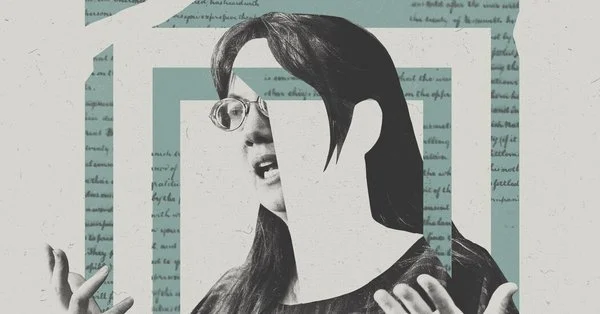
How did you sleep, loyal readers? I hope well. Like many people over the past year, I’ve suffered from mild insomnia (and REM paralysis, spooky!). But all in all, I can’t complain, and sleeplessness is relative, as Aminatta Forna emphasizes in this week’s lead article, “Chasing A Waking Life.” In this cultural history of insomnia, you’ll travel to Sierra Leone and Croatia and Spain and China and Mexico and Spain, gaining perspective that the inability to sleep is a shared human condition across time and place.

If reading about sleeping gets you tired, skip down to this week’s other great articles — an oral history of the California wildfires, an explainer on the surge in plastic surgery, and a rumination on the flourishing chicken wings industry. Please enjoy!

+ Join Article Club this month to discuss “A Homecoming,” by Amirah Mercer, which discusses how the wellness industry erases the long history of plant-based diets in the Black diaspora. We’re meeting up on Sunday, July 27 — at 2 pm online and at 3:30 pm in person. More details here.

+ Don’t be shy! If you’ve found an outstanding article that you’d like to share with our reading community, please let me know.

Chasing A Waking Life

Aminatta Forna: “As a child I slept in the back of cars, I slept on airplanes, I slept in a tangle of sheets, I slept in the arms of one parent while another remade the bed, I slept while they set me back down and turned out the light. On trips to my grandparents’ house I slept in the big bed with my grandmother. I slept while she did not (she complained I kicked her in the night). As a child I slept.

“For 15 years I could not sleep. I would wake up in bed in our home in London at four o’clock in the morning, or three-thirty or four-thirty. Without looking at the clock I came to be able to estimate the hour with some degree of precision. In the winter months, when it was dark until at least seven, I’d lie for a while hoping I was wrong. In the spring I would play with the thought that the sky was merely overcast, clouds obscuring the dawn. None of these attempts to fool myself made any difference, for sleep: silvery, slip-skinned sleep, was already gone from my grasp.” (26 min)

Objects Of Fire: Oral Histories From The California Wildfires

Teresa Pressler misses her mom’s mirror. Jess Mercer misses her grandfather’s belt buckle. Devi Pride misses her dad’s poems. In this oral history of survivors of California wildfires, Tessa Love urges us not to diminish the loss of keepsakes. “A thing may not be a life, but a life is built of things. Our objects are infused with our singular existence — memory, story, sentiment, belonging. They hold and write our histories, helping us explain ourselves to ourselves. Spoken words and lived events are ephemeral. But objects remain solid.” (22 min)

The Cosmetic Surgery “Zoom Boom” Is Real — But There’s More To The Story

Summer is coming. Stay-at-home orders are lifting. And after a year of being cooped up, we’re itching to get outside, doff our masks, and see our friends. But first, rhinoplasty is in order — or maybe cheek filler, or some submental liposuction. The demand for plastic surgery is at an all-time high, as Zoom dysmorphia has reminded us of the crevices on our faces and how maybe we don’t look as perky as we did a few years back. (13 min)

The Great Wings Rush

It’s lucky that chickens haven’t gone extinct, given how many wings Americans are eating. More than 1 billion last year, apparently, thanks to the explosion of pop-up brands, like Pasqually’s Pizza and Wings (Chuck E. Cheese), Cosmic Wings (Applebee’s), and It’s Just Wings (Chili’s). While thousands of restaurants shuttered last year, wings sales rose 10 percent, leading to a spike of wings-only ghost kitchens and virtual brands, all vying for top billing on Door Dash and other delivery apps. (11 min)

+ Reader Annotations: Several of you shared your appreciation for “The Native Scholar Who Wasn’t,” last week’s lead article. If you didn’t get a chance to read the piece, you’re in luck: Here’s an audio recording (63 min), thanks to Julia Whelan.

Thank you for reading this week’s issue of The Highlighter. Did you enjoy it? Let me know by clicking on “Yes” or ”No” below. I like hearing from you.

Also, to our new subscriber Larry, I hope you find the newsletter a solid addition to your email inbox. To our long-time subscribers (like Christine! Dave! Camille!), you’re pretty great, too.

If you like The Highlighter, please help it grow. I appreciate your support. Here are a few ways you can help:

On the other hand, if you no longer want to receive this newsletter, please unsubscribe. See you next Thursday at 9:10 am PT!

#296: The Native Scholar Who Wasn’t

As we end the school year, I’m sending teachers, parents, and young people my appreciation and gratitude. May the summer bring you big rest and revelry. Please wish me luck as I accompany my goddaughter to Great America (and ride the RailBlazer) on Saturday.

Thank you very much for opening today’s issue. I’m pleased with this week’s selections. The lead article, “The Native Scholar Who Wasn’t,” investigates yet another case of a white woman masquerading as a person of color in order to gain academic clout. But this time, there’s a twist that makes the piece even more disturbing than you’d expect.

Not interested in that? No problem. You can skip to articles investigating the ills of diversity training, the pressures on Black teachers, and the affordances of robotic pets. Please enjoy!

+ Even if you’re not vegan, consider joining Article Club this month. We’re discussing Amirah Mercer’s “A Homecoming: How I Found Empowerment in the History of Black Veganism.” I look forward to the conversation, and it’ll be even better if you’re there, too. Here’s more information.

+ Help make The Highlighter strong. If you enjoy the newsletter, please share it with someone in your life who might like it, too. Thank you.

The Native Scholar Who Wasn’t

If you’re a longtime reader of the newsletter, you know that I’m intrigued by the phenomenon of “ethnic fraud,” a form of racial misrepresentation in which (usually white) people pretend they’re from a different racial background. On the one hand, it’s easy to ridicule Rachel Dolezal (Issue #89) or Jessica Krug (Issue #280). On the other, this is serious.

That’s why I appreciated this thorough, thoughtful piece about Andrea Smith, an Ethnic Studies professor at UC Riverside, who claims to be Cherokee, but isn’t. Instead of going for the snark, author Sarah Viren explores the larger harm of “Pretendians,” especially when people choose to believe the liar. Why has Dr. Smith continued to thrive as an academic? Ms. Viren writes, “We care less as a culture about Native Americans, so the theft of Native identities means less, too.“ (39 min)

Inside The Booming Diversity, Equity, And Inclusion Industrial Complex

Since the murder of George Floyd, businesses have flung billions of dollars at diversity consultants. Some CEOs want to do real work; others want to tweet racial awareness. This article challenges not only the motivations of corporations but also the quality of antiracism providers. In a field where “anyone can call themselves a DEI practitioner,” and where one-off speeches and unconscious bias trainings are more lucrative than transformative work, it’s no surprise that cynicism has risen alongside performative confessions. (22 min)

Black Teachers Ground Down By Racial Fatigue After A Year Like No Other

High school teacher Jasmine Lane quit this year. The reason? It wasn’t the pandemic. Rather, as the only Black English teacher at her school in Minneapolis, it was the constant stress of navigating toxic white spaces. White students asked why they had to read “Ain’t I A Woman?” White colleagues demanded she share her feelings about race, then criticized her views. White administrators expected her to work miracles with kids of color. For Ms. Lane, 27 years old, the racial battle fatigue was too much. (11 min)

What Robots Can — And Can’t — Do For The Old and Lonely

Virginia Keller sometimes feels lonely. She’s 92. She has a family, she says, but she doesn’t want to bother them. So she got a robot cat and named her Jennie. Jennie is orange with a white chest and tapered whiskers. She nuzzles, stretches, and meows, like cats do. You might be sad reading this article (as I was), thinking about your relatives, or about your own loneliness, or about how we don’t really care about the elderly. But meanwhile, Jennie is keeping Ms. Keller company. (25 min)

+ Reader Annotations: Our reading community is kind. After Alison faced a New York Times paywall, loyal reader Kim shared a valuable tip. She wrote, “I wanted to let Alison know that she could check her local library’s website to see if they give access to the NYT and other news sites that have paywalls. The library here in Berkeley gives a free 72-hour code to access the Times, that I can get as often as I want.” Thank you, Kim! Further research suggests: It looks like the Berkeley Library offers free access even if you’re not a patron. Is this really possible?

Thank you for reading this week’s issue of The Highlighter. Did you enjoy it? Let me know by clicking on “Yes” or ”No” below. I like hearing from you.

Also, to our eight new subscribers — including Mitch, Jane, and Ari — I hope you find the newsletter a solid addition to your email inbox. To our long-time subscribers (e.g., Tiff! Brad! Carol!), you’re pretty great, too.

If you like The Highlighter, please help it grow. I appreciate your support. Here are a few ways you can help:

On the other hand, if you no longer want to receive this newsletter, please unsubscribe. See you next Thursday at 9:10 am PT!

#295: Stop Hustling Black Death

This week marks the anniversary of the murder of George Floyd. Last summer’s large-scale protests have ended, calls to defund the police have subsided, and white Americans’ support for Black Lives Matter has declined. Then we have the absurd: Amy Cooper is suing her former employer for racial discrimination. None of this, of course, is a surprise.

As you reflect and consider your next steps, please consider reading this week’s lead article, “Stop Hustling Black Death.” It’s a profile of Samaria Rice, mother of Tamir, who was murdered in 2014 when he was 12. Ms. Rice challenges the repetitive, performative actions taken by white journalists and Black national leaders (including BLM) after Black men and Black boys are killed by the police. She’s a mom, she says, and she has no desire being a “mother of the movement.”

If that piece is too much for you today, take in some wisdom from our elders, contemplate the power of envy, and find out how you can help your pet get famous. Please enjoy!

+ Help make The Highlighter strong. If you enjoy the newsletter, please share it with someone in your life who might like it, too. Thank you.

Stop Hustling Black Death

Imani Perry: “Samaria Rice is not inclined to speak in pious ways about a national movement for Black lives. She is sharp-tongued, if somewhat more profane. Over two hours one May afternoon — elegantly coiffed with swooping bangs, maroon lipstick, and a silk dress — she told me the story of how she had been cast into the center of the movement at the most tragic moment of her life.

“The mother figure in American culture, especially in Black communities, is expected to be self-effacing, long-suffering, enduring. To be good and dutiful mothers of the movement, they have been expected by the civil-rights Establishment to behave in ways that suppress the emotional turmoil that every mother of a murdered child experiences. Rice has no interest in playing that part.” (19 min)

70 Over 70: A Show About Making The Most Of The Time We Have Left

In my humble opinion, this is the best new podcast of the year. Who needs 30 Under 30 when we can listen deeply to the wisdom of 70 people over 70 years old? Talented interviewer Max Linsky (from Longform) asks deep questions and knows how to get people to open up and have real conversations. So far I’ve listened to just two episodes — including a great one with Sister Helen Prejean — and I’m 100% hooked. Let me know if you listen. (44 min)

+ Later this season, Mr. Linsky will be interviewing Dionne Warwick. That’s all you need to know!

There I Almost Am: On Envy and Twinship

Jean Garnett loves her twin sister. It’s glorious, she says, to have a twin, to look at another person who shares your face, has the same laugh sounds and laugh lines, and the same wrinkles, and to say, “There I am.” But as she reveals in this raw essay, Ms. Garnett can’t escape having jealous feelings. “You want your identical twin to be beautiful, to confirm that you are beautiful,” she writes. “But you also want her to be ugly, to confirm that she is uglier than you.” (22 min)

+ Are you a twin? Does this resonate?

My Dog Is (Almost) Internet Famous

Your adorable pets have graced the pages of this newsletter (and calendar!) for many years. But what exactly makes a pet famous on Instagram? That’s the essential question Erica Lenti explores in this entertaining piece, in which she tries to convince the Internet that her one-eyed puppy Belle deserves pet influencer celebrity status (and therefore earn $2,000 per post). What do you think? Should Belle get a shot at stardom? (10 min)

+ Ms. Lenti last appeared in Issue #179, when she decided not to come out to her Italian grandmother.

+ Reader Annotations: Several of you shared your appreciation for last week’s lead article, “I Feel Like I’m Just Drowning.” Unfortunately, loyal reader Alison, who was “so excited to get a break in the day while dinner was cooking” to read the piece, instead got hit with the tightfisted New York Times paywall. Drat. She wrote, “My heart was saddened when I clicked on the article and I had reached my limit of articles for the month. It’s such a tease!” I am very sorry about that, Alison. Maybe it’s time for me to raffle off another digital subscription. What do you think?

Thank you for reading this week’s issue of The Highlighter. Did you enjoy it? Let me know by clicking on “Yes” or ”No” below. I like hearing from you.

Also, to our new subscriber Etna, I hope you find the newsletter a solid addition to your email inbox. To our long-time subscribers (e.g., Vlad! Chloé! Abby!), you’re pretty great, too.

If you like The Highlighter, please help it grow. I appreciate your support. Here are a few ways you can help:

On the other hand, if you no longer want to receive this newsletter, please unsubscribe. See you next Thursday at 9:10 am PT!
#294: “I Feel Like I’m Just Drowning”

Hi there, loyal readers, and thank you for opening up this week’s issue of The Highlighter. Back nearly six years ago, when I launched this newsletter, most of its articles directly related to education. After all, I’m an educator, like many of you, so it made sense. Over time, though, my reading tastes have shifted. It’s less common now that I feature pieces on schools and teachers and students. Maybe it’s the pandemic. Or maybe it’s just that I’m reading more expansively now and looking for new topics (like Hot Cheetos, see below).

But no matter where my reading takes me, there’s no way I was going to pass up this week’s lead story — an expertly reported, well-written, kind, generous article about a group of young people in Missouri who have navigated the past year of distance learning. It’s one of my favorite articles of 2021 so far, and I highly recommend it. In fact, I’ll be reaching out to the author, Susan Dominus, to see if I can persuade her to join Article Club in August so we can talk about her piece all together.

+ Not into education? No problem. This week’s other articles — about Hot Cheetos, TikTok influencers, and rent payment grace periods — are worth your reading time and energy, too. Please enjoy!

+ I’d love to hear from you. All you need to do is hit reply.

“I Feel Like I’m Just Drowning”

Before the pandemic, 15-year-old Charles read Shakespeare plays for fun, scoured the Federalist Papers to complement his love of the musical “Hamilton,” and enjoyed bantering with his classmates about Chipotle. But then Hickman High School in Missouri moved to distance learning, and Charles stopped attending classes and turning in work, even for his favorite AP World teacher, Ms. E.K. Like thousands of young people across the country, Charles was barely leaving his bed, instead eating burgers and playing video games all day, depressed and putting life on hold.

This is the dire, touching story of Charles, several of his peers, and their dedicated teacher who texts, cajoles, and supports them the best she can in a year of isolation and desperation. (Her salary: $50,000.) Reporter Susan Dominus, a parent of twin teenagers herself, gets in there and tells an embracing, big-hearted story. If you’re a parent or an educator, or if you care about kids, this is an hour well spent. (57 min)

The Fiery Debate Over Hot Cheetos

It’s been a roller coaster week for Hot Cheetos. It began with this feel-good Planet Money episode that celebrated Richard Montañez, the janitor from Southern California who said he invented the flavor and rescued the brand. But wait: There’s no evidence of that, said Frito-Lay and Los Angeles Times writer Sam Dean, in this exposé, which debunks Mr. Montañez’ claim. That’s the end, right? Not so fast. Mr. Montañez is sticking to his story, and the Latinx community is defending him, asking why everyone’s so quick to believe a white reporter over the son of migrant workers. (Eva Longoria still plans on making a Hot Cheetos movie.) (24 min)

+ Hit a paywall? Try reloading in incognito mode.

+ A big thank you to VIP Mark for sharing this article with me.

Educating The TikTok Generation

Last year during the pandemic, English professor Barrett Swanson needed a vacation. His teaching had become less about analyzing James Baldwin and more about tending to his students’ anxieties and their comfort animals. Prof. Swanson wondered, Was there another way to support young people as they headed into adulthood? Indeed there was — at the Clubhouse for the Boys mansion, a collab house in Los Angeles where TikTok stars “hone their voice.” One of the owners says, “We really see ourselves as an influencer university.” Tons of layers here. (38 min)

+ For the record: I’m a big fan of TikTok. It’s great.

The Battle For 1042: Landlords And Tenants Struggle With The Pandemic

Alfonzo Hill, who lives with his 13-year-old daughter at 1042 Cutler in Schenectady, New York, is broke. He lost his job at the local tavern last March and has been unemployed ever since. Like the 8 million Americans behind on rent (average debt: $5,600), Mr. Hill appreciates that the federal government has banned evictions until at least July. But that’s not good news for landlord Romeo Budhoo, an immigrant from Guyana, who hasn’t collected any rent in more than a year and can’t pay the mortgage and property taxes. “This house is slowly killing me,” he said. (12 min)

+ Reader Annotations: You know you’ve made it in life when you receive a box of biscotti in the mail, thanking you for your newsletter. Thank you, VIP Robert — they’re delicious! I am very appreciative of your support. If I keep publishing issues, will you keep baking biscotti?

Thank you for reading this week’s issue of The Highlighter. Did you enjoy it? Let me know by clicking on “Yes” or ”No” below. I like hearing from you.

Also, to our six new subscribers — Marcus, Roman, Eliot, Einar, Cheryl, and Gretchen — I hope you find the newsletter a solid addition to your email inbox. To our long-time subscribers (e.g., Carol! James! Morgan!), you’re pretty great, too.

If you like The Highlighter, please help it grow. I appreciate your support. Here are a few ways you can help:

On the other hand, if you no longer want to receive this newsletter, please unsubscribe. See you next Thursday at 9:10 am PT!

#293: Homecoming

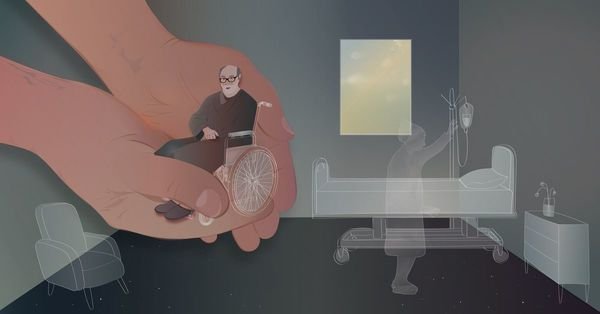
May must be the month when things get serious in article writing land. Loyal readers, you’ve come to the right place, because today’s issue of The Highlighter is a blockbuster. Honestly, I couldn’t decide which article should get top billing. Should it be “Homecoming,” the story of an elderly man in a nursing home at the beginning of the pandemic? Or should it be “Magic Actions,” the story of the rebellion that followed the murder of George Floyd? Ultimately I had to choose, but both are outstanding, and after all, is there a rule that you can read only one?

Why all this great writing all of a sudden? It could be coincidental. But I’m thinking it has to do with time. It’s been more than a year since lockdown, and nearly a year since Mr. Floyd’s murder. Thoughtful writing takes space and perspective. I’m appreciative of Davy Rothbart and Tobi Haslett for their pieces — not to mention Clint Smith and Eric Kim, who round off this week’s edition. (All men this week? Might be a first.)

+ Guess what happens when authors get featured in Article Club? They go ahead and publish critically acclaimed, best selling books! Next Friday, Brian Broome (“79”) comes out with Punch Me Up to the Gods, and Barrett Swanson (“Lost in Summerland”) comes out with Lost in Summerland. Is it time for a Highlighter book club, too? 😀

Homecoming: A Family’s Nursing Home Dilemma

A little more than a year ago, Davy Rothbart’s 83-year-old father lived in a nursing home in Michigan after suffering a stroke. Though cogent and stable, he required consistent care to prevent bedsores and to monitor his condition. But the world was changing. A mysterious virus was spreading. Old people were dying. And Mr. Rothbart had a decision to make: Should he get his dad out of there and take him home?

In this poignant essay, Mr. Rothbart takes us back to last March and lets us get to know his mom and dad and 20-month-old son Desi. We’re brought into his world: his family and friends who band together and do their best, despite limited resources and limited information. This is a story about parenthood, mortality, and the power of family. (61 min)

Magic Actions: Looking Back On The George Floyd Rebellion

Tobi Haslett: “It’s vital to insist, over the drone of an amnesiac discourse, that last year’s spate of protest was propelled, made fiercely possible, by massive clashes in the street — not tainted or delegitimized by them, nor assembled from thin air. Those threatened by that fact will work to wipe it from our minds. But something has changed in America; something is still pulsing beneath the carapace of party politics. The rebellion didn’t just release a jet of fury, but lodged the riot, without apology, in the very rhythm of political life.” (46 min)

Why Confederate Lies Live On

Clint Smith visits Blandford Cemetery in Virginia, where 30,000 Confederate soldiers are buried, to investigate why some white people cling to the lie of the Lost Cause. “So much of the story we tell about history is really the story we tell about ourselves,” Mr. Smith writes. “It is the story of our mothers and fathers and their mothers and fathers, as far back as our lineages will take us. But just because someone tells you a story doesn’t make that story true.“ (25 min)

When I Came Out To My Parents, Kimchi Fried Rice Held Us Together

I like coming out stories, and I like food, so this tender piece by cooking writer Eric Kim captured my attention from the start. Telling his conservative Korean parents wasn’t easy — his mom lost her religion, her dad said he’d lost his son — but Mr. Kim focuses instead on the kimchi fried rice his mother makes him at 3 a.m. “It meant something to me that in the midst of my mother’s grave disappointment, somehow she and I could seek refuge in this one thing that would never change. I was still her son and she was still my mom, and kimchi fried rice — something only she could make — was still my favorite thing to eat in the entire world.” (10 min)

+ Reader Annotations: I’m pleased that several of you appreciated last week’s essay by Tyrone Fleurizard. “Wow,” loyal reader Lisa wrote, “ ‘How To Name Your Black Son In a Racist Country‘ was a master class in content and technique.” My thoughts, too, Lisa — thank you for sharing.

Thank you for reading this week’s issue of The Highlighter. Did you enjoy it? Let me know by clicking on “Yes” or ”No” below. I like hearing from you.

Also, to our four new subscribers — Scott, Danielle, Elizabeth, and Kennidy — I hope you find the newsletter a solid addition to your email inbox. To our long-time subscribers (e.g., Vinci! Tamyra! Frederik!), you’re pretty great, too.

If you like The Highlighter, please help it grow. I appreciate your support. Here are a few ways you can help:

On the other hand, if you no longer want to receive this newsletter, please unsubscribe. See you next Thursday at 9:10 am PT!

#292: Invisible Kid

Happy Thursday, loyal readers. It’s Teacher Appreciation Week. No matter what Twitter says, I’m very grateful to my colleagues for the quality of instruction they’ve provided to our students in distance learning. Though I can’t wait to see everyone back in classrooms, don’t believe everything you read in the newspaper. Because of teachers’ skill and dedication, many students are thriving this year, appreciating the technology integration and the additional one-on-one support. It’s been a slog, no doubt. But we’ll get through it.

I can’t tell you which article I like best this week. They’re all good. “Invisible Kid” is infuriating, “How to Name Your Black Son in a Racist Country” is razor-sharp, “The End of the Road” is insightful, and “How Amanda Gorman Became So Much More Than a Literary Star” is inspiring. If you have time, please read one (or more!), and share with me your thoughts. Enjoy!

+ I encourage you to join Article Club. This month, we’re discussing “The Crow Whisperer,” by Lauren Markham. Originally highlighted in Issue #285, it’s a quirky (but deep) piece about crows, Oakland, animal whisperers, and how maybe we should take better notice of what’s happening around us. Here’s more information, and here’s how to sign up.

Invisible Kid

Thirty years ago, when he was 16, Adolfo Davis was sentenced to life in prison for a crime he says he did not commit. Thanks to the work of Bryan Stevenson and the Supreme Court case Miller v. Alabama (2012), which ruled that life imprisonment for minors is cruel and unusual punishment, Mr. Davis won clemency and was released.

But after returning home to the South Side of Chicago, Mr. Davis realized that freedom did not afford him an authentic chance at a new beginning. While the world had changed over the past three decades, his neighborhood had remained largely the same. He wondered, “Would Black kids raised on the South Side of Chicago have a future to look forward to, something better than what I had?” (49 min)

How to Name Your Black Son In A Racist Country

Tyrone Fleurizard: “What happens to a dream deferred? Apparently it turns into a nightmare, one where you finally meet your newborn son and his name is Tyrone. Decide that you will never call him this. You fear that in this country, a name like Tyrone will get your son killed. But in this country, there is no difference between your Black son and anybody else’s Black son. The only difference is between you, a naturalized American who pledges allegiance to this country, and your son, born in America, whose only allegiance is to upend the systems that make it impossible for Black people to breathe.” (10 min)

The End Of The Road: Nomadland, My Mother, And The Frontier’s Broken Promise

In this thoughtful article — equal parts movie review, history lesson, and personal essay — Mitchell Johnson recounts how his mother became a vagabond after the 2008 Great Recession, taking to the road after losing her home. Mr. Johnson compares the recent tech boom and bust to its counterpart more than a century ago, when white settlers got sold the frontier myth after the government killed Indigenous people and granted land to the railroads. You don’t need to watch Nomadland before reading this piece, though I recommend the film, because Frances McDormand is one of my favorites. (20 min)

How Amanda Gorman Became So Much More Than A Literary Star

Amanda Gorman wrote “The Hill We Climb” by studying the poetry of her “spiritual grandmother” Maya Angelou. She speaks frequently with her “cool auntie” Michelle Obama but still has a “mini-heart attack” every time she texts Oprah. Doreen St. Félix captures Ms. Gorman’s epic talent, rise to stardom, and wholesome character in this heartwarming profile. “I’ve learned that it’s OK to be afraid,” she says. “And what’s more, it’s okay to seek greatness. That does not make me a black hole seeking attention. It makes me a supernova.” (21 min)

+ Reader Annotations: It turns out that many of you take typing as seriously as I do. VIP Phoebe felt compelled to take a test immediately after reading “Why Am I Sp Bad at Typign?” She wrote, “My first try was 82 wpm. I bet I could do better. I was 100% accurate though. I was being careful. I normally am not and make a lot of mistakes.” Not bad, Phoebe!

Loyal readers also appreciated the newsletter’s upcoming milestone and made suggestions to celebrate. Noting my still-nascent musical skills, Randy wrote, “I’m proposing an audience-requests-only piano tour to celebrate Issue #300.” I’ll be sure to get practicing!

Loyal reader and artist Matt also congratulated me on the achievement and hoped for the commission of large-scale public works of art. He wrote, “They’ve made a movie about 300. Maybe you could Photoshop your face over Gerard Butler’s in the 300 movie poster — and put a highlighter in the hand instead of a sword!” This is a fantastic idea. Anyone interested in making this a reality?

Thank you for reading this week’s issue of The Highlighter. Did you enjoy it? Let me know by clicking on “Yes” or ”No” below. I like hearing from you.

Also, to our four new subscribers — including Jacob, Paulina, David, and Mark — I hope you find the newsletter a solid addition to your email inbox. To our long-time subscribers (e.g., Johanna! Elliot! Tiff!), you’re pretty great, too.

If you like The Highlighter, please help it grow. I appreciate your support. Here are a few ways you can help:

On the other hand, if you no longer want to receive this newsletter, please unsubscribe. See you next Thursday at 9:10 am PT!

#291: Wider Than The Sky

Happy Thursday, loyal readers. Thank you for being here. Today I’m announcing “The Official Countdown to Issue #300.” No, I’m not sure what all of that means yet, but it promises to be exciting. I hope you’ll join me in the festivities! (Your ideas welcome.)

This week’s issue is quintessential Highlighter eclectic: You get a braided essay on love, an historical analysis on whiteness, a profile on a school run amok, and a personal reflection on typing. I’m eager to hear your thoughts on these pieces, so please hit reply and share.

If you have limited time to read this week, I highly recommend today’s lead article, “Wider Than The Sky.” In addition to being about love and death (two of my go-to topics), the piece is an ode to our brains. We might think we have free will, and agency, and consciousness, but our brains are big, and their 100 billion neurons will keep doing what they’re doing regardless — which is usually beautiful and amazing, unless or until it’s not.

+ Big gratitude to everyone who joined Article Club last Sunday to discuss Bill Buford’s “Baking Bread in Lyon.” Mr. Buford was great, but you were even better! Congratulations, Angelina, for winning the book, and thank you, Summer and Elise, for facilitating. I’ll be revealing May’s article this weekend. If you’re looking for a community reading experience that’s most likely less stressful and more enjoyable than your book club (no offense), you’ll like Article Club. (For the record: I love my book club.)

Wider Than The Sky

Phyllis Beckman: “The human brain, so humble in appearance, is both fragile in form and resilient in function. Scientists like to say, and many of us like to repeat, that it is the most complex object in the known universe. We say this with satisfaction and, if we are honest, with a degree of hubris.

“Despite our very human pride, the fact remains that the brain, with no apparent effort from us, creates and holds within it one’s world and one’s self. There is resistance on the part of some to accept the concept that this three-pound mass of jelly somehow creates consciousness, provides us with an identity, and enables us to love.

“But I will tell you this: damage the brain and you damage the mind; you alter the personality and change the very essence of the person. My brain and I are companions, partners in the creation of this evolving story that is me. This is the most enduring and intimate relationship I will know. If it should leave me, I would be unable, even, to grieve.” (36 min)

The Invention Of Whiteness

“What shall we do with the white people?” asked William J. Wilson in The Anglo-African Magazine in 1860. We’re asking the same question now, argues Robert P. Baird in this well-written essay on whiteness. Mr. Baird takes an historical approach, detailing how whiteness rationalized slavery, how color-blindness narrowed the definition of white supremacy, and how whiteness studies advocated abolition of the race. “Treason to whiteness is loyalty to humanity,” Noel Ignatiev wrote in Race Traitor in 1992, urging white people to disavow the privileges of the label. But Mr. Baird says that’s impossible, likening whiteness to climate change. (30 min)

Going For Woke: How Brentwood School Became A Battleground In The Culture Wars

The elite like to talk a progressive game, but when their fancy private school wants to make real changes, like shifting its curriculum, well, that’s a different story. This profile of Brentwood School in Los Angeles (parents include Barry Bonds, Arnold Schwarzenegger, Calista Flockhart) explores the ideological skirmishes following George Floyd’s murder. How does an exclusive school become inclusive? Who gets to decide if eighth graders read To Kill a Mockingbird? (18 min)

+ I wonder what Caitlin Flanagan, author of “Private Schools Are Indefensible” (#285), thinks about this piece. Maybe I’ll ask her! She joins AC in July.

Why Am I Sp Bad At Typign?

When I tell people that my only real skill is typing, I’m only half joking. (My middle school teacher Mrs. Schaefer gets all the credit.) For Katie Notopoulos, though, typing is not a source of joy. But instead of complaining, she interviews cognitive scientists, mechanical keyboard connoisseurs, and ultimate typing champions, learning about dystypia, the effects of long fingernails, and the reasoning behind autocomplete. Her conclusion: “The act of typing is a miracle in our brains.” (18 min)

+ How fast can you type?

Thank you for reading another issue of The Highlighter. Did you enjoy it? Let me know by clicking on “Yes” or ”No” below. I like hearing from you.

Also, to our three new subscribers — including Stephanie — I hope you find the newsletter a solid addition to your email inbox. To our long-time subscribers (e.g., Susan! Micki! Jason!), you’re pretty great, too.

If you like The Highlighter, please help it grow. I appreciate your support. Here are a few ways you can help:

On the other hand, if you no longer want to receive this newsletter, please unsubscribe. See you next Thursday at 9:10 am PT!

#290: Compliance Will Not Save Me

It’s been a heavy week. I don’t think it’s just me. I’ve noticed a weight with friends, family, and colleagues. It’s an in-between state, maybe, a languishing. A hope for an end to the pandemic, but a realization that we’re still very much in the middle. An acknowledgement of a verdict that brought accountability, but a recognition that justice is still far off. And loss, plenty of personal loss, close to home. I hope you’re finding time to process, rest, be with friends, be alone, reflect, do whatever’s right for you.

If reading is helpful, I’ve got articles for you. This week’s lead piece by Ibram X. Kendi on compliance is a must-read, but even more powerful is “Seeing in the Dark,” by Breai Mason-Campbell. She captures the feelings of accumulated collective grief and the bitter truth that white people, at any moment, may bow out of the struggle for justice. Then after a pet photo break, Ashon Crawley shares his thoughts on Lil Nas X and Delphine Minoui offers some hope on the power of reading to build community. Please enjoy.

+ I invite you to try out Article Club — whether it’s this Sunday, for our discussion of Bill Buford’s “Baking Bread in Lyon,” or in upcoming months, when we’ll welcome authors Lauren Markham, Amirah Mercer, and Caitlin Flanagan. If you like to read deeply and want to connect with other thoughtful people, I’m certain you’ll appreciate Article Club.

+ You’ve weighed in: Saturday is officially Highlighter Reading Day, when the majority of you take the time to sink into the articles. If you’re an aspiring reader, VIP Martha is planning a friendly event that will support you and your reading goals. In the meantime, please reach out and say hi, whether by email or by voice message (like VIP Angelina).

Compliance Will Not Save Me

Ibram X. Kendi: “Black and brown people’s defiance is not the problem. Our compliance is not the solution. Police defiance of our humanity is the problem. American defiance of our right to live is the problem. Political compliance — to abolish American policing as we know it — is the solution.

“Police compliance with our humanity could be the solution, but I can’t imagine the institution of American policing ever recognizing Breonna Taylor’s human rights, Eric Garner’s cries to breathe, or the life that a Latino seventh grader has to live. The institution of American policing has never systematically complied with my humanity, and it never will. To believe otherwise is to comply with an alternative history, with a fantasyland, with wishful thinking, with an American dream that is my American nightmare.” (9 min)

Seeing In The Dark: A Sermon On Race, Grief, Accountability, And Change

The pandemic has taught white people about collective grief and unmerited adversity, argues Breai Mason-Campbell in this stunning essay. That’s why white people joined calls for racial justice last summer after the murder of George Floyd. But white people can only take so much, Ms. Mason-Campbell argues, before lashing out or craving the status quo. “Nice White Folks confuse moments with movements,” she writes. “Corona helped you build up some armor. Use it. Now is the time to show mercy with brave and decisive acts. The price for your return to normal is my life.” (24 min)

Lil Nas X’s ‘Montero’ Is The Lesson I Needed As A Queer Christian Kid

Growing up gay in the 1980s and ’90s in a Black Pentecostal church, Ashon Crawley felt anxious all the time. “Fear was the air we breathed.” In this moving piece, Prof. Crawley reflects on Lil Nas X’s influence on young people today. By shunning fear and slaying the devil in “Montero,” the artist reminds Black queer youth — and all of us — to live full, joyful lives, unencumbered by world views that rely on threats. To his detractors, Lil Nas X tweeted, “I hope u are mad, stay mad, feel the same anger you teach us to have towards ourselves.” (11 min)

Hunting For Books In The Ruins: How Rebel Librarians Found Hope In Syria

Since the Arab Spring, Ahmad Muaddamani has seen himself as a protester, an activist — not as a reader. But after years of living under siege in Syria, he and his friends began saving books from the ruins and built a secret, underground library for fellow townspeople in Darayya. By offering a space for reflection and ideas, welcome to experienced and novice readers alike, Mr. Muaddamani found a new way to resist against Bashar al-Assad’s regime. “Books don’t set limits; they set us free. They don’t mutilate; they restore. Reading helps me think positively, chase away negative ideas. And that’s what we need most right now.” (19 min)

+ My prediction is that loyal reader Marni, who loves to read as much as I do, will tear up after reading this article. Let us know, Marni!

+ Reader Annotations: After reading last week’s article on the classic French omelet, VIP Abby revealed that she grew up with the famous chef. She wrote, “Jacques Pépin lived in my hometown in a really cool house behind a big fence! He would often stop into my bookstore where I worked for all of high school and sign his books for us.” That makes me very happy, Abby! Did you meet Julia Child, too?

Also: I’m happy to report, the kids at Teenager Therapy got into college! (After featuring them back in Issue #277, I’ve been rooting for them.)

Thank you for reading another issue of The Highlighter. Did you enjoy it? Let me know by clicking on “Yes” or ”No” below. I like hearing from you.

Also, to our four new subscribers — Alden, Tarik, Pamela, and Linda — I hope you find the newsletter a solid addition to your email inbox. To our long-time subscribers (e.g., Katherine! Mea! Juan!), you’re pretty great, too.

If you like The Highlighter, please help it grow. I appreciate your support. Here are a few ways you can help:

On the other hand, if you no longer want to receive this newsletter, please unsubscribe. See you next Thursday at 9:10 am PT!

#289: Return The National Parks To The Tribes

In the same week that we witnessed the trial of the police officer who killed George Floyd, and in the same week that yet another Black man, Daunte Wright, was killed by a white police officer, the House Judiciary Committee voted to advance HR 40, the bill that would establish a commission to consider reparations to Black Americans for slavery. By no means, of course, am I hopeful. After all, HR 40 was first introduced more than 30 years ago, after the passage of the Civil Liberties Act of 1988, which granted reparations for the internment of Japanese Americans. Nevertheless, the conversation about reparations is growing. This week’s lead article, ”Return the National Parks to the Tribes,” by Dave Treuer, argues that the country’s 423 national parks, comprising 85 million acres, should be returned to their original stewards. If you have 30 minutes sometime this week, I urge you to read it.

Also in this week’s issue, Shayla Lawz explores the power of writing, Dr. Miin Chan criticizes the fermented food industry, and Joshua David Stern celebrates the classic French omelet. As always, thank you very much for being a loyal reader of this newsletter, and I hope you have a great week.

+ Which day of the week do you read The Highlighter? Hit reply and let me know. Or leave me a quick voice message to say hi.

Return The National Parks To The Tribes

David Treuer: “More than a century ago, John Muir described the entire American continent as a wild garden ‘favored above all the other wild parks and gardens of the globe.’ But in truth, the North American continent has not been a wilderness for at least 15,000 years: Many of the landscapes that became national parks had been shaped by Native peoples for millennia.

“We live in a time of historical reconsideration, as more and more people recognize that the sins of the past still haunt the present. For Native Americans, there can be no better remedy for the theft of land than land. And for us, no lands are as spiritually significant as the national parks. They should be returned to us. Indians should tend — and protect and preserve — these favored gardens again.

“To be entrusted with the stewardship of America’s most precious landscapes would be a deeply meaningful form of restitution. Alongside the feelings of awe that Americans experience while contemplating the god-rock of Yosemite and other places like it, we could take inspiration in having done right by one another.” (30 min)

+ Mr. Treuer is the author of The Heartbeat of Wounded Knee, a finalist for the 2019 National Book Award.

Writing Myself Back Into My Body And Into the World

A writer, poet, and interdisciplinary artist, Shayla Lawz, who is Black and queer, begins this piece, “I began writing in order to imagine. If I put something down on the page, suddenly, it existed. Suddenly, I existed.” But the murders of Sandra Bland and Eric Garner, along with a racist incident with a white professor in graduate school, challenged Ms. Lawz’s belief in her imagination. In this contemplative essay on grief, the body, and ways of seeing, Ms. Lawz acknowledges her pain and eventually returns to her vision — that writing, for her, is a willful act of being, of living. (10 min)

The Fermented Foods Industry Is Built on Global Ingredients. So Why Are Its Most Visible Faces White?

Twenty years ago, Dr. Miin Chan tasted kombucha for the first time in a Whole Foods in San Francisco. Her white friends sneered and called the beverage “gross.” That’s not true anymore, of course. Now the fermented foods of her childhood have been glorified, fetishized, and appropriated for profit. In this well-written piece, Dr. Miin explores the history of kimchi, miso, tempe, tibicos, and other ferments, criticizing the growing industry ($690 billion by 2023) and its attraction to whiteness. (19 min)

+ My new fave show, Waffles + Mochi, devoted one of its episodes to fermented foods. Please watch.

When Jacques Pépin Made All The World An Omelet

Back in college, my roommate Dave introduced me to chef Jacques Pépin, delighting me with his outlandish French accent, reminding me of the chef’s rapport with Julia Child, and ensuring I watch, over and over again, Mr. Pépin’s omelet masterclass. Here’s Joshua David Stein and his appreciation of that 1995 cooking demonstration. In this coming-of-age story, Mr. Stein writes, “There are no tricks to the omelet. No shortcuts or hacks. Plainspoken yet brilliant, humble yet exalted, Pépin is the omelet he makes.” (9 min)

Thank you for reading another issue of The Highlighter. Did you enjoy it? Let me know by clicking on “Yes” or ”No” below. I like hearing from you.

Also, to our five new subscribers — including Sarah, Tia, Christos, and Sasha — I hope you find the newsletter a solid addition to your email inbox. To our long-time subscribers (e.g., Sandy! Carl! Byron!), you’re pretty great, too.

If you like The Highlighter, please help it grow. I appreciate your support. Here are a few ways you can help:

On the other hand, if you no longer want to receive this newsletter, please unsubscribe. See you next Thursday at 9:10 am PT!