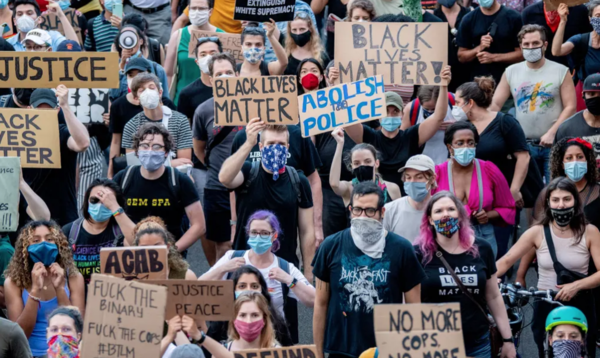
#288: White People, Black Authors Are Not Your Medicine

Happy Thursday, loyal readers, and thank you for opening The Highlighter. The other day, it hit me yet again that I haven’t set foot in a school building for more than a year, which is an odd thing for me to say, given that I’ve been an educator my whole career. Many of you are in education, too, and if you’re back in your classroom, I’d love to hear how it’s going. In the meantime, I’ll keep looking for education-related articles that aren’t all about people being mean and yelling at each other.

This week’s articles are shorter than normal, but they’re outstanding nonetheless, and I hope you read multiple. The lead essay, “White People, Black People Are Not Your Medicine,” challenges the performative move of buying books for anti-racism and then never reading them — or maybe as bad, reading them to seek absolution or to be seen as a good person.

If that piece isn’t relevant to you, skip down to Roxane Gay’s article on fat shaming, Beth Nguyen’s essay on name shaming, and Jennifer Chong Schneider’s reflection on dating and relationships. And course, there’s the pet photo and the pasta podcast. Please enjoy!

+ Want to jettison your Pandemic Life, flee to France, and bake bread? If so, join Article Club this month, where we’ll be discussing “Baking Bread in Lyon,” one of my favorite three articles of 2020. Author Bill Buford will participate in our conversation (and optionally critique your sourdough). Here’s more info and here’s the sign-up form. Try it, you’ll like it!

+ Also, if Article Club sounds like too much of a commitment right now, but you’d still like to connect with other thoughtful readers and talk about the articles in a different format, please hit reply, let me know, and let’s brainstorm ways to make that happen.

White People, Black Authors Are Not Your Medicine

Yaa Gyasi: “I make my living off my imagination, but this summer, as I watched Homegoing climb back up the New York Times bestseller list in response to its appear­ance on anti-racist reading lists, I saw again, with no small amount of bile, that I make my living off the articulation of pain too. My own, my people’s. It is wrenching to know that the occasion for the renewed interest in your work is the murders of black people and the subsequent ‘listening and learning’ of white people. I’d rather not know this feeling of experiencing career highs as you are flooded with a grief so old and worn that it seems unearthed, a fossil of other old and worn griefs.

“While I do devoutly believe in the power of literature to challenge, to deepen, to change, I also know that buying books by Black authors is but a theoretical, grievously belated and utterly impoverished response to centuries of physical and emotional harm.” (7 min)

We Are All Fragile Creatures

On the way to our vacation spot last week, my partner and I made sure to stop at Krispy Kreme for a delightful doughnut, free with our vaccine card. We didn’t heed the warnings of physicians, who attacked the company’s promotion and reminded us that a daily doughnut dose could be deleterious. In this thoughtful response, Roxane Gay suggests that maybe we should stop demonizing fat people and start acting on the real health problems our country faces. (9 min)

+ No, we didn’t get a doughnut on the trip back.

+ Ms. Gay has appeared many times in the newsletter. Her newsletter, The Audacity, includes sharp writing and the work of emerging writers.

America Ruined My Name For Me

Beth Nguyen: “Names are deeply personal and deeply public. We have to see our names all the time. Every form, every post, every e-mail. “Your name here” at the top of every assignment in elementary school. The other kids would decorate their names with stars and hearts; they would try to make their names look bigger than everyone else’s. The sight of their names gave them pleasure and satisfaction. I have never felt this pleasure, not once. Not even with publications. To me, my name has been a taunt. I’m always trying not to look at it.” (9 min)

Swipe White

In this newsletter’s first article about dating, Jennifer Chong Schneider explores how men have denigrated and fetishized her Asian identity. Brilliantly crafted in a question-and-answer format, the essay combines painful anecdotes with thoughtful reflections on trust and white aspirationalism. The daughter of a Korean woman and an abusive white American man, Ms. Chong Schneider questions her desire when she dates a Korean man for the first time. “Trust means that a person will take care with your feelings, and they will do it without effort.” (17 min)

+ Pasta Update: If you’ve been following the bucatini brouhaha (see Issues #276, #277, and #278), you can set that aside and focus now on cascatelli, the new pasta in town, a creation of Dan Pashman and his Mission ImPASTAble series. Yes, by all means, please weigh in with your thoughts, especially if you’re lucky enough to sample the prized pasta.

Thank you for reading another issue of The Highlighter. Did you enjoy it? Let me know by clicking on “Yes” or ”No” below. I like hearing from you.

Also, to our new subscriber Debby, I hope you find the newsletter a solid addition to your email inbox. To our long-time subscribers (e.g., Olivia! Luke! Monica!), you’re pretty great, too.

If you like The Highlighter, please help it grow. I appreciate your support. Here are a few ways you can help:

On the other hand, if you no longer want to receive this newsletter, please unsubscribe. See you next Thursday at 9:10 am PT!

#287: Am I A Conditional American?

Cindy-Lee_hero2.png

You’ll be proud of me, loyal readers. I’m taking my first real vacation in more than two years. (Take that, capitalism!) It’s been great to get away, rest, and reflect. As this newsletter approaches its sixth year and 300th issue, I’m feeling extra grateful for your readership. (Should there be a big celebration, once it’s safe, to commemorate the milestone?)

This week’s issue spans a variety of topics, in typical Highlighter fashion. The lead article, “Am I A Conditional American?” explores a Korean American woman’s experience with anti-Asian hate. After that probing piece, you’ll find an interview about death, a travelogue about teeth, and a reflection on the superior navigational abilities of animals. Please enjoy!

+ Article Club was a big success again last weekend. We discussed Francesca Mari’s “A Lonely Occupation,” an outstanding piece about gentrification. It was possibly the deepest conversation we’ve had. The only problem is that some of you weren’t there. If reading great articles and making new friends sound intriguing, we’d love to have you. Plus I have good news: This month, we’ll be discussing “Baking Bread In Lyon,” one of my favorite articles from last year, and author Bill Buford will be joining our conversation (and maybe judging our sourdough).

Am I A Conditional American?

Cindy Lee: “At 64 years old, I’ve come to realize that my feeling of safety is conditional. My acceptance is conditional. My Americanness is conditional. The rules are not up to those of us who are ‘other.’ Despite how we feel, who we are or what we’ve done, someone else gets to decide if we are dangerous, diseased or even American. The American Dream can be bestowed, and it can be withdrawn. Now, the American Dream is less dreamy for me, less sure. For too many, it’s never been.” (3 min)

+ Ms. Lee wrote this essay, her first published work, for a course at Arizona State University, where she is pursuing a master’s in Liberal Studies.

This Mortal Coil

Common sense suggests that being reminded of our death would make us kinder and gentler, more generous and open-minded. But according to psychologist Sheldon Solomon, the opposite is true: Our fear of the unknown causes us to turn inward, focusing on ourselves and those we trust, suspicious of anyone outside our cultural group. In this interview, Prof. Solomon explains Terror Management Theory, which accounts for why the pandemic has exacerbated polarization. After all, when times get tense, we might want to practice gratitude and humility. But we can’t help human nature. (30 min)

Bo, who belongs to loyal reader JoLynn, contemplates how best to spend the day. Want your pet to appear in The Highlighter? hltr.co/pets

Molar City

If the rate of vaccinations outpaces the rate of virus variants, we’ll soon see a rise in two of Americans’ favorite pastimes: summer vacations and going to the dentist. Why not combine the two with a trip to Los Algodones, the dental tourism capital of the world? Get a crown, install an implant, replace some gums, or do a full mouth reconstruction, all for pennies on the dollar, thanks to the inequities of the American health care system. Even if you’re not experiencing piercing pain, you may want to try out veneers, popular among teen influencers, to boost your confidence in our society obsessed with teeth. (19 min)

Why Animals Don’t Get Lost

Good thing the pandemic has kept me mostly sheltered in place, because without Google Maps, there’s no telling if I’ll get from here to there. Most animals, though, don’t need a GPS, and in this outstanding article by Kathryn Schulz, you’ll learn how Canada geese, Monarch butterflies, jumping spiders, and even your pet Goldendoodle navigate their environment, even if they’re plopped down for the first time in the middle of nowhere. Get ready for some science! (26 min)

+ Ms. Schulz is the author of “When Things Go Missing,” one of my all-time favorite articles. It was voted Best Article of 2017.

+ Reader Annotations: Last week’s lead article, “The Stories I Haven’t Been Told,” sparked strong emotions in many of you. VIP Lopez loved the piece and wrote, “I want to hear more from Jamie Figueroa, that writing was exciting. Having two sisters and a very single mom, I related so much to this article it was scary, and I’m Puerto Rican. I really hope you get her in for Article Club.” I’ve already emailed Ms. Figueroa to join us, and if she says yes, you’ll be the first to find out!

Loyal reader Kibos expressed her appreciation for “A Letter to My Fellow Asian Women Whose Hearts Are Still Breaking.” She wrote, “Thank you for choosing the article by R.O. Kwon and for particularly highlighting the voice of Korean women.” The murders were horrific, and my hope is to find more pieces like Ms. Kwon’s that might be helpful and supportive.

Given that everyone faces a cavalcade of email, it’s heartwarming to hear when you’ve appreciated receiving the newsletter. Loyal reader Johanna wrote, “I love your friendly, warm, interested voice that you use in the newsletter. :) It’s one of my fave emails to get every week!” Thank you, Johanna!

Please keep your thoughts coming. All you need to do is hit reply and start typing. I read and respond to every email I receive.

Thank you for reading another issue of The Highlighter. Did you enjoy it? Let me know by clicking on “Yes” or ”No” below. I like hearing from you.

Also, to our new subscribers Ayanna and Joel, I hope you find the newsletter a solid addition to your email inbox. Thank you to loyal reader Alison for getting the word out!

If you like The Highlighter, please help it grow. I appreciate your support. Here are a few ways you can help:

On the other hand, if you no longer want to receive this newsletter, please unsubscribe. See you next Thursday at 9:10 am PT!

#286: The Stories I Haven’t Been Told

Illustration3_final_v02_WR-2048x1195-1.jpg

Hi loyal readers! This week, I’m trying a new design for the newsletter. Maybe you don’t notice anything different? If you do, let me know what you think: Do you like the new look? Or should we go back to classic?

This week’s lead article, “The Stories I Haven’t Been Told,” is a masterpiece. I hope you will find the time to read it. It’s powerful and beautifully written. I’d love to hear what you think.

The other pieces in today’s issue are also worthy of your reading time. R.O. Kwon writes a touching letter to Korean women after last week’s horrific murders. Sen. Raphael Warnock delivers a rousing speech for voting rights. Rebecca Solnit describes how Native Americans are infiltrating environmental groups to become more inclusive. And Paul Tough explains how the dismantling of the SAT hasn’t meant more inclusive admissions at elite colleges.

About that reading thing: If you love to read but can’t seem to find time, and you’re seeking support — you know, maybe like a reading buddy — please let me know. Our reading community has tons of generous people (like VIP Martha, for instance!), who would love to connect with you.

Also, there’s Article Club, which I find delightful, where a group of us read, annotate, and discuss one great article each month. The author participates, too, which is a bonus. Reach out if you’re sort of interested but are nervous or want to know more.

The Stories I Haven’t Been Told

Jamie Figueroa fills up cheap spiral-bound notebooks with words to explore where she comes from, who she is, and why she’s here. In this complex, powerful essay, Ms. Figueroa organizes those thoughts into a gripping narrative that reveals what she knows (and doesn’t know) about her Puerto Rican family’s history. Her process reveals deep truths about generational trauma, the effects of assimilation, the legacy of family, the shape-shifting of memory, and the power of writing.

Ms. Figueroa writes, “I come from women who were held down. Women who left their children and took in others. I come from women who fought back, who wielded knives, who shot guns. Wounded, wounding. Healed, healing. I come from Taíno women and Yoruba women. Black-skinned and brown-skinned women. I come from women who can lie so good, they can convince even themselves. Women who were remade, unrecognizable. Women who have started over too many times to count. I come from women who were deterred from their own wild knowing. Women who survived.” (27 min)

+ Please reach out if you want someone to listen as you process this piece. Also, I plan on inviting the author to an upcoming Article Club.

A Letter To My Fellow Asian Women Whose Hearts Are Still Breaking

R.O. Kwon: “It’s not just that I love being a Korean woman; I also love that my life is full of Korean women. No one is more intimidating to me than ferocious Korean women, and it is part of my life’s work to try to more fully be one of these women.

“Still and always, hypersexualized, ignored, gaslit, marginalized, and disrespected as we’ve been, I am so fortified, so alive, when I’m with us. You matter to me, we matter to me, and I would so much rather have us and our allies on our side than any of them. For we already belong.” (10 min)

Environmentalists And The Sierra Club Are Finally Seeing Indigenous People

When you visit Yosemite or Yellowstone, and you gawk at the grandeur of Half Dome or Old Faithful, do you acknowledge that Indigenous people once called our country’s national parks their home? More than 100 years later after its inception, the Sierra Club is reckoning with its problematic founder, John Muir, and with its erasure of Native Americans. According to author Rebecca Solnit, a new generation of environmentalists — including the voices of Black and Indigenous people — have demonstrated “there is room to change who decides, who matters, who gets heard, whose story gets told.” (19 min)

+ Ms. Solnit appeared last in The Highlighter back in 2016, when her “Death By Gentrification” was one of the best articles of the year.

The Campus Tour Has Been Canceled: How The Pandemic Has Changed College Admissions

Mills College is closing, universities across the country are losing money, and high school seniors are taking gap years. But not everything is lost in higher education. The University of California and hundreds of other colleges no longer require the SAT or ACT to apply, signaling hope that admissions practices may become more equitable for first-generation students of color. But in this podcast episode, Ira Glass and Paul Tough report that student demographics will not shift dramatically because colleges still have to pay the bills. This means, of course, accepting more (white) students who can pay full price.

+ Mr. Tough is my second favorite education writer and the author of The Inequality Machine: How College Divides Us. He joined Article Club last February and answered our questions about “Getting an A,” a delightful story about a great student, a great teacher, and Calculus.

Thank you for reading another issue of The Highlighter. Did you enjoy it? Let me know by clicking on “Yes” or ”No” below. I like hearing from you.

Also, to our new subscribers Graig, Gabi, Christopher, and Claire, I hope you find the newsletter a solid addition to your email inbox. Thank you to loyal reader Jessica for getting the word out!

If you like The Highlighter, please help it grow. I appreciate your support. Here are a few ways you can help:

On the other hand, if you no longer want to receive this newsletter, please unsubscribe. See you next Thursday at 9:10 am PT!

#285: What Black Schools Mean To Black Kids

Lemieux-Diversity-ftr_img (1).jpg

Good morning, everyone. Thank you for being here. As schools begin to reopen, one full year after they closed, I’m finding more well-written pieces about education. This week’s lead article, “What Black Schools Mean To Black Kids,” questions the value of integrated schools and celebrates learning environments where Black children are put at the center. The second article eviscerates and excoriates private schools and suggests that maybe we should eliminate them altogether. Educators and parents, I’d love to hear your thoughts on both.

After the pet photo break, you’ll find an outstanding podcast episode featuring the transformation of a protester-turned-politician. Then to round off this issue, please enjoy something entirely different: the story of a woman who communicates with animals and heals them. Never a dull moment at The Highlighter!

+ What would make this newsletter even better? I’m all ears and ready to hear all your great ideas. Type or tell me your thoughts!

What Black Schools Mean To Black Kids

Jamilah Lemieux: “The events of last summer, much like the events of the past 400 summers, were among the many reasons that I gave up on integrated-ish schools. Now, more than ever, I am convinced that my child — my child — is safest in the hands of people who know that she is a human being, who did not have to learn later in life that she is a human being, who were raised by people who look like her to love and understand people who look like her.

“I firmly believe that this child is right where she needs to be. At no point has my little girl ever indicated that she thought white people to be more beautiful, more intelligent, more capable, or more moral than Black people. Naima is quite convinced that to be a Black girl is to be glorious. It is, and she is, and it is my duty to protect her and that feeling so long as I draw breath.” (10 min)

Private Schools Are Indefensible

Caitlin Flanagan taught at a fancy private school. She even sent her kids to one. But enough is enough. In this tart, snarky takedown of elite private schools like Dalton and Sidwell Friends, Ms. Flanagan takes no prisoners and bars no holds. It’s one thing to hoard resources, breed entitlement, and exacerbate inequality. But to do all that and then to spout progressive values and pretend you’re engines of social change? No way, no how. Ms. Flanagan is having none of that. (30 min)

+ Loyal reader Jonathan gets credit for smartly pointing this piece in my direction.

Resistance

Saidu Tejan-Thomas Jr: “When people all around the world first started going outside and protesting, I’m kind of ashamed to say that I was on my couch playing video games. I was tossing touchdowns in one game, then shooting people’s heads off in another, and the most I raised my voice for anything was to talk trash to my friends over a headset.

“A couple days later, though, as the protests got more intense, I kept thinking about this. And I convinced myself that the reason I wasn’t out there protesting was because I didn’t want to catch coronavirus, or maybe it was self-care, or some shit like that. And I think those are valid points, but in all honesty, I know that I stayed on my couch because, for me, I didn’t think there was much use in fighting anymore.” (43 min)

+ In this podcast episode, Mr. Tejan-Thomas follows 22-year-old activist Chi Ossé as he takes to the streets, founds Warriors in the Garden, and decides to run for New York City Council.

The Crow Whisperer

After crows attacked their dog, harassed their baby, and followed them around their neighborhood in Oakland, Dani Fisher and Adam Florin knew they had to call the local crow whisperer in order to avoid a murder. In this delightful piece, Lauren Markham follows Yvette Buigues as she mediates conflicts between humans and animals and performs energy healing on people’s pets, like Ernie the bull terrier and Bodie the cat. “Animals store pain and memories just like we do,” she says. (22 min)

+ Ms. Markham is one of my favorite writers. Her article, “Our School,” was one of my favorites of 2017. She also joined the podcast to discuss her outstanding piece, “The Girl Gangs of El Salvador.”

+ Reader Annotations: Last week’s issue elicited many reactions. Loyal reader and teacher Katherine shared her concern with “How First-Year Teachers Have Coped,” urging us not to normalize the expectation that beginning teachers should suffer as part of their teaching journey. She wrote, “Why do we feel like it’s OK for first-year teachers to feel ‘desperation?’ Is it just because we all did? Is it a type of hazing?” Great point, Katherine. Teaching should be joyful.

Other readers got the word out about last week’s lead article, “Coming of Age in a Pandemic.” Loyal reader and Art teacher Heidi (aka First Guest Ever on The Highlighter Podcast) wrote, “I shared the piece with my classes and my colleagues. So good! Thank you.” VIP Sivan wrote, “Thanks for making me cry with this one.”

I also appreciated reading your words of encouragement for the newsletter in general. Loyal reader Matt wrote, “Thanks for keeping this going during this crazy year. It was a nice part of my weekly ritual when everything else was up in the air.”

I’m very grateful for this reading community. Please keep reaching out and sharing your thoughts. All you need to do is hit reply and start typing!

Did you hope this issue would never end? Well, sadly, it is ending. Thank you for reading another issue of The Highlighter. I hope you enjoyed it. Let me know what you thought by clicking on one of the thumbs below.

Also, to our new subscribers Elizabeth, Christie, and Natalie, I hope you find the newsletter a solid addition to your email inbox. Thank you to loyal reader Bela for getting the word out!

If you like The Highlighter, please help it grow. I appreciate your support. Here are a few ways you can help:

On the other hand, if you no longer want to receive this newsletter, please unsubscribe. See you next Thursday at 9:10 am PT!

#284: One Year Gone

14sp-comingofage-Bagaporo-facebookJumbo.jpg

One year ago today, the World Health Organization declared COVID-19 a global pandemic, the NBA called off its season, Tom Hanks announced he had contracted the virus, and schools across the country began to close. For the most part, over the past year, I haven’t featured too many articles about the pandemic, mostly because we’ve been inundated with them. But today feels different. It’s time to read and reflect. I’m dedicating this week’s issue to the 529,000 people who have died, to the time we have lost, to the ways our lives have changed, and to the resilience we have mustered. Thank you very much for being part of this reading community and for motivating me to keep publishing this newsletter every week.

Though all four pieces are worth your attention, if you have time to read just one article this week, I recommend “The Lost Year: What The Pandemic Cost Teenagers.” It will spark emotion in you.

+ A big shoutout to VIP Lopez, who took seriously my call to spread the word about the newsletter and singlehandedly convinced seven fine people to subscribe! Let’s please welcome Ruth, Paula, Yeshi, Aaron, Amanda, Maria, and Alex, along with new subscribers Emily and Braydon. Loyal readers, can you beat Lopez? (She says you can’t.)

Coming Of Age In A Pandemic Year

Last June we lamented that high school seniors would not get to celebrate their graduations in person. But millions of seniors this year have not stepped foot in school at all. Their experience has been “gloomy,” “lonely,” and “depressing.” But in this exhibit, young people demonstrate their ability to reinvent themselves and shape their realities through art.

Through images, words, videos, text messages, and poetry, they answer the question, “What has it been like to be a teenager during the first year of a historic pandemic?” In their pieces and artists’ statements, they share what they’ve lost, and what they’ve found. Hannah Blue, 17, writes, “I was forced to be alone with myself, which led me to create art and poetry with deeper meaning than I had ever been able to create before.” (15 min)

+ Thank you to VIP Tony for sharing this piece with me.

Lost Time: Ten Stories Of The Pandemic

I encourage you to take time and read these closely. In this poignant set of profiles, which acknowledge the “suspended state of mind” we’ve felt, you’ll meet a college freshman who has never seen his campus, an engaged couple who keeps putting off their wedding, a massage therapist whose patients just want to be touched, a DJ who misses the closeness of the crowd, a 102-year-old man who’s sad he’s survived his second pandemic, and a hospice chaplain who helps people die through a mask and a pane of glass. And then there’s Emilia, who doesn’t want to turn 9. “I didn’t really get to be 8.” (15 min)

The Lost Year: What The Pandemic Cost Teenagers

Up until this year, Kooper Davis charmed his teachers, got straight A’s, and played quarterback for the Hobbs High School football team in New Mexico. He had his sights set on Stanford. But the state’s protracted shutdown canceled the football season, which led Kooper’s mental health to decline. In this heartbreaking article, Alec MacGillis argues that closed schools have led not only to losses in learning. They’ve also caused soaring rates of anxiety, depression, and suicidal ideation. That’s not the case, though, in Texas, just a 10-minute drive away, where schools have remained open all year. (42 min)

Tears, Sleepless Nights, And Victories: How First-Year Teachers Have Coped

If you’re a teacher (like many of you!), you remember your first year. Every teacher does. It’s equal parts exhilaration and desperation. No matter how much you fail, though, you see your students in front of you, and you’re reminded why you chose the profession. But this year, being a new teacher has meant never meeting your students, teaching to blank screens, creating projects that don’t get turned in, and trying to support your students from a distance. (17 min)

+ I invite you to join Article Club this month, where we’ll discuss “A Lonely Occupation,” by Francesca Mari. Featured in January, the article explores how real-estate developers hire homeless Black people to guard vacant homes in gentrifying neighborhoods while they’re being renovated. Interested? Here’s more information.

Yet again, you have exceeded expectations. Thank you for reading another issue of The Highlighter. I hope you enjoyed it. Let me know what you thought by clicking on one of the thumbs below.

Also, to our new subscribers Ruth, Paula, Yeshi, Aaron, Amanda, Maria, and Alex, Emily, and Braydon, I hope you find the newsletter a solid addition to your email inbox. Also, thank you to VIP Philippe for getting the word out!

If you like The Highlighter, please help it grow. I appreciate your support. Here are a few ways you can help:

On the other hand, if you no longer want to receive this newsletter, please unsubscribe. See you next Thursday at 9:10 am PT!

#283: Out There I Have To Smile

longreadsfinal_revised.jpg

Happy Thursday and welcome to March, loyal readers, and thank you for opening The Highlighter. In this week’s issue, you’ll find articles about the challenges of parenting, the finiteness of life, the distraction of class-based grievances, and the perils of revenge bedtime procrastination. Please enjoy!

In particular, if you like this kind of thing, I encourage you to read the articles in pairs (the first two, the second two), to see if you draw the same connections as I did. Seemingly unrelated articles, when read back to back, sometimes reveal intriguing insights. I’d love to hear what you glean.

+ Last Sunday, as part of Article Club, 20 of us gathered to discuss “How the Black Vote Became a Monolith” (#262) by Theodore R. Johnson. It was a great conversation. Thank you to everyone who participated, including loyal readers Elise and Sarai, who facilitated small groups. If you’re wanting to read more deeply and connect with other thoughtful people, check out Article Club.

Out There I Have To Smile

For Heather Lanier, whose daughter Fiona has Wolf-Hirschhorn syndrome, there’s a big difference between living “in here” and “out there.” She writes, “In here applies little pressure. In here asks no questions. In here often lets you and your kin be as you are.” But “out there,” Ms. Lanier and her daughter face physical obstacles — like narrow doorways and steep stairs — and people’s stares, excessive concern, and harmful questions. Most exhausting, they have to perform happiness. They have to smile all the time.

“You ask: Am I happy? I say, sometimes less than before. Because she wakes six times a night. Because regular trips to pediatric specialists are no strolls through the park. Because special educators sometimes see her as broken, in need of fixing. Because her needs often exceed my energy. Because every time I’ve hovered above her convulsing body at night, counting the minutes, I might have gained something like courage or ‘life experience,’ but I also felt gashed in a bodily place that I can’t find, I can’t name. Because loving someone has never been so hard.” (21 min)

A Matter Of Life And Death

When Marjorie Williams finds out she has liver cancer, at age 43, she is given six months to live. But the devastating prognosis does not prevent Ms. Williams from living fully and honestly along with her husband and two young children. In this outstanding, moving piece, she writes about the liberation she feels realizing that she lives on borrowed time. “Sometimes I feel immortal: whatever happens to me now, I’ve earned the knowledge some people never gain, that my span is finite, and I still have the chance to rise, and rise, to life’s generosity.” (52 min)

+ I’ve been asked, “Why so many articles on death?” It’s simple: They remind me, again and again, to live.

Inside A Battle Over Race, Class, And Power At Smith College

Two years ago, when a Black student at Smith College complained about racial profiling, the school’s white president mandated anti-bias training and called for “reconciliation and healing.” But ever since an investigation found no evidence of wrongdoing, a backlash has ensued, led by white staff members, including Jodi Shaw, who claim that class matters as much as race in building an inclusive environment, and that conversations about race cause undue discomfort. Two questions arise for me: (1) Haven’t we heard this distraction before? (2) Why so much attention on a tiny college in Massachusetts, tuition $55,830? (14 min)

Revenge Bedtime Procrastination Is Real, According To Psychologists

We know we should prioritize sleep. We know not to keep our phone at our bedside, or drink coffee late, or scroll through Twitter. If we know these things, why do we continue? The reason, according to clinical therapists, is that we’re savoring our rare alone time. We’re relaxing, despite our exhaustion. Most important, we’re stubbornly taking a stand against capitalism, which has stripped us from leisure. We know that sleeping will help us feel refreshed, but refreshed for what, exactly? More productivity, more obligations? No way. We can’t have that. Let’s stay up all night. (7 min)

+ Please share a time you participated in advanced revenge bedtime procrastination.

+ Reader Annotations: Loyal reader Susan loved last week’s lead article and shared her appreciation for its author. “I love Anna Deavere Smith. I have seen her in her plays at the Berkeley Rep, and miss so much going to see live theater with a message.” Thank you very much for reaching out, Susan. I also look forward to seeing Ms. Deavere Smith perform again in Berkeley once we’re all safe!

I hope you feel accomplished now that you have successfully completed yet another issue of The Highlighter. I hope you enjoyed it. Let me know what you thought by hitting reply or by clicking on the thumbs below.

Also, let’s welcome Jane, Minna, Maya, and Alanya, our reading community’s four new subscribers. I hope you find the newsletter a solid addition to your email inbox. Also, thank you to loyal reader Caitlin for getting the word out!

If you like The Highlighter, please help it grow. I appreciate your support. Here are a few ways you can help:

On the other hand, if you no longer want to receive this newsletter, please unsubscribe. See you next Thursday at 9:10 am PT!

#282: Black At Beaver

original (1).jpg

We’re nearing the end of February, loyal readers, and I hope that you’re keeping your energy up, getting your vaccinations, and remaining hopeful as we hit the one-year mark of this pandemic. For many of us, reading is a respite, and that’s one reason I send out this newsletter every week and am appreciative that you open it.

This week’s articles talk to each other, as they sometimes do, and I hope that you try reading a few of them. The lead article, by Anna Deavere Smith, is a brilliant memoir of her time in college and her awakening as a Black civil rights leader. The middle pieces explore two harmful ways that white people disengage from racial equity work. Rounding off today’s issue is an essay about beginner’s mindset, and though it has nothing to do with race, I found it to be a helpful reminder to stay engaged when there’s conflict. Enjoy!

+ I’d like to ask you for a favor: If you like The Highlighter, could you share it with a friend and urge them to try it out? Thank you! Nearly all of you are here because of word of mouth, so I would be very grateful if you kept the good word going.

“We Were The Last Of The Nice Negro Girls”

When Anna Deavere Smith was a high school student in Baltimore in the late-1960s, her white counselor encouraged her to attend Beaver College, a predominately white women’s school outside of Philadelphia. Beaver was “looking for nice Negro girls like Anna,” the counselor told her mother.

But in this outstanding coming-of-age piece, Ms. Deavere Smith recounts how her childhood politeness, an expectation of Jim Crow, quickly shifted in college as her political consciousness deepened. One of just seven Black students, Ms. Deavere Smith and her classmates demanded courses in Black history and the hiring of Black professors. Any remaining vestige of “niceness” disappeared with the assassination of Martin Luther King Jr. and the rise of Angela Davis and the Black Power Movement.

Connecting her transformation with the current moment, Ms. Deavere Smith writes, “In our current moment of division, we cannot afford to go forward without looking back. We must excavate history to assess how we learned to restore human dignity that had been ripped away by plunder and slavery. How did we get this far? Not by being nice.” (16 min)

Hangman: What One Says, And Doesn’t Say, To White Educators

In the northwestern part of Lower Michigan, where teachers play Hangman with their students without considering the game’s connections to violence, career educator Lois Beardslee, who is Native American, and whose grandfather was lynched, knows to speak “submissively, hoping not to offend” when asking a white second grade teacher to consider an alternate name to the game. It doesn’t go well. The teacher flips out, gets defensive, and demands that Ms. Beardslee never return to the school. “A lot of educators turn out to be ineducable, especially when the person doing the educating doesn’t look like them.” (13 min)

+ I highly recommend this piece for the quality of its writing.

Ghosted by Allies: Why BIPOC Still Can’t Trust White People With Justice

“We all knew it was coming,” writes Angie Franklin, yoga instructor and wellness entrepreneur. After last summer’s surge of protesting against police brutality, supporting Black-owned businesses, and unsolicitedly Venmoing Black people money, white people have mostly retreated in their efforts to be allies and co-conspirators. The main problem, Ms. Franklin writes, is that “white folks have an uncanny way of centering themselves even when they aim to decenter.” (7 min)

+ This article reminded me of “When Black People Are In Pain, White People Just Join Book Clubs,” one of your favorites from last year.

The Joys Of Being A Beginner

We were all supposed to learn a new skill during the pandemic, right? You know, like a new language, or maybe quilting? Unfortunately, many adults have trouble taking on a beginner’s mindset. Not Tom Vanderbilt, though, whose 4-year-old daughter inspired him to learn (painstakingly sometimes) the game of chess. After some ribbing from his friends, Mr. Vanderbilt hires a coach and goes all in. “There is safety in sticking with what we’re already good at,” he writes. “But we forget we were once beginners in all sorts of things, until we were not.” (16 min)

+ Have you learned anything new since last year? Hit reply and share your inspiring accomplishments.

Just like that, and through no fault of your own, this 282nd issue of The Highlighter is coming to an end. I hope you enjoyed it. Let me know what you thought by hitting reply or by clicking on the thumbs below.

Also, let’s welcome Dan and Preston, our reading community’s two new subscribers. I hope you find the newsletter a solid addition to your email inbox. Also, thank you to loyal reader Marni for getting the word out!

If you like The Highlighter, please help it grow. I appreciate your support. Here are a few ways you can help:

On the other hand, if you no longer want to receive this newsletter, please unsubscribe. See you next Thursday at 9:10 am PT!

#281: Inheritance

original.jpg

Happy Thursday, loyal readers! If you’re a long-time subscriber of this newsletter, you know that I like sharing articles from a variety of publications. But sometimes, there’s just no way I can skip a blockbuster from The New York Times or The Washington Post. Such is the case this week, with The Atlantic’s Inheritance, “a project about American history, Black life, and the resilience of memory.” Today’s lead article, “American Democracy Is Only 55 Years Old” — which celebrates the struggle of Black Americans to secure voting rights but warns that progress is tenable — is my favorite piece so far from the collection. Please let me know what you think of it.

Also in this week’s issue, you’ll find articles comparing the Civil Rights Movement and Black Lives Matter, investigating the rise of eating disorders among men, and exploring the dangers of the popular Brazilian Butt Lift. Please enjoy!

+ In case you’re a maybe for this month’s Article Club discussion, you might want to check out this interview with Theodore R. Johnson, author of “How the Black Vote Became a Monolith.” Loyal reader Sarai and I got to ask Dr. Johnson some questions about voting and political engagement among Black Americans. We’ll be discussing his piece on Feb. 28 at 2 pm. Let me know if you’re in!

American Democracy Is Only 55 Years Old

This outstanding essay by Vann R. Newkirk II about the Voting Rights Act and the fragility of democracy begins with a touching letter to his mother, who was born a year before the law’s passage and who died late last year.

“Democracy is central to America’s idea of itself, but that idea had never been a reality until the VRA. You always reminded me of the precariousness and the novelty of this experiment — of the fact that I had been granted a franchise that wasn’t even yours when you were born. In school textbooks, the black-and-white photographs of civil-rights protests suggested that America had vanquished its demons ages ago. But you told me that the people marching in those photographs were the people who sang in the choir at church and who brought chitlins to family reunions. We were taught that Black folks had been granted a fundamental right in perpetuity, but in truth the boundaries and contours of that right were in flux and constantly being negotiated, renegotiated, and sometimes overruled.

“You lived 56 years. You witnessed the entirety of what might be considered genuine democracy in America. I fear that era might not last much longer.” (29 min)

From Civil Rights To Black Lives Matter

From Emmett Till to Trayvon Martin, sociologist Aldon Morris compares the origins and strategies of the Civil Rights Movement and Black Lives Matter, emphasizing the importance of emotions — in particular, anger and love — in transforming mental attitudes and achieving social change. Espousing an “indigenous perspective theory,” which suggests that the power of social movements comes directly from within oppressed communities, Prof. Morris predicts that Black Lives Matter’s decentralized approach, and its commitment to inclusive leadership, may outlast today’s sophisticated methods of surveillance and repression. (19 min)

This Is What It’s Like For Men With Eating Disorders

One unfortunate (and ironic) effect of greater gender equality is that cisgender men now face harmful body image expectations once reserved for women. The combination of TikTok, Instagram, Captain America, and Black Panther have pushed teenagers and young men to exercise multiple times a day, call the gym their home, and eat salads without dressing for lunch. As a result, men make up 1 in 3 cases of anorexia and bulimia, an all-time high. (18 min)

+ For more articles on dieting, body positivity, and fat shaming, check out this Highlighter Spotlight.

Brazilian Butt Lift: Behind The World’s Most Dangerous Cosmetic Surgery

“The quest was simple,” author Sophie Elmhirst writes, “Melissa wanted the perfect bottom.” For Melissa and thousands of women worldwide, the only solution was the BBL, which redistributes fat from various parts of the body and injects it into the buttocks. “ ‘If you’ve had a BBL, it’s like you’ve already edited your body in real life,’ Melissa said, ‘so you don’t have to edit your pictures.’ ” But looking like Kim Kardashian means confronting one of the most dangerous cosmetic surgeries out there, plus even if you survive, “the body remains alive, organic, unpredictable.” (25 min)

Look at you, making a great choice! You chose to read The Highlighter instead of watching Bridgerton again from the beginning. I hope you enjoyed this week’s issue. Let me know what you thought by hitting reply or by clicking on the thumbs below.

Also, let’s welcome our reading community’s four new subscribers, Arbee, James, James, and Cali. I hope you find the newsletter a solid addition to your email inbox.

If you like The Highlighter, please help it grow. I appreciate your support. Here are a few ways you can help:

On the other hand, if you don’t like that this newsletter arrives in your inbox every week, please unsubscribe. See you next Thursday at 9:10 am PT!

#280: The Whiteness Of The Classics

07mag-peralta-facebookJumbo.jpg

Hi there, loyal readers. Thank you for being here, whether this is your first issue or your 280th. As a former history teacher, I loved this week’s well-written lead article, “He Wants to Save Classics From Whiteness” and think you’ll like it, too, even if you’re not a fan of the ivory tower. The other three pieces — about a white woman who pretends to be Black, a racist work environment at Bon Appétit, and a typical college evening that turns awful — are also worth your attention. I hope that you enjoy one or all of them!

+ Let’s take a brief moment to appreciate loyal readers Frederik, Micki, Kyle, Jessica, and Donna. This is their 100th issue of The Highlighter. Should they get a prize?

+ I’m happy to announce that this month at Article Club, we’re reading and discussing “How The Black Vote Became a Monolith,” by Theodore R. Johnson, originally featured last September in Issue #262. I warmly invite you to join the discussion. You can find out more information and sign up here.

He Wants To Save Classics From Whiteness

Whether it’s Black Lives Matter, taking down Confederate monuments, defunding the police, renaming schools in San Francisco, or responding to the pandemic, this past year has reminded us how charged and tribal our discourse has become. Princeton professor Dan-el Padilla Peralta believes we should question Classics as a discipline and reconsider whether Greece and Rome should be exalted over other ancient civilizations.

That seems like a reasonable inquiry, right? Not according to many of his colleagues, who reframe Prof. Padilla’s argument as an attempt to dismantle and abolish Classics altogether.

In this outstanding article, which offers a window into the conservatism of academia, Rachel Poser suggests that white liberals agree with Prof. Padilla’s critique — and welcome discussions on antiracism, whiteness, and white supremacy — so long as they can “go back to doing exactly what [they’ve] been doing.” (40 min)

Jessica Krug, The White Professor Who Posed As Black For Years

After former history professor Jessica Krug got caught for not being a Black woman, not being a Puerto Rican woman, and not being from the Bronx, she wrote, “I am a coward.” But she didn’t apologize. Ms. Krug grew up in Overland Park, Kansas, an affluent white suburb, and attended elite private schools before rebranding herself as Jess La Bombalera and decrying gentrification in New York City. Sure, we can ridicule Ms. Krug as we did Rachel Dolezal five years ago. But this phenomenon of white people posing as Black is not going away. And the harm they cause is profound. (22 min)

The Test Kitchen At Bon Appétit

When the Bon Appétit scandal broke last year, I tried not to care too much, despite the story’s significance. There’s no way to follow everything, right? But now Reply All is doing a four-part exposé, with deep reporting by Sruthi Pinnamaneni, who begins the story 10 years ago, when the magazine hired a white editor from GQ who knew nothing about food. A toxic, racist workplace worsened, with chefs of color being expected to serve as assistants and getting snubbed from opportunities to appear in the magazine. In this podcast episode, Ms. Pinnamaneni listens and lifts up the voices of staff members as they describe how they came to realize that something was horrendously wrong at Bon App. (57 min)

+ In other food-related news, De Cecco has shared additional details about last year’s bucatini shortage.

Public Safety

Roxane Gay launched The Audacity last month, a newsletter in which she tells stories, hosts a book club, and features original essays from emerging writers. This essay by Paul Rousseau will shock you. One month before graduating from college, Mr. Rousseau is shot on accident by his best friend Mark inside their on-campus apartment. (No, that’s not the shocking part.) In the shooting’s aftermath, Mark lies and obfuscates, leaving Paul to contemplate the hole in his head. (16 min)

+ Here’s Ms. Gay in conversation with Kimberly Drew and Jenna Wortham, co-editors of Black Futures. The first question: “What does it mean to be Black and alive right now?”

+ Reader Annotations: Loyal reader and teacher Shreya appreciated “The Zoom Gaze” (#276) and paired the article with Jia Tolentino’s “The I In The Internet” (which I should read) for students in her New Narratives electives class. Shreya writes:

For my juniors and seniors, ~35% of their entire high school careers (!) will have happened during the pandemic, with video platforms a huge part of how they will have taken AP tests, done college campus visits and interviews, had class social events and milestones like graduation, etc. It was interesting to discuss how Zoom has been amazing in allowing school to happen but is also really disorienting and problematic.

I’m happy your students had a good discussion, Shreya! (Teachers get extra points for incorporating articles from The Highlighter into their classes.)

Readers last week also connected with “The Climate Crisis Is Worse Than You Can Imagine. What If You Try?” Loyal reader Kati does her part to combat climate change but also “felt bad for the Kalmus family.” She writes:

They are letting this slow-moving disaster ruin the life they currently have. I get where they’re coming from, but I also felt sad for them. I think about this all the time as well, and how so many people think we’re “weird” to not want to acquire junk, for instance, or try to eat in a way that is less disruptive to the environment. There are not enough people trying to make changes, so my belief is that it needs to come from corporations and legislation; otherwise, we’re all screwed. (I think we’re all screwed.)

Loyal readers, I value hearing your thoughts and learning from your perspectives. Please hit reply and let’s keep this conversation going!

Please give yourself a pat on the back. You chose to read The Highlighter instead of watching the cat lawyer video on repeat. I hope you enjoyed this week’s issue. Let me know what you thought by hitting reply or by clicking on the thumbs below.

Also, let’s welcome our reading community’s four new subscribers, including Richard, Maya, and Matt. I hope you find the newsletter a solid addition to your email inbox.

If you like The Highlighter, please help it grow. I appreciate your support. Here are a few ways you can help:

On the other hand, if you don’t like that this newsletter arrives in your inbox every week, please unsubscribe. See you next Thursday at 9:10 am PT!

#279: The Black Art Of Escape

d3f29c154e0bb45a00ec6c0bcb490dcffe-07-the-black-art-of-escape.1x.rsocial.w1200.jpg

Is it already February? Indeed it is, so says the calendar. Loyal readers, thank you for opening up today’s issue of The Highlighter, and I hope that your Thursday has begun well.

Here’s a fun fact about how I compile this newsletter: For the most part, I do not save articles for future weeks or try to organize them around a common theme. That means that what gets featured here represents my favorite articles I’ve read over the past week, and usually, you get a wide range of pieces on different topics that seemingly have no relationship with each other. But sometimes, like this week, the articles talk to each other.

Today you’ll read four perspectives on resistance and resilience. The lead article, “The Black Art of Escape,” explores one man’s approach to contending with 400 years of racism, while the other three pieces discuss resistance to capitalism, the pandemic, and climate change. I hope you enjoy them. Please hit reply and tell me what you think.

The Art Of Escape: A Vision For Black Americans

Casey Gerald: “We — if you are who I hope you are — still find ourselves, 400 years later, in a bind, or a country. Our country. We have learned and taught so many tactics to survive in it. To assimilate, best we can. To fight for our rights, even to the death. Yet here we are, shit in fan, wondering (at least, I wonder) what may be our next best move. I have come back to offer a way — one that saved me, just as it once saved our flying forebears: the Black art of escape. No one, in these 400 years, has discovered the sure path to freedom. All I’m trying to say is this: Any freedom manual without flight instructions is not worth reading.

“As we stand, you and I, at the shoreline of destruction, seeing, in the distance, the end of this American empire, there is but one way forward, old and true: Be not conformed to this society — nor kill yourself to make it love you — but be transformed in it, against it, by the renewal of your mind, body, and spirit. No matter the cost. Claim your inheritance. Miss the moment. Go mad, go missing, take a nap, take the day, drop a tab. You’re free! Kum baba yali. The kingdom is nigh. Send a postcard, won’t you? Wink at me on the subway, in our dreams.” (35 min)

On Vibing

One way to combat capitalism is to do absolutely nothing. Tricia Hersey knows how. So does Jenny Odell. In this piece, Mary Retta champions the practice of “vibing,” which she defines as “refusing a schedule” yet “filling days with intention.” It’s simultaneously doing nothing and doing something. Because Ms. Retta considers linear time as a white colonial construct that protects the status quo, vibing is an act of resistance that “shapes time into pleasure” and “molds it into something that feels soft and sweet.” (9 min)

+ Are you advanced at vibing? If so, please share.

“I Can’t Do This Anymore.” Middle Schoolers Struggling In The Pandemic

This well-written portrait of four middle schoolers in Philadelphia captures the despair and resilience of young people as they struggle with distance learning. Seventh grader Anuar began the year optimistic: dressing up for class, fixing his hair, keeping his camera on. But by November, the slog of eight hours a day on screens had drained him. “I can’t do this anymore,” he said. “I need to see people. I need to see the teacher. I can’t learn without seeing them.” (25 min)

The Climate Crisis Is Worse Than You Can Imagine. What If You Try?

The problem with climate change is that it’s easier to pretend it doesn’t exist than to try to do something about it. If you actually care, like climate scientist Peter Kalmus, who has spent years calling for collective action to protect the planet, you might alienate your family, insist on dumpster diving, avoid all travel, and suffer a mental breakdown. After all, your wife doesn’t want to use the outdoor toilet, and your kids don’t want to listen to you all day warning of imminent doom. (15 min)

+ What’s your strategy to deal with climate change?

+ Reader Annotations: Loyal reader Lisa, an English teacher, appreciated last week’s podcast episode featuring Isabel Wilkerson. She wrote, “I am very excited to have my AP students read or listen to the Wilkerson interview as a companion piece to Brave New World and a discussion of caste systems.” That’s a great idea, Lisa, and would love to hear more about what your students thought.

On a different note, the bucatini article (#276) continued its momentum this week, evoking strong views from loyal reader Beth, who declared that “walnuts are perfectly fine in pesto.” She added, “They are cheaper.” Chef Lisa concurred, offering this pesto recipe that combines walnuts with pistachios and pine nuts. “It is absolutely delicious,” Lisa wrote.

Thank you, Lisa and Beth, for your enthusiastic reader annotations. Loyal readers, please do not hesitate to share your perspectives. For example: Is it time that this newsletter rebrand and feature exclusively food-related content?

Look at you! You’re an expert reader. I hope you enjoyed this week’s issue of The Highlighter. Let me know what you thought by hitting reply or by clicking on the thumbs below.

Also, let’s welcome our reading community’s nine new subscribers: Kristy, Andy, Liz, Mary, Loretta, Tarik, Erin, Kate, and Jenny. I hope you find the newsletter a solid addition to your email inbox. Thank you to VIP Peter and loyal reader Bora for spreading the good word!

If you like The Highlighter, please help it grow. I appreciate your support. Here are a few ways you can help:

On the other hand, if you don’t like that this newsletter arrives in your inbox every week, please unsubscribe. See you next Thursday at 9:10 am PT!