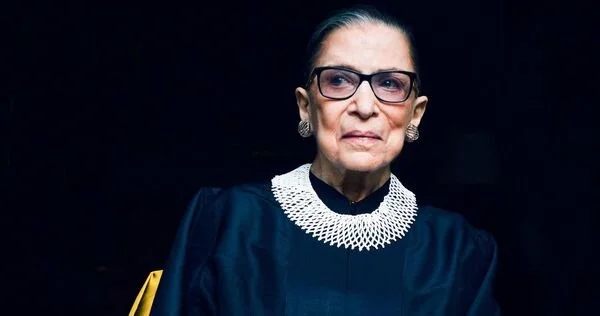
#262: The Glorious RBG

51eaff2cb7c3b417885ee3588aae93f6ac-09-RGB.1x.rsocial.w1200.jpg

I’m one of those people who believed that Ruth Bader Ginsburg would live forever. You too? When she died last Friday, I was in shock, even before I began to realize how her absence would shape our country’s politics over the next few months. Today’s issue is dedicated to her legacy. I welcome you to take in one of the pieces and appreciate the contribution she made to our nation.

If you’ve already read everything RBG-related, this week’s other articles — focusing on the voting trends of African Americans, the fight to remove a Confederate monument in Maryland, and the selfish inclinations of American universities — are also excellent. I hope you take a look, and please enjoy!

+ I’d love your help getting the word out about the newsletter. That’s why I’ve made this email template that you can modify and send to your friends and colleagues. Please try it out — it’s a little like magic!

The Glorious RBG

Long before people tattooed her face on their bodies or followed her exercise routine (push-ups and planks), and before her famous dissent — with corresponding collar — in Shelby County v. Holder (2013), Ruth Bader Ginsburg fought for the liberation of women and men. Arguing that gender discrimination violated the Fourteenth Amendment’s Equal Protection clause, Ms. Ginsburg believed that “there’s something wrong with that view of the world, a man’s world with a small space in it for a woman, relegated to her own confined corner.”

This tribute to RBG by Irin Carmon, author of Notorious RBG, succinctly captures the Justice’s personal and professional life, offering glimpses into her childhood, her triumphs at the Court, her husband’s love, and her favorite beverage at the opera. (10 min)

+ More RBG: Linda Greenhouse’s obituary, Nina Totenberg’s account of their friendship, and Ms. Ginsburg’s dissent in Shelby County (2013).

The Black Monolith

Black people vote overwhelmingly for Democrats, but that doesn’t mean they’re all liberal (far from) or that trends can’t change (they have before). In this well-written article, Theodore R. Johnson explains how Reconstruction, the Great Migration, the Voting Rights Act, and the Southern strategy contributed to what appears to be Black people’s monolithic voting patterns. “Why do a vast majority of Black Americans, despite our diverse politics, vote the same?” Mr. Johnson asks. ”Because our rights are always on the ballot.” (21 min)

+ This is a great article for Government teachers.

My Local Confederate Monument

At the county courthouse in Easton, Maryland, a small town not far from the birthplace of Frederick Douglass, a monument commemorating Confederate soldiers still stands, even though the state never seceded and the majority of residents want the memorial removed. Author Casey Cep, who grew up on the Eastern Shore, explains how white people in her community, especially those serving on the county council, do not consider themselves racist, find “diversity training” offensive, disagree with the Black Lives Matter movement, and believe that removing the monument would amount to erasing history. (20 min)

The End Of The University

This scathing critique of higher education argues that colleges care more about profit than access and suggests that public universities have prospered by embracing neoliberal privatization. “If we could create a world where Black students were free to learn at free universities,” author Justin Cook writes, “we would have created a world where everyone else was finally able to do so as well.” Mr. Cook makes a strong case that higher education is “a convoluted system of affirmative action for affluent white people,” but his solution to the problem does not seem viable to me. What do you think? (27 min)

Thank you very much for reading yet another issue of The Highlighter. Let me know what you thought by hitting reply or by clicking on the thumbs below. I’m grateful for your feedback. (If you’re advanced: Leave me a short voice message!)

Also, let’s welcome our community’s 4 new members: Mikeie, Rayaan, Josh, and Dave. (Thank you, Elizabeth, for your good word!) I hope that you find this newsletter a solid addition to your Thursday email inbox.

If you really like The Highlighter, please help it grow and get better. I appreciate your support. Here are a few ways you can help:

On the other hand, if this newsletter is cluttering your inbox, please unsubscribe. See you next Thursday at 9:10 am PT!

#261: Climate Migration Will Reshape America

20mag-Climate2-Images-facebookJumbo.jpg

Happy Thursday, loyal readers, and thank you for opening today’s newsletter. I appreciate your readership, whether you’re new to The Highlighter (hi Dorothy!) or not-so-new (hi Heidi!). This week’s lead article, which focuses on the climate crisis in our country, describes in detail how warming will result not only in more (un)natural disasters but also in mass migration of Americans.

If gloomy science isn’t for you, I recommend today’s other pieces, including a powerful personal essay by Jaquira Díaz, an illuminating look at the challenges of voting-by-mail, and a worrisome investigation into the surveillance of Black Lives Matter activists. Please enjoy. I hope that you’ll find at least one article that piques your curiosity, and have a great week!

+ Article Club is in its ninth month (already?), and I invite you to check it out if you want to read more deeply and connect with fellow loyal readers. This month, we’re discussing “I Went to Disney World” (#254) by Graeme Wood. Find out more information here.

+ Thank you for all the kind emails about last week’s issue. If you like the newsletter and want to leave a kind word, please do!

Climate Migration Will Reshape America

The eerie orange skies in the Bay Area, the catastrophic wildfires out West, and the devastating hurricanes in the South have left many of us paralyzed with despair about the severe effects of climate change. But the worst is yet to come. In this solemn article, environmental reporter Abrahm Lustgarten explains that within the next 20 years, 13 million Americans will migrate, mostly from the South, to escape the dangers of global warming. The poor and elderly will be left behind.

Some predictions: Buffalo will feel like Tempe; 700,000 people will leave the Bay Area, New York will build a $100 billion sea wall, many beaches will disappear; Phoenix and Atlanta won’t have enough water; we’ll have another Dust Bowl; and the housing market will collapse.

Despite that frightening forecast, not all is doom and gloom. About half of Americans, for example, now rank climate as a top priority, a huge increase since 2016. That trend extends to conservatives, with one in three now believing that global warming “should be declared a national emergency.” The question remains: Are we going to do anything about it? (27 min)

America Is In Crisis. But Some Of Us Have Never Known Any Different.

Jaquira Díaz: “I am the Black daughter of a white woman, which means that in my family tree there are colonizers as well as colonized people, and I carry this violence in my body. I see it in the mirror every day. Whether or not people read me as Black, I’m a racialized person: I’m Latina; my first language is Spanish; I have an accent. I’m also a gay woman with a white transmasculine fiancé. The truth is, some of us have never felt safe. Some of us have always been navigating systems of power and oppression in our homes, in our workplaces, in our schools, so we were not surprised by the last presidential election, because while some of America woke up to reality in November 2016, or even just last month, the rest of us have been waking up in this America since we were born or arrived here.” (8 min)

Here’s VIP Elise proudly drinking her inaugural tea with her fancy new Highlighter mug. (She receives extra points for having Malala and Paul Tough’s books in the background.) Are you secretly jealous?

The Democracy Factory

If voting-by-mail fails in November, it won’t be the fault of the U.S. Postal Service or incompetent state and local elections boards. According to Jesse Barron in this well-reported article, the problem lies not with government but with private corporations like Runbeck Election Services, a Phoenix-based ballot printer. Can they print the ballots fast enough? Will the $500,000, 20-foot-long W+D BB700-S2 inserter put the right ballots in the right envelopes? Will the AgilisDuo machine verify voter signatures correctly? Mr. Barron says maybe. (18 min)

How San Francisco Police Surveillance Closed In On BLM Protests

Next time you’re out and about in San Francisco, know that the police have access to 2,400 cameras if they think you’ve committed a crime. But thanks to the Surveillance Oversight and Transparency Ordinance, passed last year, city departments can’t introduce new methods of surveillance without following specific procedures. Unfortunately, that didn’t stop the Union Square Business Improvement District from giving the police unfettered access to its 375 cameras during the Black Lives Matter protests in June, causing some activists to have second thoughts about exercising their First Amendment rights. (8 min)

Thank you very much for reading yet another issue of The Highlighter. Let me know what you thought by hitting reply or by clicking on the thumbs below. I’m grateful for your feedback.

Also, let’s welcome our community’s 8 new readers: Water, Tobi, Anne, DW, Jacky, Leslie, Dorothy, and Lynette. (Thank you, Marcella, for getting the word out!) I hope that you find this newsletter a solid addition to your Thursday email inbox.

If you really like The Highlighter, please help it grow and get better. I appreciate your support. Here are a few ways you can help:

On the other hand, if this newsletter is cluttering your inbox, please unsubscribe. See you next Thursday at 9:10 am PT!

#260: Raising A Black Family In White America

index-1599249513.jpg

Let’s begin this edition with some gratitude. This week, I received several kind notes from you, thanking me for continuing to publish this newsletter every Thursday despite our wild times and orange skies. I won’t lie: I’ve thought once or twice about taking a week off. But it’s clear that reading helps me process what’s happening out there, plus it’s an honor to share my favorite articles with you. I’m extremely appreciative that you show up week after week, trusting me with your reading time. Thank you!

Now comes the part where I tell you that every single piece this week is outstanding (true), that I highly recommend the lead article by Ijeoma Oluo (especially if you’re a parent), that even if you’re not a science person, you’ll enjoy “State Of The Species” (so much new knowledge!), that Florida should concern you (obviously), and that, as Ta-Nehisi Coates emphasizes, high-quality writing is a rare gift. Thank you again for being a loyal reader, and please enjoy.

Raising A Black Family In White America

Ijeoma Oluo: “Inspired by my conversation with my 12-year-old son Marcus, I’ve spent more time lately listening to young activists. They have every reason to be far angrier than I am. And they are angry. But they are so much more than that. They have seen us struggle, and the price we’ve paid for that struggle; they have seen the fire go out in our eyes, and they still decide that they, too, will try to change the world. After more than four centuries of brutality and oppression, how amazing is yet another generation that demands revolution?

“What an unfathomable tragedy to meet this wonderful gift with apathy and resignation. We have the chance to help our children in ways broader society didn’t help us or those who came before us. To receive their fierce love with equally fierce respect. To use our dollars, our votes, and our voices to dismantle policies that seek to harm them. To honor their commitment to fighting for justice. To teach them the heritage of Black resistance. To ensure that they feel they are part of something so much larger than themselves. To make clear that their lives matter.” (13 min)

+ Want to read more by Ijeoma Oluo? Try Issues #97, #128, #171, #181, and #188. But first, read Ms. Oluo shatter Rachel Dolezal back in Issue #89.

State Of The Species

Don’t worry, loyal readers: This isn’t an apocalyptic look at climate change and how we’re all doomed. Rather, it’s one of the best articles that I’ve read on the history of humans and our remarkable success as a species. If you’re a novice scientist, like I am, you’ll love Charles Mann’s clear explanation of how Homo sapiens prospered, despite many challenges (e.g., body lice, supervolcanic eruptions), because of its unparalleled ability to adapt. We’re very good at keeping on going. The only problem? Most successful species kill themselves off. Will we be next? (37 min)

Who Gets To Vote In Florida?

Two years ago, Florida passed Amendment 4, which reinstated voting rights for ex-felons, who the state had previously disenfranchised for life. Soon after, however, the state legislature passed a law requiring ex-felons to pay outstanding fees and fines, thereby suppressing 750,000 potential voters, about half of whom are Black. “I want them to fight for it,” state senator Mike Bennett said. “Do you ever read the stories about the people in Africa — the people in the desert, who literally walk two and three hundred miles so they can have an opportunity to do what we do?” Potential voter Betty Riddle said, “Not all the Republicans are bad. But they don’t want us to vote. Because they think they’re going to lose.” (41 min)

+ For more on voting rights and voter suppression, check out Issues #3, #26, #61, #63, and #137.

Ta-Nehisi Coates, On Breonna Taylor

Always thoughtful, Ta-Nehisi Coates is outstanding in this conversation with Evan Ratliff, in which he discusses guest editing the September edition of Vanity Fair and centering the words of Tamika Palmer, the mother of Breonna Taylor, in the cover story, “A Beautiful Life.” “Good things take time,” Mr. Coates said, explaining his contribution to protest the killing of George Floyd. “You gotta let things cook. You can’t insta-bake something like this.” (49 min)

Thank you very much for reading yet another issue of The Highlighter. Let me know what you thought by hitting reply or by clicking on the thumbs below. I’m grateful for your feedback.

Also, let’s welcome our community’s 6 new readers: Biz, Mark, Stacy, and three great anonymous people. I hope that you find this newsletter a solid addition to your Thursday email inbox.

If you really like The Highlighter, please help it grow and get better. I appreciate your support. Here are a few ways you can help:

On the other hand, if this newsletter has not brought you value, or if it’s just not working for you at this time, please unsubscribe. See you next Thursday at 9:10 am PT!

#259: On Witness And Respair

Happy Thursday, loyal readers, and thank you for opening today’s issue of The Highlighter. Back in March, when the pandemic hit and we began sheltering in place, articles about the coronavirus flooded my feed, but few included the depth of writing and perspective worthy of our reading community. That trend has shifted lately, and this week’s two lead articles — “On Witness and Respair” and “What Happened In Room 10?” — approach the pandemic in different, touching, heartbreaking ways. Plus, I have a general rule to read whatever Jesmyn Ward writes, so even though her piece will likely make you cry, I recommend it nonetheless.

If crying isn’t your thing this week, skip right to the pet photo (for tears of joy), then to an article about teacher trafficking (tears of anger), then finally to a piece on the dilemma of Black bookstore owners (tears of some-emotion-in-between). As always, my hope is that you’ll find at least one article that speaks to you, and if you like, please reach out and let me know what you think. Have a great week!

On Witness And Respair

Jesmyn Ward: “My Beloved died in January. He was a foot taller than me and had large, beautiful dark eyes and dexterous, kind hands. He fixed me breakfast and pots of loose-leaf tea every morning. He cried at both of our children’s births, silently, tears glazing his face. Before I drove our children to school in the pale dawn light, he would put both hands on the top of his head and dance in the driveway to make the kids laugh. He was funny, quick-witted, and could inspire the kind of laughter that cramped my whole torso. He traveled with me often on business trips, carried our children in the back of lecture halls, watchful and quietly proud as I spoke to audiences, as I met readers and shook hands and signed books. He indulged my penchant for Christmas movies, for meandering trips through museums, even though he would have much preferred to be in a stadium somewhere, watching football. One of my favorite places in the world was beside him, under his warm arm, the color of deep, dark river water.” (10 min)

What Happened In Room 10?

At the Life Care Center of Kirkland, Washington, where the first American outbreak of the coronavirus killed 46 people, 85-year-old Twilla and 98-year-old Helen shared Room 10. This big, well-written article poignantly tells their story, revealing not only our lack of preparation for the pandemic but also our lack of care for the elderly, who account for more than a quarter of total COVID-related deaths. You’ll root for Helen, rage against the nursing home industry, and wonder why we’re so callous toward our country’s most vulnerable. (71 min)

Trafficking In Teachers

What do some school districts do when faced with a teacher shortage? Instead of increasing pay or improving working conditions, they recruit teachers from overseas, most notably the Philippines, partnering with shady companies with patriotic names, like Teach USA and Teach Quest USA. These agencies take advantage of the country’s J-1 “cultural exchange” visa program, promising teachers the American Dream while stiffing them with exorbitant fees, temporary work, and no pathway to citizenship. Some victims are going to court, arguing that the exploitation and abuse they faced constitutes human trafficking. (33 min)

Linking Allies To Action In The Heart Of The Black-Bookstore Boom

When former teacher Onikah Asamoa-Caesar first thought of opening Fulton Street Books & Coffee in Tulsa, Oklahoma, she dreamed of building a community-gathering space for Black people. But then white people started buying thousands of books, prompting Ms. Asamoa-Caesar to wonder whether her bookstore had become a “center of intellectual triage for white people.” Here’s the story of how a Black bookstore owner works toward realizing her long-term vision while navigating a short-term clientele. (11 min)

+ Reader Annotations: Last week’s article, “Un-Adopted,” sparked strong emotions, including this response from loyal reader and VIP Angelina:

The adoption and “re-homing” of a child from another country who has autism really rubbed me the wrong way. I caught another article a few weeks back about the Stauffers and was enraged. Ridiculous these people: Children are not animals!

Thank you for sharing your thoughts, Angelina. You make our reading community better. Loyal readers, if an article this week moved you, please feel free to reach out by hitting reply.

Too bad, you’ve reached the end. Thank you very much for reading yet another issue of The Highlighter. Let me know what you thought by hitting reply or by clicking on the thumbs below. I’m grateful for your feedback.

Also, let’s welcome our community’s 4 new readers: Meaghan, JW, Jonny, and Rachel. I hope that you find this newsletter a solid addition to your Thursday email inbox.

If you really like The Highlighter, please help it grow and get better. I appreciate your support. Here are a few ways you can help:

On the other hand, if this newsletter has not brought you value, or if it’s just not working for you at this time, please unsubscribe. See you next Thursday at 9:10 am PT!
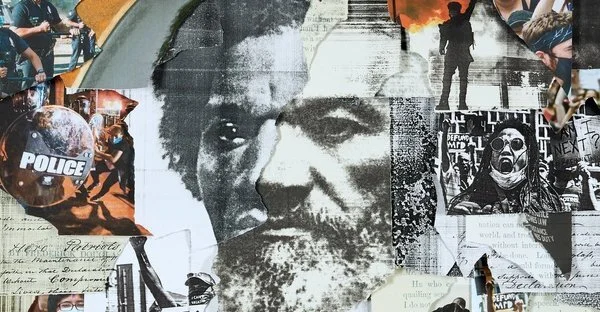
#258: A Beautiful Life

As August comes to a close, teachers are building relationships with their students from a distance, wildfires are ravaging California, the pandemic is claiming 1,000 lives a day, the police have shot another Black man in the back, and the officers who killed Breonna Taylor still do not face criminal charges.

This week’s lead article, “A Beautiful Life,” illuminates the life of Ms. Taylor, told from the perspective of her mother, Tamika Palmer, in a series of conversations with Ta-Nehisi Coates. You don’t need to be a mom to feel the enormity of the loss.

If that’s too much for you to bear, the rest of today’s issue is also outstanding, with articles on depression in the Black community, the rise of fat shaming during the pandemic, and the perils of white saviorism when mediated by YouTube. Hope you find an article or two to read, thank you again, let me know what you think, and have a great week!

A Beautiful Life

Tamika Palmer: “I have so many stories. I think about how I had to tell Breonna how to make chili a hundred times, and she would still call me when she would go to the store. She worked third shift. So she gets off of work at 7 in the morning, and of course I’m at work by then, because I start work at 4, 4:30 in the morning, you know? And so Breonna would be in the grocery store at 7 in the morning, calling my phone, and it would be funny because this is what my coworkers will remember the most about her—they always talked about Breonna in the grocery store, calling me like, Mama, what do I need to buy for chili? Blah, blah, blah. And I would say Breonna, can you write this down, because I don’t understand why I got to tell you this all the time. And she would say, I don’t need to write it down, I can just call my mama. My coworkers would just laugh. But she’d just say, I need to talk to my mama. And I’m like, Girrrll.” (29 min)

That Is Some White Folks’ Mess

In her Black, Southern family, author Kim McLarin learned that mental illness was reserved for white people. She writes, “White people had nervous breakdowns, black folks just got tired of shit. White people had anxiety, black folks had nerves. Black folks got the blues sometimes, but only white people got clinically depressed. White people listened to Prozac. Black folks listened to their mother, their pastor, and God.” In this outstanding, expansive essay, Ms. McLarin explores her life with depression and her relationship with Eshu, the trickster god of the Yoruba people. (29 min)

+ TW: Suicidal ideations and suicide notes.

Fat Shaming Shouldn’t Be Part Of Our “New Normal”

When the pandemic hit in March, many of us hoped that shelter-in-place would finally give us a chance to get in shape. Five months in, we’re eating cookies, wearing sweatpants, and skipping the scale. Rather than embracing our bodies and a few extra pounds, Erika Thorkelson has found the opposite is true, especially among poor and working-class women, shamed into believing that they have a moral duty to lose weight or die from the coronavirus. (14 min)

+ Click here for nine more great articles on dieting, body positivity, and fat shaming.

Un-Adopted: Why Did YouTubers Myka And James Stauffer Give Up Huxley?

If you’re a straight white Christian couple on YouTube, you gain followers as your family grows, and you get extra points if you adopt a child from overseas and then homeschool them. That recipe was working for Myka and James Stauffer, who amassed more than 1 million followers after recording the “Gotcha Day” of their son Huxley from China. But when Huxley grew combative and was diagnosed with autism spectrum disorder level three, the Stauffers changed course, giving Huxley up, no longer “so excited to open our hearts and see what the Good Lord has in store for us.” (26 min)

Did you read all the articles? Hope so. Thank you very much for reading yet another issue of The Highlighter. Let me know what you thought by hitting reply or by clicking on the thumbs below. I’m grateful for your feedback.

Also, let’s welcome our community’s 2 new members: Lieba and Fiona. (Big thanks to Phillippe for the referral.) I hope that you find this newsletter a solid addition to your Thursday email inbox.

If you really like The Highlighter, please help it grow and get better. I appreciate your support. Here are a few ways you can help:

On the other hand, if you’ve given this newsletter a chance, but it’s just not a part of your weekly reading routine, please unsubscribe. See you next Thursday at 9:10 am PT!

#257: The Douglass Republic

93970cf60ea03fec8b124687381e4145d9c16319.jpeg

Happy Thursday, loyal readers, and welcome especially to the newer members of our reading community who have decided to give this newsletter a try. I hope it’s a good match for you.

As summer ends and school begins, support for Black Lives Matter has started to wane, particularly among white people. As Tre Johnson pointed out in Issue #250, Black people “know what happens next.” White people disengage, apologize for missing antiracist book club meetings, and return to prioritizing their comfort. (Evidence: The Democratic National Convention.)

This week’s lead article, “The Douglass Republic,” encourages activists to take on the “robust skepticism” and “disciplined aloofness” of abolitionist Frederick Douglass, while making sure always to call out the delusion of white supremacy.

If Mr. Douglass doesn’t intrigue you, I also recommend today’s three other articles, which explore the challenges of giving birth as a Black woman, the legacy of restrictive racial covenants on segregation in the Bay Area, and the ineffectiveness of the prison system to do anything besides punishing people we don’t care about. Please read as much as you like, and as always, share with me your thoughts!

The Douglass Republic

After the passage of the 1870 Civil Rights Act, Frederick Douglass warned Black people not to get caught up in hope and a “delirium of enthusiasm.” A triumph today could turn into a backlash tomorrow. Mr. Douglass knew that “power concedes nothing without a demand” and that “if there is no struggle, there is no progress.” In other words, white people may temporarily give up some power, but long-lasting change and true equality do not come easily.

In this well-written article, Jabari Asim worries that our country may see a pendulum shift that negates the progress made this summer. Prof. Asim writes, “Robert E. Lee’s stone-carved likeness might be lying face down in the street, but the customs and beliefs he embodied are far sturdier.” Once white people stop buying up all the anti-racism books, what’s next? Things will go back to normal, Prof. Asim suggests, unless activists take up the pathos of Mr. Douglass and expose American hypocrisy, challenge myths of exceptionalism, and spit indignant fire. (18 min)

A Litany For Survival: Giving Birth As A Black Woman In America

Naomi Jackson: “Having a Black child in America has always been an act of faith. In the antebellum South, one in every two children born to an enslaved woman was stillborn or died within a year. If they lived, the babies were often sold away from their mothers. Still today, we worry that our children will not survive. The gap between infant mortality rates for Black and white babies is wider now than it was during slavery. But our children are not the only ones in danger. As I began seriously considering having a child, I started to read more about the risks that pregnancy poses to Black women in the United States. Black women are three to four times more likely to die than white women, regardless of income or education. If a doctor doubted Serena Williams when she recognized the symptoms of blood clots, which she had experienced before, how would a Black woman without the protection of celebrity fare?” (19 min)

The Black Lives Next Door

Sophia Heath is a white teenager and activist who organized a large Black Lives Matter demonstration last June in her hometown of San Mateo, a suburb of the Bay Area. Now she wants to know why her Hillsdale neighborhood is so white and why only 1 percent of her high school peers are Black. She finds out that the 1941 deed to her family home included a racial covenant that restricted people of color from purchasing homes in the neighborhood. Even though those covenants have been unconstitutional since 1948, their harmful effects remain, causing a legacy of segregation. The question is, What’s the way to repair the harm? Historian Richard Rothstein has an idea. (9 min)

Did Prisons Ever Work?

If the purpose of prisons is to punish people we don’t like at an extraordinarily high price, then yes, prisons work fine. But if the point is to reduce crime or to rehabilitate people to be better, then the answer is no way. Lauren McKeon explores the history of women’s prisons in Canada, arguing that most women get locked up not because of violent crime but rather as a result of domestic violence, drug addiction, or living on the street. Ms. McKeon calls for an immediate moratorium on the building of new prisons, followed by stages of decarceration and excarceration. (22 min)

Did you read all the articles? Hope so. Thank you very much for reading yet another issue of The Highlighter. Let me know what you thought by hitting reply or by clicking on the thumbs below. I appreciate your feedback.

Also, let’s welcome our community’s 6 new members: Will, WW, Kelly, Juan, Rishi, and Jonathon. I hope that you find this newsletter a solid addition to your Thursday email inbox.

If you really like The Highlighter, please help it grow and get better. I appreciate your support. Here are a few ways you can help:

  • Forward today’s issue to a friend and urge them to subscribe. Word of mouth is the best way to grow our community.

  • Keep my reading energy nice and high by buying me a cookie. Big thanks to an anonymous donor for your 3 cookies.

  • Support the newsletter’s growth by becoming a VIP member. Big thanks to Lois for joining the esteemed club.

On the other hand, if you’ve given this newsletter a chance, but it’s just not a part of your weekly reading routine, please unsubscribe. See you next Thursday at 9:10 am PT!

#256: The Unraveling Of America

Happy Thursday, loyal readers! Are you as busy this week as I am? This year’s start of school has reminded me of my beginning-teacher days, when all was new and not easy. But I’m happy to report that the weekend is in sight, which means more time to read and relax.

This week’s lead article — about how the coronavirus marks the end of the American era — certainly won’t buoy your spirits or make you feel better about the state of our country. But I highly recommend the piece, most notably in how it builds on Ibram X. Kendi’s brilliant essay from last week about the power of American denial.

If reading about our nation’s demise doesn’t sound appealing to you, skip the lead article and head straight to an interview with Stacey Abrams, a photo of an adorable puppy, a criticism of white allies, and a podcast on the state of reading instruction. Enjoy!

+ Join us at Article Club this month as we read and discuss “Going The Distance (And Beyond) To Catch Marathon Cheaters.” Author Gordy Megroz will be answering our questions in a podcast episode, and we’ll gather on August 30 to share our thoughts. If you like connecting with other thoughtful readers, Article Club is your place.

The Unraveling Of America

Wade Davis: “In a dark season of pestilence, COVID has reduced to tatters the illusion of American exceptionalism. At the height of the crisis, with more than 2,000 dying each day, Americans found themselves members of a failed state, ruled by a dysfunctional and incompetent government largely responsible for death rates that added a tragic coda to America’s claim to supremacy in the world.

As they stare into the mirror and perceive only the myth of their exceptionalism, Americans remain almost bizarrely incapable of seeing what has actually become of their country.

The republic that defined the free flow of information as the life blood of democracy, today ranks 45th among nations when it comes to press freedom. In a land that once welcomed the huddled masses of the world, more people today favor building a wall along the southern border than supporting health care and protection for the undocumented mothers and children arriving in desperation at its doors. In a complete abandonment of the collective good, U.S. laws define freedom as an individual’s inalienable right to own a personal arsenal of weaponry, a natural entitlement that trumps even the safety of children.” (19 min)

+ Thank you to Article Clubber Kati for sending this article my way.

“You Can’t Give Up The Power You Have Trying To Get The Power You Want.”

Stacey Abrams: “This is a nation built on voter suppression. When we started, white men who owned land could vote. If you were Black, you were a slave. If you were a woman, you were supposed to be silent. If you were Native American, you were invisible. Then in 1790 we decided to shut the gates and say no one else can come in. So we’ve spent 230 years trying to reclaim the promise that was in our Declaration of Independence, this promise of equality. But we can only reclaim it if we have the power of the vote.” (22 min)

The Black Lives Matter Movement Hits A Different Kind Wall: White Allies

Robin Givhan: “An ally? This modest, bland word feels inadequate to the breadth and complexity of what it means. An ally isn’t more capable or experienced or exceptional. An ally simply recognizes that we’re like Venn diagrams with overlapping commonalities. An ally is just another human being muddling through life, trying to be decent. Giving them a title is a bit like awarding them a gold sticker just for seeing the humanity in their neighbor.” (8 min)

What The Words Say

On average, young people who read well tend to do better in school, get in less trouble, make more money, and live longer. That’s why, every August, education reporter Emily Hanford writes another documentary about the state of reading instruction, reminding us that we’re horrible at it, and letting us know that phonics is the only way to go. (51 min)

+ Two years ago, Ms. Hanford shared her thoughts on The Highlighter Podcast. Please take a listen!

Thank you very much for reading yet another issue of The Highlighter. Let me know what you thought by hitting reply or by clicking on the thumbs below. I appreciate your feedback.

Also, let’s welcome our community’s 10 new members: Robert, Mat, Laura, Ted, and 6 others whose first names I couldn’t decipher from their emails. (Feel free to say hi!) I hope that you find this newsletter a solid addition to your Thursday email inbox.

If you really like The Highlighter, please help it grow and get better. I appreciate your support. Here are a few ways you can help:

  • Forward today’s issue to a friend and urge them to subscribe. Big thanks to Lynn for sharing last week’s issue.

  • Keep my reading energy nice and high by buying me a cookie. Big thanks to Charlie, Beth, and Jennifer — your eight cookies last week were very delicious.

  • Support the newsletter’s growth by becoming a VIP member. Big thanks to Ariel and Jamie for joining the esteemed club.

On the other hand, if you’ve given this newsletter a chance, but it’s just not a part of your weekly reading routine, please unsubscribe. See you next Thursday at 9:10 am PT!

#255: American Denial

Happy Thursday, loyal readers! Especially when work is busy (definitely true this week), I look forward to carving out time to read, reflect, and share thought-provoking articles with you. I’m appreciative of this reading community — whether you joined this month, or five years ago, or anywhere in between.

I couldn’t decide which article should lead this week’s issue, so if you have time, I recommend that you read both. “The Power of American Denial” and “America’s Untouchables” talk to each other, exploring our country’s choice not to reckon with the systemic white supremacy and anti-Blackness right in front of our faces.

Also, don’t forget about the two articles (focusing on TikTok and policing) after the adorable puppy photo (thanks, Erin). They’re worth your time, too. As always, I hope at least one article resonates with you, and if it does, please hit reply and tell me what you think. Have a great week!

The Power Of American Denial

Ibram X. Kendi: “On racial matters, the United States could just as accurately be described as a land in denial. It has been a massacring nation that said it cherished life, a slaveholding nation that claimed it valued liberty, a hierarchal nation that declared it valued equality, a disenfranchising nation that branded itself a democracy, a segregated nation that styled itself separate but equal, an excluding nation that boasted of opportunity for all. A nation is what it does, not what it originally claimed it would be. Often, a nation is precisely what it denies itself to be. Donald Trump has revealed the depths of the country’s prejudice—and has inadvertently forced a reckoning.

The abolition of slavery seemed as impossible in the 1850s as equality seems today. But just as the abolitionists of the 1850s demanded the immediate eradication of slavery, immediate equality must be the demand today. Abolish police violence. Abolish mass incarceration. Abolish the racial wealth gap and the gap in school funding. Abolish barriers to citizenship. Abolish voter suppression. Abolish health disparities. Not in 20 years. Not in 10 years. Now.” (20 min)

America’s Untouchables

Isabel Wilkerson: “As we go about our daily lives, caste is the wordless usher in a darkened theatre, the flashlight cast down the aisles, guiding us to our assigned seats for a performance. The hierarchy of caste is not about feelings or morality. It is about power: which groups have it and which do not. It is about resources: which caste is seen as worthy of them, and which are not; who gets to acquire and control them, and who does not. It is about respect, authority and assumptions of competence: who is accorded these, and who is not. In the American caste system, the signal of rank is what we call race, the division of humans on the basis of their appearance. In the United States, race is the primary tool and the visible decoy for caste.” (16 min)

TikTok And The Evolution Of Digital Blackface

Jason Parham: “As a Black man, my relationship to images is fraught. Fraught in the sense that, if images speak our humanness into being, if they tell us how we are made visible to ourselves and to others, it is also a language that is often used against us: as surveillance, as documentation, through grainy smartphone cameras as figures of unwant. This is America, after all, where Black humanity has barely been recognized.” (27 min)

A Police Officer’s Worst-Case Scenario

As appeals to defund the police have grown stronger, a question remains about how best to support people experiencing mental illness. In this nuanced article by Hannah Dreier, certainly the answer is not more police de-escalation training. But what should happen in the time before social workers replace police officers? In other words, what should happen now, when Thomas Parker, an officer in Huntsville, Alabama, receives his next call? (20 min)

+ This is Ms. Dreier’s third article featured in The Highlighter. Want more? Check out #138 and #163.

Thank you very much for reading yet another issue of The Highlighter. Let me know what you thought by hitting reply or by clicking on the thumbs below.

Also, let’s welcome our community’s 3 new members: Evan, Robert, and Kelly. I hope that you find this newsletter a solid addition to your Thursday email inbox.

If you really like The Highlighter, please help it grow and get better. I appreciate your support. Here are a few ways you can help:

On the other hand, if you’ve given this newsletter a chance, but it’s just not a part of your weekly reading routine, please unsubscribe. See you next Thursday at 9:10 am PT!

#254: Nice White Parents

We’re almost in August, loyal readers, which means that school’s around the corner again. How did that happen? I don’t know about you, but for me, this year’s version of summer was the shortest in recorded history. For all you educators out there, I wish you every morsel of rest (and reading!) before heading back.

Leading this week’s issue is the first episode of “Nice White Parents,” the much-hyped podcast by Serial Productions that dropped this morning. I got up early to take a listen and recommend the piece to white parents and white educators.

If listening isn’t your thing, the other three pieces in today’s issue are also worth your attention. They explore the common theme of community — who’s in vs. who’s out, and in the case of John Lewis, how to make our community a better one. Please enjoy them and let me know your thoughts!

+ Tonight at 5 pm PT, loyal reader Telannia (please see her photo and bio below) and I are facilitating a discussion on “What Is Owed,” the brilliant article on reparations by Nikole Hannah-Jones. If you’ve read the piece and want to talk about it, hit reply, and I’ll send you the Zoom link. We’re both looking forward to a thoughtful conversation. Hope you’ll make it!

Nice White Parents

I still remember a Back to School Night in San Francisco, early in my teaching career, when I thought it would be a good idea, after concluding my presentation, to open the floor for questions. In a room of 40 parents, all but two Black or Brown, a white woman in the back of the room raised her hand, looked around and then at me, and asked, “What are you going to do to help my child in this classroom?”

Hosted by the outstanding Chana Joffe-Walt, “Nice White Parents” explores how liberal white parents may mean well but ultimately wield their power toward selfish ends, taking over schools, hoarding resources for their children, and exacerbating inequities.

“When we look for what’s broken, for how our schools are failing, we focus on who they’re failing — poor kids, Black kids, and Brown kids. We ask, ‘Why aren’t they performing better? Why aren’t they achieving more?’ Those are not the right questions. There’s a powerful force that is shaping our public schools — arguably, the most powerful force. It’s there even when we pretend not to notice it. If you want to understand why our schools aren’t better, that’s where you have to look. You have to look at white parents.” (62 min)

+ Also by Ms. Joffe-Walt: “LaDonna” and “The Problem We All Live With.”

Together, You Can Redeem The Soul Of Our Nation

John Lewis: “Emmett Till was my George Floyd. He was my Rayshard Brooks, Sandra Bland, and Breonna Taylor. He was 14 when he was killed, and I was only 15 years old at the time. I will never ever forget the moment when it became so clear that he could easily have been me.

When historians pick up their pens to write the story of the 21st century, let them say that it was your generation who laid down the heavy burdens of hate at last and that peace finally triumphed over violence, aggression, and war. So I say to you, walk with the wind, brothers and sisters, and let the spirit of peace and the power of everlasting love be your guide.” (4 min)

After The Reading

After a poetry reading, Gary Jackson sips wine and tries to make small talk with two women eager to tell him that racial relations have improved and how “it doesn’t matter what color anyone is as long as you’re willing to listen.” Sensing awkwardness in the conversation, a third woman saves the day, steering the conversation back to the art and reminding Mr. Jackson that “everything’s always been this awful, but it’s getting better.” (2 min)

Disney World During The Pandemic Is Extremely Weird

“I should admit,” Graeme Wood writes, “that a Disney vacation, even in pre-coronavirus conditions, sounds to me like the most elaborate way to have a miserable time yet invented by humankind.” But in this hilarious, well-written article, Mr. Wood discovers that the Magic Kingdom, despite its problems, serves as a benevolent authoritarian regime, satisfying its obedient subjects, who don’t mind the constant surveillance and the $11 corn dogs. Maybe this is better governance than what’s outside Disney’s walls? (26 min)

+ Reader Annotations: Several of you listened to last week’s outstanding podcast with Bryan Stevenson. (Thank you.) Here’s what loyal reader Lisa had to say:

Stevenson’s interview was profound. I’ve had a Post-It on my monitor all summer that says “liberation.” It is the filter through which I move my decisions and thoughts. They are either liberating me and others or they are not. Period. But the most moving idea in the podcast was the imperative of truth telling. There is no beauty, no liberation, no healing without it.

Thank you very much, Lisa, for your thoughtful contribution. Loyal readers, if an article in this newsletter moves you, by all means, hit reply and let me know.

Thank you very much for reading yet another issue of The Highlighter. Let me know what you thought by hitting reply or by clicking on the thumbs below.

Also, let’s welcome our community’s 4 new members: David, Janna, Galiullina, and Feroze. I hope that you find this newsletter a solid addition to your Thursday email inbox.

If you really like The Highlighter, please help it grow and get better. I appreciate your support. Here are a few ways you can help:

On the other hand, if you’ve given this newsletter a chance, but it’s just not a part of your weekly reading routine, please unsubscribe. See you next Thursday at 9:10 am PT!

#253: An American Founder

original.png

John Lewis died this week. He’s an inspiration to me not only because of his courage but also because of his clarity of purpose. “Freedom is not a state; it is an act,” he said. “It is not some enchanted garden perched high on a distant plateau where we can finally sit down and rest. Freedom is the continuous action we all must take.” Most of all, I’m moved by his unwavering hopefulness and his pride in young Black Lives Matter protesters, who he said “are going to help redeem the soul of America.” This week’s lead article is a tribute to Mr. Lewis. Please read it if you can.

The other three pieces in today’s issue — about how America can heal from its racism, whether antiracism trainings are effective, and whether the left’s cancel culture prevents open discourse — are also thought provoking and worth your time. Go ahead: Read (or listen to!) one or more of them, and then share with me your thoughts.

+ Loyal reader Telannia and I want to invite you to a discussion of “What Is Owed,” by Nikole Hannah-Jones, next Thursday, July 30, 5-6 pm PT. If you’re interested, hit reply, let me know you’re in, and I’ll give you more details, including the Zoom link and how to prepare. Telannia and I are looking forward to seeing you there for a thoughtful discussion of American history and the role of reparations to achieve true justice and equality.

John Lewis Was An American Founder

Many of us think of John Lewis and C. T. Vivian and other civil rights leaders as champions for justice and equality for oppressed and marginalized Americans. But writer Adam Serwer makes things plain: Without Mr. Lewis and his peers, the United States would still be a white republic, designed by law and violence to disenfranchise and subjugate Black people.

In this way, Mr. Serwer writes, we should consider Mr. Lewis and Mr. Vivian as founders of the Third American Republic, the first true attempt to apply the promises of the Declaration of Independence in order to build an interracial democracy.

Mr. Lewis’s words at the March on Washington ring true now as they did back in 1963. “We do not want our freedom gradually, but we want to be free now! We are tired. We are tired of being beaten by policemen. We are tired of seeing our people locked up in jail over and over again. And then you holler, ‘Be patient.’ How long can we be patient? We want our freedom and we want it now.” (8 min)

How American Can Heal: Bryan Stevenson on The Ezra Klein Show

In case you’re a new subscriber, yes, I’m a huge fan of Bryan Stevenson, and yes, Just Mercy should be required reading (and viewing) for all Americans. In this interview, Mr. Stevenson argues that the only way we as Americans can cleanse ourselves of the legacy of slavery is to tell the complete truth and to engage in deep reconciliation. Part of that process, he says, is to dismantle dishonorable monuments and to defund the police. (81 min)

+ If you listen to the whole piece, please reply and let me know which part you found most inspiring.

Does Antiracism Training Work?

Now that every white person has read Robin DiAngelo’s White Fragility and attended Glenn Singleton’s Courageous Conversation training, racism is on a precipitous decline, right? Not according to Harvard sociologist Frank Dobbin, who argues that antiracist workshops can backfire, activating stereotypes, re-traumatizing people of color, and doing little to advance equity. One reason for their failure, according to Mr. Singleton: They’re not aggressive enough. (38 min)

+ For a nuanced critique of Ms. DiAngelo’s work, read “The Limits Of White Fragility,” by Lauren Michele Jackson, featured in Issue #209.

Cancel Culture And The Willful Blindness of Reactionary Liberalism

I grew up believing in free speech, the marketplace of ideas, and the promise of liberalism. But the recent complaints about cancel culture do not adequately acknowledge that current notions of open debate do not allow all voices to participate equally. In this well-written article, Osita Nwanevu makes the case that conservatives who call progressives illiberal may not appreciate the associative freedom of groups to unite to promote individual rights. Or maybe it’s just that they don’t want to face the consequences of their speech. (23 min)

I am very grateful that you’ve completed yet another issue of The Highlighter. Thank you for reading it. Let me know what you thought by hitting reply or by clicking on the thumbs below.

Also, let’s welcome our community’s 7 new members: Eric, Charles, Nikki, Marcella, Heidi, Tom, and one other great person. I hope that you find this newsletter a solid addition to your Thursday email inbox.

If you really like The Highlighter, please help it grow and get better. I appreciate your support. Here are a few ways you can help:

On the other hand, if you’ve given this newsletter a chance, but it’s just not a part of your weekly reading routine, please unsubscribe. See you next Thursday at 9:10 am PT!