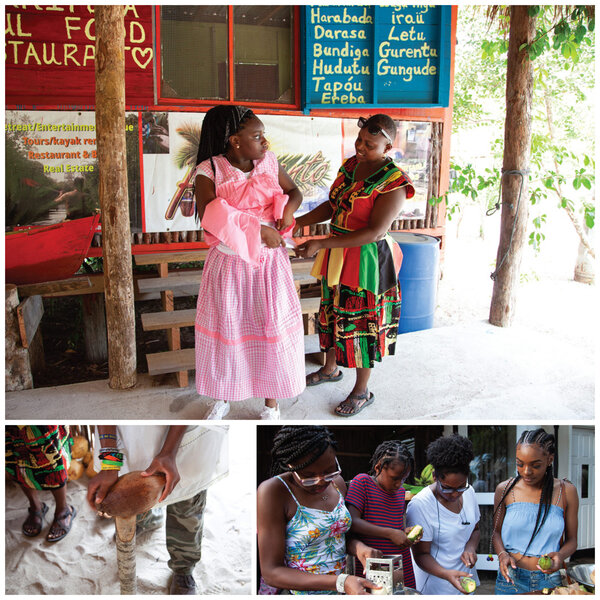
#252: The Test of Their Lives

Hi loyal readers, and thank you for opening today’s issue of The Highlighter. Unless you live off the grid, which lately has become more appealing to me, you couldn’t escape news stories this week debating whether teachers should return to school next month. It’s a fair and important question. But I noticed fewer stories in my feed that included the experiences of students. This week’s lead article, “The Test Of Their Lives,” tells the story of four San Francisco high school students and how they navigated distance learning in the Spring. No, the piece won’t magically give us the answers to our current questions. But it might offer perspective and help to keep young people at the center as we make key decisions.

Also in this week’s issue, you’ll find articles on the dangers of facial recognition technology and the benefits of having authentic conversations with voters. And if you happen to be in the mood for listening over reading, give the “This Land” podcast a chance. I think you’ll appreciate it.

+ I’d love to hear from you — especially if we’ve never met or you’ve never shared your thoughts before. If an article or podcast resonated with you, please let me know. All you need to do is hit reply!

The Test Of Their Lives

As Los Angeles, Houston, and other major districts have decided to begin the school year in distance learning, this touching profile of four students at Burton High School in San Francisco and their quest last Spring to pass the AP World History examination reminded me of the resilience of young people and the massive challenges that they face. On what motivates him to persist, student Jonathan Tran says, “I want my baby sister to grow up without any stress, without having to move because we’re pretty close to being homeless — anything like that, I want to shield her from.”

Without treading too far down the saviorism path, education reporter Laura Meckler credits teacher Eirik Nielsen’s resolve as well. He presents rigorous lessons, maintains high expectations, and doesn’t let distance learning get in the way of his commitment to students. (23 min)

Defund Facial Recognition Now

Malkia Devich-Cyril: “Black faces have long been considered a threat by American law enforcement. It’s discomforting, even dystopian, to think that when I step out of my home to exercise my constitutional right to protest, I will encounter a system that seems hell-bent on ending my life. My Black face can be identified, verified, and tracked without my consent or knowledge. My mother survived the surveillance of the FBI’s counterintelligence program as a civil-rights activist in the 1960s. As a second-generation Black activist, I’m tired of being spied on by the police.” (17 min)

This Land

For more than a year, this podcast series had languished in my queue, beckoning me to listen. But last week’s landmark Supreme Court decisionMcGirt v. Oklahoma, finally got me unstuck, and I immediately binge-listened its eight episodes. What seems at first glance a simple story of a murder case becomes an inquiry into the long-standing treaty rights of five Native American tribes — and nearly half of Oklahoma. Host Rebecca Nagle, a citizen of Cherokee Nation, does a great job telling the story. (~240 min)

The Only Way To Change A Voter’s Mind

Most political scientists agree that the way to win elections is by mobilizing your base. There’s no point in trying to woo swing voters, because for the most part, nobody actually switches sides. But Aaron Vasquez and other advocates of “deep canvassing” believe that listening to people (without judgment) and telling personal and vulnerable stories (skip the facts, please) can make a difference, especially in local elections, and particularly in rural environments. (16 min)

+ What do you think? Is this method better than registering new voters and urging them to the polls?

Reader Annotations: VIP member Phoebe was pleased that Viet Thanh Nguyen’s essay led last week’s newsletter and shared these thoughts:

Asian Americans usually don’t figure into the greater discussion of race in America. As an Asian American, I always struggle with finding my place in the race discussion, and it has been particularly difficult this year. First came the increasingly overt anti-Asian sentiment that was especially unleashed by Covid, and then the complicated jumble of feelings about where I fit into the discussion of racism in America after George Floyd was killed. Viet Thanh Nguyen’s article was the best articulation that I’ve read about those complicated feelings. Thanks for highlighting it!

Thank you for sharing your reflection, Phoebe. Loyal readers, if an article this week resonated with you, go ahead, please tell me about it. All you need to do is hit reply!

I am appreciative that you have read yet another issue of The Highlighter. Thank you for reading it. Let me know what you thought by hitting reply or by clicking on the thumbs below.

Also, let’s welcome our community’s 10 new members: HollyKumaraKevinElizabethMirandaMikellTomTyler, and two other great people. I hope that you find this newsletter a solid addition to your Thursday email inbox.

If you really like The Highlighter, please help it grow and get better. I appreciate your support. Here are a few ways you can help:

On the other hand, if you’ve given this newsletter a chance, but it’s just not a part of your weekly reading routine, please unsubscribe. See you next Thursday at 9:10 am PT!

#251: The Model Minority Myth Hurts Us All

anti-asian-racism-america-featured-image.jpg

For the third week in a row, last week’s issue was the most popular in The Highlighter’s history, thanks to your strong readership. Thank you for opening the newsletter every week and trusting me to suggest thought-provoking articles to read.

Today’s selections are definitely worth your time and attention. In this week’s lead article, author Viet Thanh Nguyen argues that the model minority myth hurts not only Asian Americans but everyone. The next two pieces — about the killing of Ahmaud Arbery and a protest in Bethel, Ohio — offer opposing perspectives of the Black Lives Matter movement. Finally, a feature on dollar stores reminds us what happens when capitalism intersects with race and poverty. My hope is that you’ll read at least one article this week and then share with me your thoughts.

+ This month’s Article Club selection is “Jerry and Marge Go Large,” one of the best articles of 2018. Writer Jason Fagone captures the joy and spirit of two savvy retirees as they game the lottery to win millions. You can find out more info and sign up here.

The Model Minority Myth Hurts Us All

In this nuanced, thought-provoking essay, Pulitzer Prize-winning author Viet Thanh Nguyen reflects on being Asian American in the time of coronavirus and nationwide protests against police brutality. The model minority myth traps Asian Americans into pursuing the American Dream, and thereby aligning with white supremacy culture, while remaining inextricably foreign and vulnerable to xenophobia. “Throughout Asian-American history,” Mr. Nguyen writes, Asian immigrants and their descendants have been offered the opportunity by both Black people and white people to choose sides in the Black-white racial divide, and we have far too often chosen the white side.”

Still, Mr. Nguyen acknowledges the racism and violence against Asian Americans, how capitalism pits Asian Americans of different ethnicities against each other, how immigration policies targeted and discriminated against Asians, and how the wars of American imperialism resulted in devastation. If seeking the American Dream means being seen as the other, and reaching it means seeing fellow Americans as the other, then maybe it’s not a dream worth chasing in the first place. (25 min)

+ Thank you to VIP member Phoebe for suggesting this article. Do you have a great article for our reading community? Send it my way!

Ahmaud Arbery Will Not Be Erased

David Dennis Jr.: “Black people disappear in America. This fact is woven into the fabric of our country. Parents are separated from their children at slave auctions, never to be seen by them again. A loved one is here one day and turns up in the Jim Crow woods the next, dangling from trees under the cover of nightfall and inhumanity. Ahmaud Arbery left his house on February 23 to go for a run, as the 25-year-old former high school football star was known to do. In the middle of that run, he became one of those bodies. Ahmaud was in the middle-class Satilla Shores neighborhood, on a winding road under the cover of Spanish moss that hung from trees like history. It’s the type of road Black bodies disappear into.” (19 min)

In case you haven’t seen it yet, here’s Frederick Douglass’s famous speech, “What To The Slave Is The Fourth Of July?” read by his descendants. It’s powerful. (7 min)

You Can’t Bring This Into Our Town: How A BLM Protest In Ohio Turned Ugly

Everyone in the village of Bethel, Ohio, loves second grade teacher Lois Dennis. That is, they loved her — until she participated in a Black Lives Matter demonstration with her daughter last month. The town of 2,800 mostly white residents turned on her, claiming that Bethel isn’t racist and doesn’t need to examine its values. For this working-class, Trump-voting community, white privilege doesn’t exist and BLM amounts to reverse racism. (26 min)

+ Read more by Anne Helen Petersen on millennial burnoutcollege debt, and farmhouse-chic.

The True Cost Of Dollar Stores

Discount stores are thriving, particularly in poor areas, which Walmart and Target won’t serve. But this outstanding piece by Alec MacGillis explains how dollar stores contribute to economic distress rather than mitigating it, especially in working-class Black communities. Keeping prices down means poor working conditions, low wages, and worst of all, high rates of robbery and murder. When you go to work, Jolanda Woods says, you shouldn’t have to risk your life. (28 min)

Congratulations, you’ve done it again! You’ve reached the end of this week’s newsletter. Thank you for reading it. Let me know what you thought by hitting reply or by clicking on the thumbs below.

Also, let’s welcome our community’s 22 new members: BethEmilyMattGraceHeatherFrankJordanTaliGwynSari JaneKara, and 11 other great people. I hope that you find this newsletter a solid addition to your Thursday email inbox.

If you really like The Highlighter, please help it grow and get better. I appreciate your support. Here are a few ways you can help:

On the other hand, if this newsletter is reminding you that you don’t really read much anymore, and you don’t like that feeling, please unsubscribe. See you next Thursday at 9:10 am PT!

#250: My Body Is A Confederate Monument

Just like that, we’ve reached the 250th issue of The Highlighter. Loyal readers, thank you for your support and your thoughtful contributions to our reading community. Together we’ve built something meaningful, don’t you think?

Last week’s issue broke another reading record. The lead article, “What Is Owed,” got shared hundreds of times and led many of you to reach out to brainstorm possible action steps.

This week’s issue is another strong one. All four articles are worthy of your attention and reflection, but the first two are phenomenal. Today’s lead essay, “My Body Is A Confederate Monument,” by Caroline Randall Williams, is a masterpiece. The second, “America’s Enduring Caste System,” by Isabel Wilkerson, is also beautifully written, offering a powerful and possibly different way for people to understand anti-Blackness and systemic racism.

Please get into these and the other two articles and let me know what you think. Onward to another 250 issues!

My Body Is A Confederate Monument

Caroline Randall Williams: “I have rape-colored skin. My light-brown-blackness is a living testament to the rules, the practices, the causes of the Old South. If there are those who want to remember the legacy of the Confederacy, if they want monuments, well, then, my body is a monument. My skin is a monument.” (5 min)

America’s Enduring Caste System

Isabel Wilkerson: “Caste is the granting or withholding of respect, status, honor, attention, privileges, resources, benefit of the doubt and human kindness to someone on the basis of their perceived rank or standing in the hierarchy. Caste is insidious and therefore powerful because it is not hatred; it is not necessarily personal. It is the worn grooves of comforting routines and unthinking expectations, patterns of a social order that have been in place for so long that it looks like the natural order of things. Caste, along with its faithful servant race, is an X-factor in most any American equation, and any answer one might ever come up with to address our current challenges is flawed without it.” (52 min)

+ Ms. Wilkerson is the recipient of the Pulitzer Prize and author of one of my favorite books, The Warmth of Other Suns.

The Long Walk

When the Hillsboro City School District in Ohio refused to integrate after the Brown v. Board of Education decision, Gertrude Clemons, Imogene Curtis, and other Black mothers walked their children every morning to the city’s better-resourced elementary schools. Day after day, school officials turned them away. But eighteen months and several court cases later, the group of mothers triumphed, when the district relented to the pressure. “They taught their children to keep going,” Sarah Stankorb writes. “They taught them to know when the walk is not yet done.” (51 min)

When Black People Are In Pain, White People Just Join Book Clubs

Tre Johnson: “When things get real — really murderous, really tragic, really violent or aggressive — my white, liberal, educated friends already know what to do. What they do is read. And talk about their reading. What they do is listen. And talk about how they listened. What they do is never enough. This isn’t the time to circle up with other white people and discuss black pain in the abstract; it’s the time to acknowledge and examine the pain they’ve personally caused.” (7 min)

+ Reader Annotations: I’m really grateful for our strong and thoughtful reading community. I hope you are, too. But what’s the point of all this reading in the first place? Several of you have reached out the past two weeks and shared your thoughts. Here is loyal reader Lynn and her contribution:

We read so we can act in an effective way. Reading gets a bad rap because people end there, if they even got there in the first place. But it doesn’t end there. Reading is not just an exercise for the brain. It should hit our hearts and bodies, if we let reading do so.

Thank you, Lynn, and may the reading we choose to do this week “hit our hearts and bodies” so that we may act and be better.

Look at you! You’ve reached the end of this week’s newsletter. Thank you for reading it. Let me know what you thought by hitting reply or by clicking on the thumbs below.

Also, let’s welcome our community’s 15 new members: Anastasia, Morgan, Crystal, Veronica, Joyce, Blake, Molly, Alicia, Jessica, Carolyn, Terri, Carrie, Gary, Emily, and one other person. I hope that you find this newsletter a solid addition to your Thursday email inbox. (Also, thank you, loyal readers Maker and Caitlin, for starting off a chain reaction of subscribing and referring!)

If you really like The Highlighter, please help it grow and get better. I appreciate your support. Here are a few ways you can help:

On the other hand, if you consider this newsletter only OK, rather than great, or if you read it only sporadically, please unsubscribe. See you next Thursday at 9:10 am PT!

#249: What Is Owed

28mag-Owed-Image-facebookJumbo.jpg

In a 1967 speech, the Rev. Dr. Martin Luther King Jr. said, “It didn’t cost the nation anything to integrate lunch counters. It didn’t cost the nation anything to integrate hotels and motels. It didn’t cost the nation a penny to guarantee the right to vote. Now we are in a period where it will cost the nation billions of dollars to get rid of poverty, to get rid of slums, to make quality integrated education a reality. This is where we are now. The fact is that there has never been any single, solid, determined commitment on the part of the vast majority of white Americans to genuine equality for Negroes.”

In this week’s outstanding lead article, “What Is Owed,” Nikole Hannah-Jones, a self-identified pessimist, acknowledges that this current moment, 50-plus years later, offers a genuine opportunity for change. Employing extensive evidence from American history, Ms. Hannah-Jones convincingly makes the case that the United States barred Black Americans from opportunities to acquire the wealth necessary to achieve economic justice, while simultaneously advantaging white Americans. The logical next step, she argues, is for the federal government to pay reparations to Black Americans.

Loyal readers, if you can, please make time to read this important essay. I highly recommend it. If it moves you, or if you want to talk about it, hit reply and share your thoughts with me.

As always, thank you for your readership, and I hope that you find value in all four pieces in this week’s issue. Please enjoy!

What Is Owed: Without Economic Justice, There Can Be No True Equality

Nikole Hannah-Jones: “If Black lives are to truly matter in America, this nation must move beyond slogans and symbolism. Citizens don’t inherit just the glory of their nation, but its wrongs too. A truly great country does not ignore or excuse its sins. It confronts them and then works to make them right. If we are to be redeemed, if we are to live up to the magnificent ideals upon which we were founded, we must do what is just. It is time for this country to pay its debt. It is time for reparations.” (39 min)

+ Listen to Ms. Hannah-Jones talk about her essay on Fresh Air. (47 min)

The Trayvon Generation

Elizabeth Alexander: “My sons love to dance. I have raised them to young adulthood. They are beautiful. They are funny. They are strong. They are fascinating. They are kind. They are joyful in friendship and community. They are righteous and smart in their politics. They are learning. They are loving. They are mighty and alive. Yes, I am saying I measure my success as a mother of Black boys in part by the fact that I have sons who love to dance, who dance in community, who dance till their powerful bodies sweat, who dance and laugh, who dance and shout.” (13 min)

+ Thank you to loyal reader Phillip for suggesting this article.

Unbecoming American

Growing up in the Bay Area in the 1980s, Johann Neem felt like there was space for him as an American without giving up his Indian background. “I imagined that I could become anybody. The American Dream was alive,” he writes. But in the past 30 years, Prof. Neem argues, the United States has seen a transformation in which the riches of the country have been afforded not to all Americans but rather to its white members only. This change led Prof. Neem to feel like he was “unbecoming American” and “losing his country.” (30 min)

Going Varsity In Mariachi

In South Texas, students at Edinburg North High School don’t aspire to play underneath the Friday night lights. Instead, they desire a spot on Mariachi Oro, reigning champions at the Texas State Mariachi Festival. Follow Nathan Fernandez and his bandmates in this delightful Pop-Up Magazine film, produced and directed by Alejandra Vasquez. The music is joyful, the young people are heartwarming, and the expectations are high. Like me, you’ll want to join mariachi, too. (13 min)

Unfortunately, you’ve reached the end of this week’s newsletter. Thank you for reading it. Let me know what you thought by hitting reply or by clicking on the thumbs below.

Also, let’s welcome our community’s 12 new subscribers: Jeanie, Greg, Cassandra, Alicia, Annette, Kathy, Alexsandra, and 5 others. I hope that you find this newsletter a solid addition to your Thursday email inbox.

If you really like The Highlighter, please help it grow and get better. I appreciate your support. Here are a few ways you can help:

On the other hand, if you consider this newsletter “only OK,” rather than great, or if you read it only once in a while, please unsubscribe. See you next Thursday at 9:10 am PT!

#248: Trying To Parent My Black Teenagers Through Protest And Pandemic

Last week’s issue was The Highlighter’s most-read-yet. I appreciate your interest in reading well-written articles on important topics, and I am grateful that you make the time and space, week after week, to read, reflect, and have conversations with others. I am hopeful that today’s issue will continue to build the momentum of this thoughtful reading community.

This week’s pieces center the ideas and lived experiences of Carvell Wallace, Sarah Bellamy, Pirette McKamey, Bryan Stevenson, Saeed Jones, and Kadir Nelson. All of them are great, but my personal favorite is the lead article, “Trying To Parent My Black Teenagers Through Protest and Pandemic,” which might bring you to tears (of anger, of sadness, of other emotions), even if you’re not a parent. If you’re an educator (in particular, a U.S. History teacher), I also highly recommend “Reconstruction In America.”

+ If you’re a relatively new member of our reading community, or you’ve missed an issue here and there, you might want to check out The Most Popular Articles Of 2020 So Far. The list includes a wide range of outstanding pieces on a variety of topics. Enjoy!

Trying to Parent My Black Teenagers Through Protest and Pandemic

Carvell Wallace: “It is terribly painful that my son thinks I have ruined his life. He’s not entirely wrong. I am a wildly imperfect parent. I have made tremendous mistakes. Perhaps the biggest mistake was bringing him into a world where we all have to wear masks, where riot squads assemble in front of our minivan, where the climate is on a collision course with the destruction of the human race, where the encampments of houseless people grow larger and wilder every day, where he can watch himself be murdered over and over again just by clicking a link.

This is the world I let be created. Under my watch. They know this. They blame me for it. They are right. It hurts my heart. Also, would you like dinner? What movie should we watch? Tell me about your day. Parenting, like life, is heartbreak followed by reality, followed by love, followed by loneliness, followed by despair, followed by jokes, followed by exhaustion. If this is what you are experiencing, you are doing it right. If you are returning over and over again to watch the simple miracle of growth, you are doing it right.” (30 min)

Performing Whiteness

Sarah Bellamy: “White folks, you must dig into your embodied racism, even — especially — if you think it’s not there. And this is not just to shift what you say and how you shape your arguments, questions, Facebook posts, tweets. It’s not about performing your wokeness. This isn’t about what you say — it’s about how you act; how your body might be predisposed to rely on a racial inheritance that endangers the lives of others. What’s in your guts, in your muscles, in your blood? What are you carrying dormant in your body that springs up when confronted with Black joy, Black power, Black brilliance, Black Blackness in the world? How can you train your bodies to respond differently when you are triggered, when you’re in fight-or-flight mode?” (11 min)

How To Be An Anti-Racist Teacher

Pirette McKamey: “Ask Black students who their favorite teacher is, and they will joyfully tell you. Ask them what it is about their favorite teacher, and most will say some version of this: They know how to work with me. So much is in that statement. It means that these students want to work, that they see their teachers as partners in the learning process, and that they know the teacher-student relationship is one in which they both have power. In other words, Black students know that they bring intellect to the classroom, and they know when they are seen — and not seen.” (5 min)

Reconstruction In America

Bryan Stevenson: “Reconstruction offered great promise and could have radically changed the history of this country. However, it quickly became clear that emancipation in the United States did not mean equality for Black people. The commitment to abolish chattel slavery was not accompanied by a commitment to equal rights or equal protection for African Americans and the hope of Reconstruction quickly became a nightmare of unparalleled violence and oppression. We believe our nation has failed to adequately address or acknowledge our history of racial injustice and that we must commit to a new era of truth-telling followed by meaningful efforts to repair and remedy the continuing legacy of racial oppression.” (75 min)

+ If the link doesn’t load, copy and paste this URL into your browser: eji.org/report/reconstruction-in-america

Whose Grief? Our Grief

Saeed Jones: “Before coroners learned George Floyd’s body tested positive for the coronavirus, before every building in my neighborhood boarded up its windows, before the curfews, before some white men who live in my building opened their windows and spat on the protesters marching on the street under them and yelled ‘Fuck George Floyd,’ George Floyd called out for his dead mother just as desperately as he was calling out for air. My own mother, the woman who used to end the notes she sent to me with ‘I love you more than the air I breathe,’ died almost a decade ago and I can promise you that when this country finally gets its hands on me, I will be calling out for her too. Sometimes, I can’t help but feel that our grief is all this country will let us own. And though I’d very much like to pass onto you something other than this ghostly pain, America, it’s all you deserve.” (5 min)

Say Their Names

Kadir Nelson: A closeup examination of the artist’s latest cover in The New Yorker, in which the murder of George Floyd embodies the history of violence inflicted upon Black people in America. (10 min)

Your luck has run out. Unfortunately, you’ve reached the end of this week’s newsletter. Thank you for reading it. Let me know what you thought by hitting reply or by clicking on the thumbs below.

Also, let’s welcome our community’s 11 new subscribers: Vickie, Janine, Rebecca, Jennie, Chrissy, Semechka, Clare, and 4 others. I hope that you find this newsletter a solid addition to your Thursday email inbox. (Thank you for the referrals, Minnie and Clare.)

If you really like The Highlighter, please help it grow and get better. I appreciate your support. Here are a few ways you can help:

On the other hand, if this newsletter isn’t something you look forward to every week, or if you read it only once in a while, please unsubscribe. See you next Thursday at 9:10 am PT!

The Most Popular Articles of 2020

The Highlighter features four great articles every week. But which are most popular among loyal readers? Here were the five most popular articles of 2020. Please enjoy!

witness-and-respair.jpg

#1: On Witness And Respair

Jesmyn Ward: “My Beloved died in January. He was a foot taller than me and had large, beautiful dark eyes and dexterous, kind hands. He fixed me breakfast and pots of loose-leaf tea every morning. He cried at both of our children’s births, silently, tears glazing his face. Before I drove our children to school in the pale dawn light, he would put both hands on the top of his head and dance in the driveway to make the kids laugh. He was funny, quick-witted, and could inspire the kind of laughter that cramped my whole torso. He traveled with me often on business trips, carried our children in the back of lecture halls, watchful and quietly proud as I spoke to audiences, as I met readers and shook hands and signed books. He indulged my penchant for Christmas movies, for meandering trips through museums, even though he would have much preferred to be in a stadium somewhere, watching football. One of my favorite places in the world was beside him, under his warm arm, the color of deep, dark river water.” (10 min) (Issue #259)

28mag-Owed-Image-facebookJumbo.jpg

#2: What Is Owed

Nikole Hannah-Jones: “If Black lives are to truly matter in America, this nation must move beyond slogans and symbolism. Citizens don’t inherit just the glory of their nation, but its wrongs too. A truly great country does not ignore or excuse its sins. It confronts them and then works to make them right. If we are to be redeemed, if we are to live up to the magnificent ideals upon which we were founded, we must do what is just. It is time for this country to pay its debt. It is time for reparations.” (39 min) (Issue #249)

Screen Shot 2020-12-16 at 9.19.01 PM.png

#3: What Happened In Room 10?

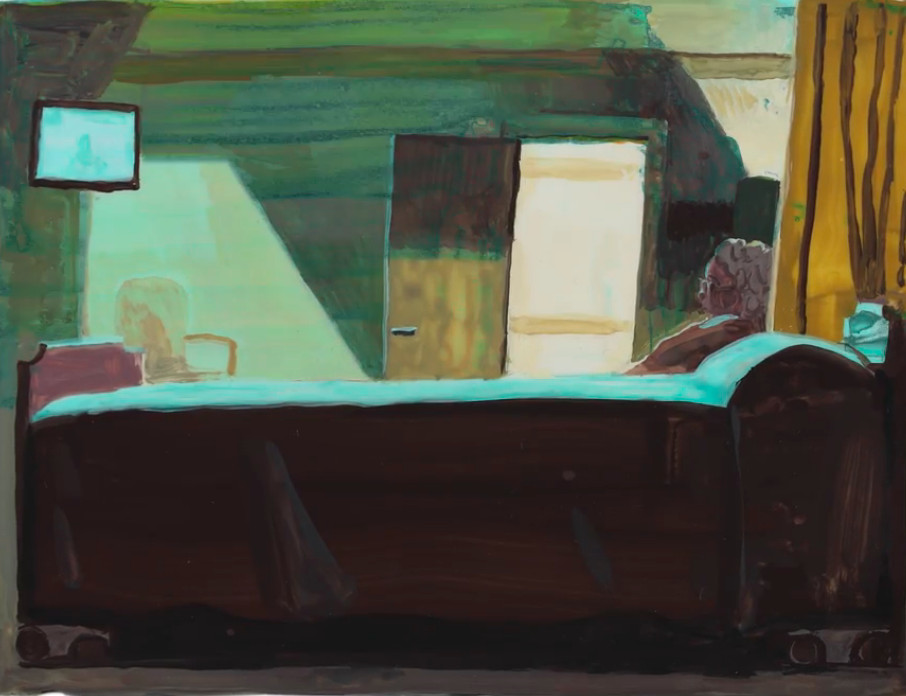
At the Life Care Center of Kirkland, Washington, where the first American outbreak of the coronavirus killed 46 people, 85-year-old Twilla and 98-year-old Helen shared Room 10. This big, well-written article poignantly tells their story, revealing not only our lack of preparation for the pandemic but also our lack of care for the elderly, who account for more than a quarter of total COVID-related deaths. You’ll root for Helen, rage against the nursing home industry, and wonder why we’re so callous toward our country’s most vulnerable. (71 min) (Issue #259)

Jefferson_20Cowie_20George_20Wallace_20University_20of_20Alabama_20freedom_20white.jpg

#4: Is Freedom White?

Americans love freedom. But we don’t agree on a common definition. There are three types of freedom, according to sociologist Orlando Patterson: personal freedom (to do as we please), civic freedom (to participate in public life), and sovereign freedom (to exercise power over others). According to Jefferson Cowie, this third type of freedom — “the unrestrained capacity to dominate” — is the most dangerous, given our country’s racism.

Prof. Cowie writes, “Freedom was used to steal land from Native Americans, defend slavery, defeat Reconstruction, justify lynching, fight the New Deal, oppose civil rights, elect Trump, and label Black Lives Matter as seditious.”

The only way for all Americans to achieve equality, Prof. Cowie argues, is for white people to stop presuming that freedom means the right to dominate everyone else. (14 min) (Issue #263)

tattered-flag-nyc-skyline.jpg

#5: The Unraveling of America

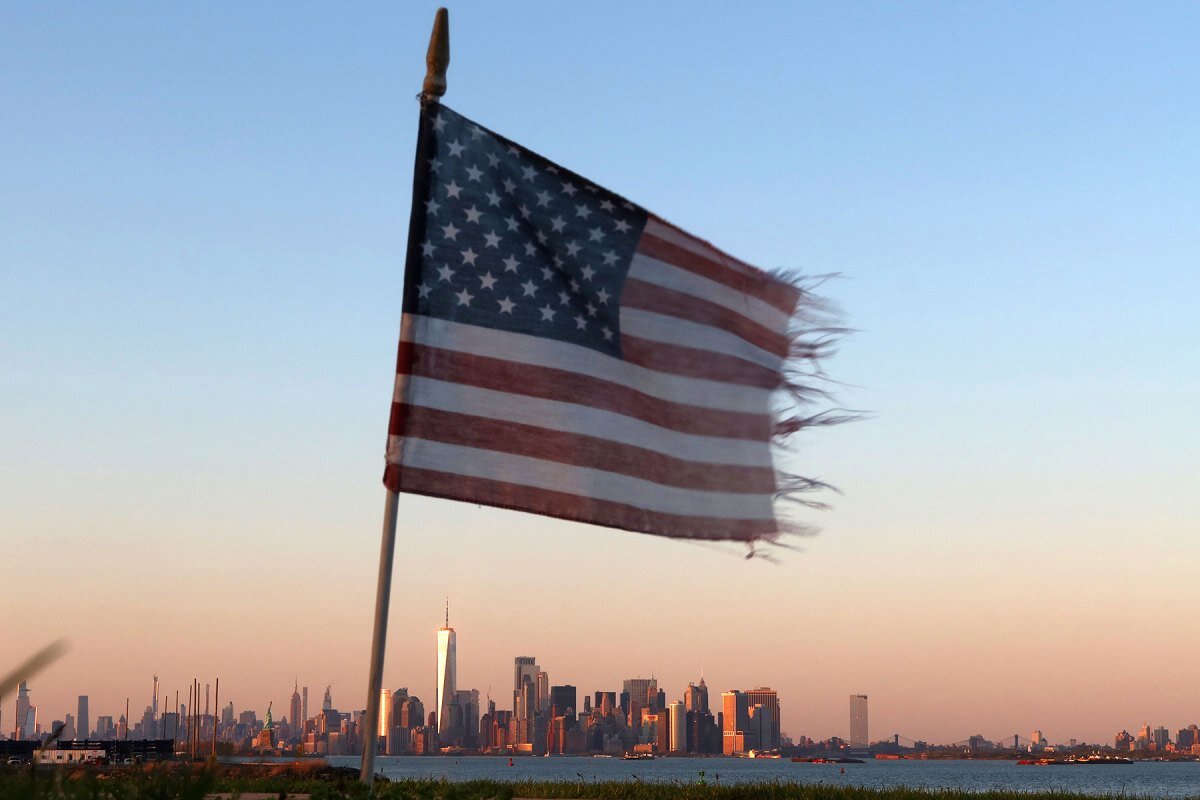
Wade Davis: “In a dark season of pestilence, COVID has reduced to tatters the illusion of American exceptionalism. At the height of the crisis, with more than 2,000 dying each day, Americans found themselves members of a failed state, ruled by a dysfunctional and incompetent government largely responsible for death rates that added a tragic coda to America’s claim to supremacy in the world.

As they stare into the mirror and perceive only the myth of their exceptionalism, Americans remain almost bizarrely incapable of seeing what has actually become of their country.

The republic that defined the free flow of information as the life blood of democracy, today ranks 45th among nations when it comes to press freedom. In a land that once welcomed the huddled masses of the world, more people today favor building a wall along the southern border than supporting health care and protection for the undocumented mothers and children arriving in desperation at its doors. In a complete abandonment of the collective good, U.S. laws define freedom as an individual’s inalienable right to own a personal arsenal of weaponry, a natural entitlement that trumps even the safety of children.” (19 min) (Issue #256)

#247: Call It What It Is

Our reading community is quite a bit bigger and stronger this week, thanks to the good word of loyal readers Luke and Bora (and likely others). If you’re new here, welcome! I’m Mark, and every week for the past five years, I’ve shared great articles on race, education, and culture, offering them to you for reflection, conversation, and action.

This week’s articles center the ideas and lived experiences of kihana miraya ross, Michelle Alexander, Doreen Oliver, and Lauren Michele Jackson. All of them are great, but my personal favorite is the last piece, “What Is An Anti-Racism List For?” which helped interrogate my thinking on the purpose of reading.

+ I warmly invite you to join Article Club this month. We’re discussing “The Mountain,” by Andrew Marantz (#217), which follows a young woman named Samantha and her transformation from campaigning for President Obama to joining the alt-right.

+ Our gathering last Thursday evening was a big success. We met new people, talked about our world right now, and listened deeply to each other. Also, loyal readers Xuan-Vu, Salem, and Eunice won prizes! I’m thinking of doing this again soon. Hit reply and let me know if you’re interested.

Call It What It Is: Anti-Blackness

kihana miraya ross: “Mr. Floyd’s brutal killing is not an exception, but rather, it is the rule in a nation that literally made Black people into things. Black people were rendered as property, built this country, spilled literal blood, sweat, and tears into the soil from which we eat, the water we drink, and the air we breathe. The thingification of Black people is a fundamental component of the identity of this nation.” (5 min)

America, This Is Your Chance

Michelle Alexander: “Too many citizens prefer to cling to brutal and unjust systems than to give up political power, the perceived benefits of white supremacy and an exploitative economic system. If we do not learn the lessons of history and choose a radically different path forward, we may lose our last chance at creating a truly inclusive, egalitarian democracy.” (12 min)

The Cold Of Winter

Doreen Oliver: “Taking medication because life was messed up was something I was raised to believe only white people did. Also in the ‘Things Only White People Do’ box was drunk dancing, yelling indignantly at police officers, kissing pets on the mouth, and that all-time white-woman favorite, crying at work. I mean, every now and again, for better or worse, we reveled in the status of doing things that once were deemed ‘white.’ But doing anything that appeared weak? Never.” (21 min)

What Is An Anti-Racism Reading List For?

Lauren Michele Jackson: “An anti-racist reading list means well. How could it not with some of the finest authors, scholars, poets, and critics of the twentieth century among its bullet points? Still, I am left to wonder: Who is this for? The syllabus, as these lists are sometimes called, seldom instructs or guides. It is no pedagogue. I suppose the anti-racism reading list is exactly for the person who asks for it. And yet the person who has to ask can hardly be trusted in a self-directed course of study.” (6 min)

+ Reader Annotations: Loyal reader Phillip bristled as he read “Kid Culture(#244) because of its lazy, unspecific definition of the term “American,” which leads to centering affluent whiteness.

I think among liberal publications, “American” has become a placeholder for upper class, mostly white. The author expressed the difficulty of having a nanny only four hours a day. What a hard life! There is not one American way that kids are raised, and race and class are large determining factors in what families decide to provide for their kids. To end the article on a tirade against capitalist consumerism, while clearly being part of the problem, made her analysis seem more trendy than authentic, more of an act of what is believed to be the right line of thinking without any self-reflection. (That is probably the most “American” thing about the article! But then, I’m using the word in the same limited way.)

Thank you for your insightful thoughts, Phillip. If an article from today’s issue resonated with you, reach out and share your ideas!

It is unfortunate, I know, but you’ve reached the end of this week’s newsletter. Thank you for reading it. Let me know what you thought by hitting reply or by clicking on the thumbs below.

Also, let’s welcome our community’s 57 new subscribers, including Amy, Josh, Nora, Sam, Chris, Jessica, Elliot, Wes, Johan, Chevy, Nicci, Gordon, Ted, John, Tiff, Charlie, Chrisanne, Jen, Claire, Richard, Davin, Ken, Nate, Keeley, Max, Emily, Chris, Sabrina, Hudson, Kim, Louis, Wes, and 25 others. I hope that you find this newsletter a solid addition to your Thursday email inbox.

If you really like The Highlighter, please help it grow and get better. I appreciate your support. Here are a few ways you can help:

On the other hand, if this newsletter isn’t something you look forward to every week, or if you read it only once in a while, please unsubscribe. See you next Thursday at 9:10 am PT!
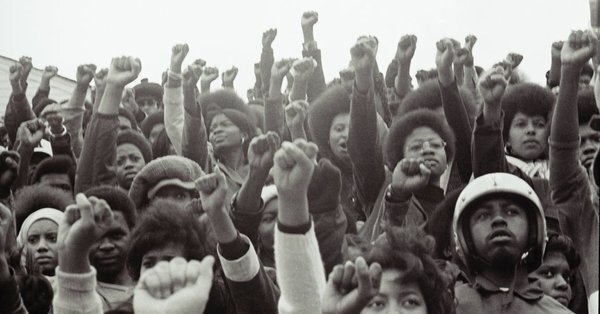
#246: No One Is Coming To Save Us

Thank you very much, loyal readers, for opening today’s issue of the newsletter. This week, Bryan Stevenson said, “We have never honestly addressed all the damage that was done during the two and a half centuries that we enslaved black people. The great evil of American slavery wasn’t the involuntary servitude; it was the fiction that Black people aren’t as good as white people, and aren’t the equals of white people, and are less evolved, less human, less capable, less worthy, less deserving than white people. That ideology of white supremacy was necessary to justify enslavement, and it is the legacy of slavery that we haven’t acknowledged. This is why I have argued that slavery didn’t end in 1865, it evolved.”

This week’s articles center the ideas and lived experiences of Roxane Gay, Ibram X. Kendi, A. Rochaun Meadows-Fernandez, and Nikole Hannah-Jones. My hope is that you find the pieces valuable for possible reflection, conversation, and action.

+ I’m hosting a small gathering tonight if you’re interested in connecting with other thoughtful members of our reading community. It’d be heartwarming to see you there. Reply if you’re in, and I’ll email you the Zoom link. Bring a beverage of your choice. We’ll begin at 5:30 pm PT and be in dialogue for an hour or so.

No One Is Coming To Save Us

Roxane Gay: “Eventually, doctors will find a coronavirus vaccine, but Black people will continue to wait, despite the futility of hope, for a cure for racism. We will live with the knowledge that a hashtag is not a vaccine for white supremacy. We live with the knowledge that, still, no one is coming to save us. The rest of the world yearns to get back to normal. For Black people, normal is the very thing from which we yearn to be free.” (6 min)

The American Nightmare

Ibram X. Kendi: “Their American dream—that this is a land of equal opportunity, committed to freedom and equality, where police officers protect and serve—is a lie. Their American dream—that they have more because they are more, that when black people have more, they were given more—is a lie. Their American dream—that they have the civil right to kill black Americans with impunity and that black Americans do not have the human right to live—is a lie.” (11 min)

The Unbearable Grief Of Black Mothers

A. Rochaun Meadows-Fernandez: “Growing up, when my family experienced anti-Black racism from the outside world, or disrespect from men within our orbit, I used to be upset that no woman in my family had modeled authentic hurt. But now that I have two children of my own, I understand. Unattended grief is heavy and slows one down. Black mothers don’t have time to spare. My mother chose to teach me what I needed to survive.” (9 min)

Grief That White Americans Can’t Share

Nikole Hannah-Jones (2016): “We’d been here again and again, but somehow, this felt depressingly the same yet also different. Even older Black people, typically stoics from weathering things my generation has not had to, found themselves, to their alarm, crying as well.” (6 min)

Thank you for reading this week’s newsletter. If you like, please share with me your thoughts. Also, let’s welcome our reading community’s six new subscribers: Kally, Vicki, Cricket, Darryl, and two others. I hope that you find this newsletter a solid addition to your Thursday email inbox. (Thank you to loyal readers Lauren and Maria for being ambassadors.)

As always, if you’re not finding that this newsletter is valuable, please unsubscribe. See you next Thursday at 9:10 am.

#245: Sense Of Strength

The weather has turned warm in the Bay Area, loyal readers, which brings me great joy and most people great pain. I’m noticing that even my climate change activist friends are secretly wishing for central air conditioning. Look on the bright side: Summer is near! (Too bad shelter in place seems to have no definite end.)

Even if the air is stifling you, at least you can grab a tall glass of lemonade and enjoy a few outstanding articles, thanks to The Highlighter. If you want to read an uplifting story about young people and their principal, this week’s lead article is for you. If you’re a white person, I encourage the second piece, which offers context to the racist tragedies occurring over the past month. The last two articles — a reflection on cocoons and a biography of James Hemings — are worth your time, too. Please enjoy!

+ Join us at HHH #14 next Thursday, June 4! We’ll meet on Zoom, 5:30 - 6:30 pm PT. Bring a beverage of your choice and meet great people, win significant prizes, and participate in general merriment. All you need to do is hit reply and say, “I’m in!”

Sense Of Strength

Towana Pierre-Floyd grew up in New Orleans and now serves as principal of Frederick A. Douglass High School. She believes that the best way to prepare Black students to succeed in college is to remind them that they come from a long line of brilliant people, and because they’re standing on the shoulders of giants, they have to do great things in return.

To that end, Ms. Pierre-Floyd takes groups of students overseas every year to expand their perspectives and to engage in a “global legacy of excellence.” This article chronicles a trip she took to Belize with 25 students. Along the way, you meet 15-year-old Endiah Guyton, learn more about the challenges of New Orleans schools post-Katrina, and discover that the best way to fry fresh barracuda is with no cornmeal at all. (34 min)

The White Space

“Black people are required to navigate the white space as a condition of their existence,” professor Elijah Anderson writes in this academic article that explores how racism requires that Black people perform for white people’s provisional acceptance, a sort of “dance” in order to ”pass inspection,” a conditional allowance that can be rescinded at any time. Written in 2015, Prof. Anderson includes two anecdotes that mirror the events involving Ahmaud Arbery and Christian Cooper. (20 min)

The Truth About Cocoons

As a kid, I loved dinosaurs, but honestly, the whole caterpillar-to-butterfly metamorphosis thing never grabbed my interest. Good thing Sam Anderson gave me another chance many, many years later. This essay on cocoons (or chrysalises) accurately captures our current state living in this global pandemic. Maybe our lives are “cramped and dim” and “unpleasant and grim” right now, but Mr. Anderson assures us, “We are in the middle of creating whatever the new world will be. We did it, and we are doing it, every day.” (10 min)

America’s First Connoisseur

The musical Hamilton taught us that Thomas Jefferson liked being fancy. But it didn’t say anything about James Hemings, the most accomplished American chef of the 1700s, who prepared the menu for “the room where it happened,” and who spent most of his life as Mr. Jefferson’s property, alongside his more-famous sister Sally. This is by no means an uplifting story, but particularly if you’re a foodie, you’ll appreciate references to Chef Hemings’s signature dishes (including capon stuffed with Virginia ham). (13 min)

+ Reader Annotations: Last week’s article, “We Cannot Return To Campus This Fall,” caused a stir. Here’s what loyal reader Hannah thought:

I agree with your thoughts on Harley Litzelman’s article. My main problem with it is that it assumes that Distance Learning is better than the reality that he is describing. While I agree with him, that his reality isn’t great, I’m not convinced that the alternatives are better. Having watched my students struggle through the last two months, I worry deeply about what will happen to them in the fall. I do appreciate his analysis of some of the problems with trying to social distance at schools, but I wish he acknowledged the strengths that the schools have with in-person learning, rather than only their deficits.

Thank you for sharing your perspective, Hannah. Loyal readers, I value your perspective. Please reach out and share your thoughts!

Did you find at least one good article? Hope so. Thank you for reading this week’s newsletter. Let me know what you thought by hitting reply or by clicking on the thumbs below. Also, let’s welcome our reading community’s two new subscribers JoDee and Rae. I hope that you find this newsletter a solid addition to your Thursday email inbox.

If you really like The Highlighter, please help it grow and get better. I appreciate your support. Here are a few ways you can help:

On the other hand, if you’re not finding that this newsletter is valuable, please unsubscribe. See you next Thursday at 9:10 am!

#244: Shadowland

Happy Thursday, loyal readers, and thank you for opening today’s issue of The Highlighter. A couple weeks ago, as VIP Summer was sharing her wisdom in a podcast episode for Article Club, I was reminded of a simple and powerful fact: There’s a lot of trust you’re giving me when I choose articles and suggest that you read them. It’s all wonderful and generous, and if I haven’t said it lately, I’ll say it now: Thank you. I appreciate you, your readership, and the reading community we’re building.

Now let’s get to this week’s selections. Even if you’re not fascinated by conspiracy theorists, or wonder how regular people become radicalized to believe in the politics of the far right, I highly recommend this week’s lead article, especially if you care about the future of our country. I can’t stop thinking about it. The other three pieces are also strong. They focus on a range of topics, including the unacceptable rates of diabetic amputations in the South, the challenges of opening schools safely in the Fall, and the seemingly inevitable forces that drive parents insane. Enjoy!

+ Should we have HHH on Thursday, June 4? Yes, HHH is best in person, but we can’t do that, unfortunately. But if joining one more Zoom doesn’t sound excruciating, I’d love to see all of you, invite you to chat with other thoughtful readers, and give out prizes (of course). (If you’d prefer a collective silent reading hour, without all the banter, I like that idea, too.) Hit reply if you’re in!

QAnon Is More Important Than You Think

We can laugh at conspiracy theorists all we want. We can reject their politics, call them extremists, and deride their way of looking at the world. But this outstanding article by Adrienne LaFrance convincingly argues that QAnon has organized once-disparate conspiracy theories into a powerful force that is gaining power and threatening to spread mainstream.

Ms. LaFrance writes: “It is a movement united in mass rejection of reason, objectivity, and other Enlightenment values. And we are likely closer to the beginning of its story than the end. The group harnesses paranoia to fervent hope and a deep sense of belonging. The way it breathes life into an ancient preoccupation with end-times is also radically new. To look at QAnon is to see not just a conspiracy theory but the birth of a new religion.” (41 min)

+ Don’t be scared, but Republican voters in Oregon voted for Jo Rae Perkins to be their nominee for Senate in their primary this week.

The Black American Amputation Epidemic

In the Mississippi Delta, if you’re Black, have diabetes, and go to your doctor with poor circulation, chances are you might lose a limb, even though diabetic amputations are the most preventable surgery in the country. Dr. Foluso Fakorede, one of the few Black cardiologists in the state, is on a mission to serve his Black patients, fight against racist practices in the medical and health care fields, and disrupt longstanding beliefs that life outcomes for some Americans can’t be improved. (33 min)

+ This is Lizzie Presser’s fourth feature in The Highlighter. See also #80, #96, and #164.

We Cannot Return To Campus This Fall

No, I don’t agree with Oakland teacher Harley Litzelman when he says that we shouldn’t try to open schools in the Fall. But his writing is vibrant, and his vision of the challenges ahead are spot on. I’m not a fan of his smug, pugilistic tone and his suggestion that only teachers know enough about education to make decisions. Plus his proposed solution isn’t good for kids, especially those who are most vulnerable. But I’ll give Mr. Litzelman credit: This is a provocative article that got me thinking. (27 min)

+ Thank you to loyal readers Laura H, Geoff, and Trisha for this piece. Educators, hit reply and share your thoughts!

Why Are American Children Treated As A Different Species Than Adults?

All parents want the best for their children. But only in the United States has this natural desire led parents to insanity. As Sarah Menkedick argues, there’s no need to invest in a “kid culture” that separates family from community life. Kids don’t need trampoline parks and summer camps all the time. But because we conceptualize parenthood as a project, and non-parents prefer that children stay home, and capitalism sucks every minute out of an otherwise healthy childhood, it’s not easy for parents to resist the hamster wheel. (18 min)

+ Interested in more? Ms. Mendekick’s new book, Ordinary Insanity, is receiving rave reviews.

Did you find any good articles? Hope so. Thank you for reading this week’s newsletter. Let me know what you thought by hitting reply or by clicking on the thumbs below. Also, let’s welcome our community’s five new subscribers, including Claire, Katie, Nathalie, and Mara. I hope that you find this newsletter a solid addition to your Thursday email inbox. (Thank you, loyal reader Phillip, for the referral.)

If you really like The Highlighter, please help it grow and get better. I appreciate your support. Here are a few ways you can help:

On the other hand, if you opened today’s issue by mistake and actually want the newsletter to disappear, please unsubscribe. See you next Thursday at 9:10 am!