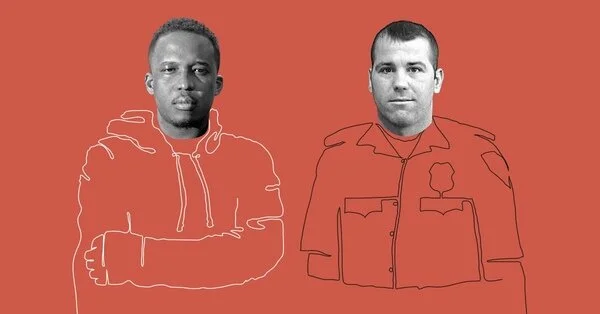
#243: Only A Mile And A Big World Separated Us

We’ve reached the middle of May, loyal readers! I’m happy to announce that I’m noticing more high-quality, non-pandemic articles lately, and today’s issue of The Highlighter includes four selections worthy of your time and attention.

Leading this week’s issue is “Only A Mile And A Big World Separated Us,” a big, well-written piece that I recommend highly. The second article, about an anti-gay woman and her gay son, is also excellent. Then take time for Tuba, in his first appearance since Issue #198, before diving into a pair of articles about Ahmaud Arbery and the differences in running when you’re Black vs. when you’re white. I hope you find the articles valuable and illuminating.

+ The Highlighter Hoodie is coming, at long last! What color should it be? Hit reply and vote your conscience.

Only A Mile And A Big World Separated Us

“This is an All-American story about two kids from the east side of Baltimore.” So begins this riveting, profound essay by D. Watkins, who came of age as a Black man in the same working-class neighborhood as Daniel Hersl, a white man. Even though they grew up just one mile apart, their lives diverged in disturbingly predictable ways according to the racist inequities of our society. Mr. Watkins sold crack before he got out of the game and got into college; Mr. Hersl became a police officer and terrorized Black men before he got convicted of stealing from drug dealers.

In clear and convincing prose, Mr. Watkins argues that law enforcement policies like broken windows, zero tolerance, and stop-and-frisk, which led inexorably to mass incarceration, also vilified Black men as superpredators while their white counterparts were honored as superheroes.

Mr. Watkins writes, “America didn’t give me any tools to change, and it didn’t give Daniel Hersl any reason to change. But instead of addressing these problems, it treats us both as exceptions, rewarding me and locking him away, so that it can forget about these particular East Baltimore boys and let the game go on.” (41 min)

An Anti-Gay Crusader And Her Gay Son Were Making It Work. Then Came Trump.

When Matthew Mason came out to his family, his pro-life, pro-gun, anti-gay mother Mylinda kicked him out of the “Patriotic Cottage,” also known as the house. But like many conservative families, which separate their public hate from their private love, Matthew and Mylinda did not let the separation detract from their connection. But then, President Trump got elected, and Mylinda organized a straight rights rally in Modesto, California, which changed everything. (27 min)

The Killing Of Ahmaud Arbery

Of all the articles I’ve read on the horrific killing of Ahmaud Arbery, this one by Charles Blow stands out for its direct language and simple truth. He writes, “Slavery was legal. The Black Codes were legal. Sundown towns were legal. Sharecropping was legal. Jim Crow was legal. Racial covenants were legal. Mass incarceration is legal. Chasing a black man or boy with your gun because you suspect him a criminal is legal. Using lethal force as an act of self-defense in a physical dispute that you provoke and could easily have avoided is, often, legal.” (5 min)

This Trail Is Not Your Trail

Jonathan Severy is a white man who likes to run on trails in the Rocky Mountains that don’t belong to him. When his neighbors remind him that he’s trespassing on private property, Dr. Severy appeals to their humanity, which results in mild skirmishes, threats of lawsuits, and the brandishing of iPads (for photographic evidence). He’s indignant. “Americans’ idea of community is becoming less cohesive, while our focus contracts inward. We become more suspicious of others, more concerned with ourselves. We feel victimized.” (11 min)

+ Reader Annotations: Loyal reader Daniel liked last week’s lead article, “Full-Timing Families” and shared these thoughts:

I was particularly taken with the idea of “roadschooling.” But even so, I feel like the article presents a false binary: Either you are full-time on the road, or you are living in our usual “rat race.” I grew up in a family that valued home and time together more than those things were valued by most other families I know. And because my father was a teacher and had summers away from work, we took several multi-month cross-country road trips — all without leaving the permanence of home, school, and job. Being on the road for two months is much more than most people ever get. So I think that, rather than “either-or,” it may be possible to have “both-and.”

Thank you, Daniel, for reading the piece and reaching out with your connections. Loyal readers, if an article this week resonated with you, please hit reply and start a dialogue.

You did it again! Thank you for reading this week’s newsletter. Let me know what you thought by hitting reply or by clicking on the thumbs below. Also, let’s welcome our community’s five new subscribers Amy, Scriber, Lux, Alison, and Adam. I hope that you find this newsletter a solid addition to your Thursday email inbox. (Thank you, loyal reader George, for the referral.)

If you really like The Highlighter, please help it grow and get better. I appreciate your support. Here are a few ways you can help:

On the other hand, if the newsletter is not a great match for your inbox, please unsubscribe. See you next Thursday at 9:10 am!

#242: Full-Timing Families 🚐

It’s Thursday, loyal readers, which means it’s time for another installment of great articles on race, education, and culture. Thank you for being an important part of our reading community!

Today’s issue explores two trends emerging from the pandemic. The first is the growing desire to escape our cooped-up conditions and to branch out into the wider world. The second is the increasing reliance on technology and its questionable impact on identity and humanity. If you want more lighthearted, go with the first pair of articles; if you want more serious, go with the second pair. As for my favorite this week, I can’t decide between “The Rise of Full-Timing Families” or “What Happens After You Get Rich Quick?” They will elicit various emotions. Please enjoy!

+ Congratulations to Nikole Hannah-Jones for winning her first Pulitzer Prize for commentary. Her winning essay was the lead article in Issue #205 last August. Ms. Hannah-Jones is, in my mind, the best writer right now on race and education.

+ I’d like to see more of you try out Article Club this month. Go ahead, take the leap! We’re discussing “Lost in Summerland,” by Barrett Swanson, a powerful story about two brothers, mental illness, psychic powers, summer camp, and painful secrets. You can learn more here and sign up for this month’s discussion.

The Rise Of Full-Timing Families

Are you tired of shelter in place? Maybe it’s time to buy a van or trailer (like two of my friends did this past weekend), hit the road, and explore the great outdoors! Better yet, you may opt for a more permanent solution, like #vanlife. If you’re really advanced, becoming a full-time traveling family might be right for you.

More than 1 million Americans now live in their RVs. For Robyn and Victor Robledo and their five children, the decision was simple. Feeling empty, like something was missing, they chose to “focus on what’s truly important,” to go “against the grain.” After all, full-timing families say, the true American dream is to seek freedom and adventure, not to accumulate property.

But if you join the movement, be sure to get a blog, jump on Facebook, establish your YouTube channel, and have a plan to monetize. Also, remember that your RV chugs gas and that it’s better to be financially independent (and a white evangelical) before you head off. (14 min)

What Happens After You Get Rich Quick? The World Of The Retired Dropshipper

If you really want to get away, maybe dropshipping in Bali is the best way to go. Mike Vestil can help you buy junk on Alibaba, sell it to Europeans over Instagram, learn about “sexual transmutation,” and spend the bulk of your time shirtless by the pool with the ladies. (The remainder of your time goes to YouTube.) But if you’re like most dropshippers and go bankrupt, you can leave your villa in Canggu and settle on Bukabuka, like Thomas Despin, and have the island’s 20 residents build you a bathroom with electricity and running water. It’s all about being a man and reinventing yourself, right? (17 min)

Queer Visibility At The Self-Checkout Line

Alyse Burnside likes to take selfies with her partner in the Target self-checkout line. She’s done it with every partner she’s had. It’s irresistible, she says. It’s her act of resistance, a way of being seen as a queer person in this digital, capitalist world. As queer people become more mainstream, and marriage is legal, Ms. Burnside feels more invisible — that belonging means giving something away. Taking selfies and posting them online “feels in some small way like taking back my own image, to reframe surveillance as something other than an attempt to monitor consumers, to create collective experience by sharing it online.” (14 min)

Test Anxiety: When Someone Watches You While You Take Your Final Exam Online

No matter your feelings on the topic, online learning is here to stay. This means plenty more Zoom, Google Classroom, and challenges to the humanity of teaching and learning. One creepy trend is the rise of online test proctoring, where a representative from Examity or Proctorio watches you (and you alone) while you take your exam online. “We closely watch the face of the student to see if there is something suspicious, or if the student is trying to mumble something to somebody else outside the room.” Students aren’t pleased, calling the experience “creepy” and “invasive.” (15 min)

How do you do it? Thank you for reading this week’s newsletter. Let me know what you thought by hitting reply or by clicking on the thumbs below. Also, let’s welcome our community’s four new subscribers Camille, Leigh Ann, Charlotte, and Samella. I hope that you find this newsletter a solid addition to your Thursday email inbox. (Thank you, loyal reader Jeannette, for the referral.)

If you really like The Highlighter, please help it grow and get better. I appreciate your support. Here are a few ways you can help:

On the other hand, if the newsletter is not a great match for your inbox, please unsubscribe. See you next Thursday at 9:10 am!

#241: The Kitchen Is Closed

Thank you for opening today’s issue, loyal readers, and I hope that all of you are holding up. Is this your first issue? Welcome. Is this your gazillionth issue? Welcome back. I’m happy you’re here.

This week’s lead article, a chef’s account of the closing of her restaurant, is the first piece I’m highlighting that is related to the novel coronavirus. I highly recommend it. You won’t see The Highlighter transitioning to all-COVID, all-the-time, but if an article offers perspective and is written well, you’ll find it here.

If you subscribe to this newsletter to escape current events, rest assured, the other selections will please you. You can learn about an Alaska Native teacher’s efforts to decolonize her classroom. Or you can worry about the state of marriage. Or you can decide, once and for all, whether Marie Kondo sparks joy. Read one or all of these articles, and hit reply to share your thoughts. Please enjoy!

+ I’m excited to announce that Article Club will be reading and discussing “Lost in Summerland,” by Barrett Swanson, starting this Sunday. This is easily one of my favorite articles so far this year. Also, Mr. Swanson will be participating in one of our discussions on May 24. Join us!

My Restaurant Was My Life For 20 Years. Does The World Need It Anymore?

The pandemic forced chef Gabrielle Hunter to shutter Prune, the bistro she opened in the East Village in 1999. In this well-written essay, Ms. Hunter eulogizes her restaurant, gets real about the challenges of the industry, and waxes sentimental, then existential, on whether any of our pursuits in life deserve to exist after they’re gone. Toward the end, Ms. Hunter’s emotions mount, with anger and sadness and nostalgia all mixed together, as she laments not only the end of Prune, but also the neighborhood she loved. (26 min)

+ Thanks to loyal reader Rosa for recommending this article. You can also listen to the piece here.

The Alaska Native Teacher Upending The Legacy Of Colonial Education

Growing up in the 1970s, Alaska Native Josephine Tatauq Bourdon attended a colonial school designed to erase her Inupiaq values and accelerate assimilation into Western culture. But ever since she became a teacher, Ms. Bourdon has resisted capitalist constructs of education, building classrooms and curricula rooted in collective and environmental responsibility, with an emphasis on stewardship of the land. “The land is our life. The land is our livelihood. It feeds our bodies, minds, spirit, and soul.” (16 min)

+ One of my favorite articles on education is about how the Inupiat people rebuilt their curriculum.

Marriage Is Dead, Sure. But Don’t Worry. Pair-Bonding Is Alive And Here To Stay.

Around the world, marriage is plummeting, striking fear into proponents of the conservative nuclear family. But according to Manvir Singh, marriage’s decline is nothing to fret over. People are still coupling up, cohabitating, and rearing children. With women gaining power, and states extending rights to domestic partnerships, cohabitation is “like a subscription,” whereas the institution of marriage is reserved “for love.” (18 min)

+ Maybe the nuclear family was a big mistake in the first place, argues David Brooks in Issue #230.

Marie Kondo Cleaned House. Now She Wants To Fix Your Whole Life

Longtime subscribers, did you think that I’d forgotten about Marie Kondo? Not a chance. The “millennial doyenne of decluttering” sparks such joy (and opposing emotions), I’d be remiss if I didn’t keep you posted about Ms. Kondo’s new plans to tidy up office spaces (and small towns), expand to executive coaching, and sell you items to promote her minimalist lifestyle, like this $75 tuning fork, meant to restore balance, on her website. (15 min)

+ More Marie Kondo? Sure: #51, #65, #175.

+ Reader Annotations: Loyal reader Katherine read last week’s lead article, “Childhood In An Anxious Age,” with great interest:

As someone relatively new to parenting, and someone who is a bit anxious (example: I hate when my sleeves are too far down on my wrists and I’m far too willing to accommodate when my 1-year-old is upset that her sleeve is slightly wrong…I know how crazy this is), I was really interested. The statistics at the beginning were terrifying and upsetting, but the article got more upbeat as it went on, suggesting totally normal solutions. I think it boils down to what I’ve always thought: We need a more family-friendly society. Happy adults, happier kids. If only America could take some lessons from Scandinavians in this area (and others).

Thank you for reaching out and sharing your thoughts! Loyal readers, don’t be shy. Hit reply.

You did it again! Thank you for reading this week’s newsletter. Let me know what you thought by hitting reply or by clicking on the thumbs below. Also, let’s welcome our community’s six new subscribers Leslie, Ramsey, Listory, Shreya, Rebecca, and Bill. I hope that you find this newsletter a solid addition to your Thursday email inbox. (Thank you, loyal reader Joycelin, for the referrals!)

If you really like The Highlighter, please help it grow and get better. I appreciate your support. Here are a few ways you can help:

On the other hand, if the newsletter is not a great match for your inbox, please unsubscribe. See you next Thursday at 9:10 am!

#240: Childhood In An Anxious Age

Happy Thursday, loyal readers, and thank you for opening today’s issue, whether this is your first or your 240th. This week’s issue features articles on how best to parent anxious children, why so many streets are named after Confederate generals, what makes the U.S. Postal Service so special, and how swimming is the most transformative type of exercise. (I still like running better.) If you’re a parent or a teacher, definitely read the lead article; if you like history, go with the second one; if you’re feeling sentimental, start with the photo of Miki, then read the whole second half. Enjoy!

+ I have a question for you: You’re sheltering in place, working from home, homeschooling your kids, worrying about your family and friends, and maybe navigating your partner. When and how are you finding the time and space to read? Please hit reply to tell me your secrets, or if you prefer, get your voice out there. I’ll share some tips and tricks next week.

Childhood In An Anxious Age

Not every kid who is scared of the dark or who demands chicken tenders every night is going to experience mental health problems as an adult. But anxiety among children is real, is growing, and needs to be addressed.

The problem, according to Kate Julian, is not that we ignore our children’s anxiety but that we coddle and accommodate them too much. About 95 percent of parents, experiencing high levels of stress themselves, choose to avoid conflict with their children, steering them away from potential harm before tantrums emerge. But “short-term pain leads to long-term gain,” psychologists say, and the best way to teach children to cope with their anxious emotions is to treat the parents. (43 min)

+ Want to see some of my highlights of the print article? Here they are!

Confederacy In The Hood

Born and raised in Harlem, Benjamin Israel moved to Hollywood, Florida, liked the weather and stayed, but began to wonder why many of the streets in the Black neighborhood were named after Confederate generals, including Nathan Bedford Forrest, the first grand wizard of the Ku Klux Klan. So Mr. Israel started making speeches at the city council meetings, excoriated the absurdity of Shelby Foote and the Lost Cause, demanded the streets be renamed, and didn’t stop until he prevailed. (18 min)

+ This piece by Deirdre Mask is an excerpt from her new book, The Address Book: What Street Addresses Reveal About Identity, Race, Wealth, and Power.

An Ode To The Post Office

Sure, we have email and Slack, Google Docs and PDFs, and digital subscriptions to periodicals. But there’s no substitute to receiving a real letter or having a care package arrive on your stoop. In this classic essay, Jesse Lichtenstein argues that while the U.S. Postal Service may never make money, it’s a miracle nonetheless, delivering 160 billion pieces of mail a year, thanks to its 227,000 postal carriers, 32,000 post offices, and 2,000-member police force. “It’s what binds us together as a country.” (44 min)

+ This article is dedicated to loyal reader Beth, a longtime ardent supporter of the USPS.

Why Do We Swim?

People tell me I should give up running “before it’s too late” and take up swimming instead. Not a huge fan of being wet or cold, I typically demur, but reading this romantic, sentimental piece encouraged me to give water another try once the pandemic passes. Bonnie Tsui writes, “Swimming is a way for us to remember how to play,” and suggests that being in the water improves our breathing, our relationship with our bodies, and our connection to the vastness of the sea. (6 min)

+ Reader Annotations: Last week’s “Baking Bread In Lyon” struck a chord. Not able to contain his excitement, loyal reader Tyler said the article “was sooooo good.” Loyal reader Phoebe wrote, “It was such a nice balm for these times.” And loyal reader Marna took things to the next level:

I woke this morning and saw that I had enough overripe bananas to make bread. As I read the baking piece, the aroma of the bread filled my kitchen. Thank you for making my morning more beautiful.

Also popular last week was “Hiking In The Woods With My Curmudgeonly Big Brother.” Loyal reader Martha, who encourages you to check out her YouTube channel, where she hosts live readings of The Highlighter (also in Spanish), liked the article because “I’ve been in a sappy mood and miss my family” and felt like the piece “read like a love letter.” Sharing a similar mood, loyal reader Hannah wrote that the piece brought her to tears:

I loved the article about the brothers. It totally made me cry (which seems to be happening more frequently than it used to), and was a wonderful reminder of the strength of sibling relationships and the beauty of loving people for who they are.

I love hearing from you, learning that the articles resonate with you, and building this reading community together. Go ahead, hit reply, and share your thoughts.

You did it again! Thank you for reading this week’s newsletter. Let me know what you thought by hitting reply or by clicking on the thumbs below. Also, let’s welcome our community’s four new subscribers, including Nêy, Jac, Cat, and Lindsay. I hope that you find this newsletter a solid addition to your Thursday email inbox.

If you really like The Highlighter, please help it grow and get better. I appreciate your support. Here are a few ways you can help:

  • Convince a friend or family member to subscribe

  • Share the newsletter on FB or IG or Twitter (bonus: TikTok)

  • Make The Highlighter Hoodie a reality by buying me a coffee

  • Become a VIP member and bask in fancy surprise perks

On the other hand, if the newsletter is not a great match for your inbox, please unsubscribe. See you next Thursday at 9:10 am!

#239: On Anger, Autism, and Blackness

On-Anger-Autism-and-Blackness-3.jpg

Happy Thursday, loyal readers! I wish you health, safety, and plenty of reading in these strange and scary times. This week’s quest for well-written articles (not relating to the pandemic) resulted in many hours of scouring 70-plus publications for hidden gems, and I have to say, I was pleased with my luck. This week’s lead article, “On Anger, Autism, and Blackness” explores the interaction between racism and developmental disorders that may broaden your thinking. The other pieces — focusing on homeownership, French bakeries, and hiking with your curmudgeonly big brother — are worth your time, too. But if you can manage to read just one article this week, my vote, by far, is for “Baking Bread in Lyon.” Enjoy!

+ Have you been meaning to tell me about that one article you read a couple weeks ago that you loved? What are you waiting for? There’s no need to delay. Hit reply and share your thoughts.

On Anger, Autism, And Blackness

“I have dreams about my sister killing me,” Kat Lewis writes, “because my sister makes me fear for my own safety.” So begins this raw personal account about growing up with an autistic sibling who suffers from violent fits of rage. Her sister Remi’s mental illness is magnified by racist trolls on YouTube and Confederate flags along the highway. “She understands racism and sexism and how prejudice influences others’ perceptions of her,” Kat writes. “What she doesn’t understand is how to process and cope with her own Blackness.” Eventually, Remi’s pent-up anger erupts, causing Kat to question her relationship with her sister, pushing her to fight or flee, rather than to engage. (13 min)

Making A Home That’s Affordable

In rapidly gentrifying Houston, Regina Daniels wanted to buy a house in a nice neighborhood without breaking the bank. She succeeded by partnering with the Houston Community Land Trust, purchasing a three-bedroom home for just $725 a month. The catch? Ms. Daniels doesn’t own the land. Serving as an alternative to traditional housing assistance programs, nonprofit community land trusts provide permanent housing solutions to lower-income first-time homebuyers. But does this model offer an equitable path to wealth? (20 min)

Baking Bread In Lyon

I have this joke that I’m going to quit my job to open up a scone store, but otherwise, I’m no baker, nor do I have dreams of moving to France to apprentice at a boulangerie. Good thing Bill Buford did, because in this beautiful story, we get to meet Bob the baker from Lyon, learn his secrets to making delicious baguettes (answer: the flour), and realize that the meaning of life may come down to food, family, le goût et les valeurs. (33 min)

+ These times are either making me sentimental, or this is one of my favorite articles so far this year.

Hiking In The Woods With My Curmudgeonly Big Brother

Speaking of sentimentality, I’m a sucker for sappy stories involving big brothers and little brothers. This one, in which Steve Friedman invites his big brother Don to bond on a long hike in the Cascades, is funny, endearing, and reminds me of A Man Called Ove. Sure, Don might say curmudgeonly things like, “I just need to get used to the idea that I’m closer to death and the world is meaningless,” but stick with him a bit and you’ll see why Steve loves him so much. (15 min)

+ Want to read another outstanding brotherly story? Revisit “Lost in Summerland,” one of my favorites.

Look at you, finishing another issue! Thank you and let me know what you thought by hitting reply or by clicking on the thumbs below. Also, let’s welcome our community’s 4 new subscribers, including Susan, Kibos, and Janie. I hope that you find this newsletter a welcome addition to your Thursday email inbox.

If you really like The Highlighter, please help it grow and get better. I appreciate your support. Here are a few ways you can help:

On the other hand, if the newsletter is not a great match for your inbox, please unsubscribe. See you next Thursday at 9:10 am!

#238: Body of Lies


Happy Thursday, loyal readers!
This week’s newsletter is The Highlighter through and through: big, well-written articles from a variety of publications about a variety of topics, offering you respite from anxiety-ridden clickbait you might find on your phone. Today’s pieces include a vulnerable personal reflection on body image, an inspiring effort to save Indigenous languages, a caper about cannabis in California, and a torturous trek through the jungle. Go ahead, take the plunge: Set aside three hours and read them all!

+ I’m excited to announce that Peggy Orenstein’s “The Miseducation of the American Boy” is this month’s selection at Article Club. Come join the conversation, especially if you teach or parent young men.

Body of Lies

“About two years ago,” writes Deenie Hartzog-Mislock, “I stopped feeling beautiful.” Once a college dancer, with men fawning over her size-0 body — more so when she ate less food or purged her meals — Ms. Hartzog-Mislock is nearing 40, fully aware, as a feminist, how the patriarchy and the wellness industry have conspired to demean women’s worth when their bodies do not match some slim ideal.

But no matter how much she accepts her “less taut, less petite, less lean everywhere” figure, Ms. Hartzog-Mislock cannot escape that she desires men’s attention, most importantly from her husband, whose depression has prevented them from having sex in a long time. “I feel sexy when he thinks I’m sexy,” she writes. “I’ve believed, all this time, that I’m only as beautiful as he thinks I am.” (15 min)

Save The Words: The Fight To Revive And Revitalize Indigenous Languages

The 2,000 Indigenous languages that once thrived in North America have dwindled to 256, the result of colonization, forced assimilation, and a boarding school program designed to “kill the Indian, save the man.” But this article features the hard, inspiring work of Native American programs to revitalize dormant languages, from the Menominee Language and Culture Commission in Wisconsin to the Indigenous Language Digital Archive in Ohio. Even extinct languages, which have no living speakers and no speech recordings, can be resurrected. (26 min)

The Rise and Fall of Pot’s Superman

If this week you’re in the mood for an epic history of cannabis in Oakland, you’ve come to the right place. This is the saga of Dan Rush, a burly Irish-Catholic Hells Angel motorcyclist, who called himself Superman, and who dreamed of legalizing cannabis and building an industry that would produce thousands of middle-class union jobs. Be ready for intrigue, informants, corruption, kickbacks, Gavin Newsom, and the FBI. (84 min)

+ Also by Jason Fagone: “Jerry And Marge Go Large,” one of my favorite articles of 2018.

When Can We Really Rest?

Sandra’s from Cameroon, fleeing state-run terror and sexual violence and seeking her fiancé in Texas. Waseem’s from Pakistan, escaping the dangers of the Taliban and wanting a better life. On their way to the United States, Sandra, Waseem, and other migrants meet up for the first time before crossing the Darién Gap, one of the most dangerous regions in the world, 10,000 square miles of rainforest and marshland straddling the border of Panamá and Colombia. The trek is grueling and harrowing. “How many more days?” Sandra asks, to no one in particular. (32 min)

+ Warning: The photos are arresting and disturbing.

Thank you for reading today’s issue! Let me know what you thought by hitting reply or by clicking on the thumbs below. Also, let’s welcome our community’s four new subscribers: Mahogney, Patricia, Mauro, and Maria. I hope that you find this newsletter a welcome addition to your Thursday email inbox.

If you really like The Highlighter, please help it grow and get better. I appreciate your support. Here are a few ways you can help:

On the other hand, if the newsletter is not a great match for your inbox, please unsubscribe. See you next Thursday at 9:10 am!

#237: Land-Grab Universities

Welcome to April, loyal readers, and thank you for opening this week’s issue of The Highlighter. I’m still processing yesterday’s announcement that public schools in California will remain closed until the Fall. It’s very strange. In addition to learning more about the best practices of distance learning, and collaborating with colleagues over Spring Break, I’ve had more time to read, and I’m confident you’re going to enjoy today’s selections.

This week’s lead article, “Land-Grab Universities,” which I highly recommend, does an outstanding job tracing how many of our most prestigious universities grew prominent as a result of the capture and redistribution of Native American lands. If that topic is not for you, check out a profile of La’Darius Marshall, a critique of the latest fat-shaming show, and a warning about imminent water shortages.

+ Tired of so many Zoom calls back to back? Take a break, read a few of today’s articles, hit reply, and say hi!

Land-Grab Universities

We know about the Trail of Tears, the brutal effects of Manifest Destiny, and the genocide of Native Americans by the United States government. But we might not know about how the federal seizure of Indigenous lands led directly to the ascent of the American higher education system.

Maybe you’ve heard of Cornell? Or MIT? Or UC Berkeley? Or any of these 49 other universities? All of them exist because of the Morrill Act of 1862, which cut up 11 million acres of tribal land and granted parcels to states for the construction and endowment of colleges.

“There would be no higher education as we know it in the United States without the original and ongoing colonization of Indigenous peoples and lands, just like there would be no United States,” said Sharon Stein, an assistant professor at the University of British Columbia. (27 min)

+ I recommend this article especially to U.S. History teachers.

La’Darius Marshall: “When I’m Performing, You’re Going To See Me.”

By no means am I a TV connoisseur, but that didn’t stop me from seeing (and enjoying) Cheer when it aired earlier this year. In this profile of the show’s breakout star, La’Darius Marshall — his senior season canceled due to the coronavirus — opens up about how Cheer transformed him, contemplates what’s next, and shares his appreciation for his coach, his boyfriend, and Nicki Minaj. (12 min)

No Winners with “The Biggest Loser”

Once a huge hit, The Biggest Loser, which features fat people competing against each other to lose the most weight the fastest, fell on hard times a few years ago as the wellness craze rebelled against the show’s fat-shaming ways. (It didn’t help that contestants gained their weight back and that beloved trainer Bob Harper nearly died of a heart attack.) After being canceled in 2016, the show is back, taking a more holistic view of health, yet keeping the weekly weigh-ins and the belief that “light is right.” (18 min)

+ For more great articles on dieting and body positivity, check out this Highlighter Spotlight.

Where Water Used To Be

According to the United Nations, within five years, two thirds of the world’s population will experience “water stress,” meaning there won’t be enough, it’ll be dirty, or impossible to access. A resident of Cape Town, South Africa, Rosa Lyster knows about drought, and in this troubling article, she travels to Mexico City, explains why it’s sinking, connects water shortages with increased violence against women, and illustrates how climate change is making things worse. (13 min)

+ Here’s more about our global water crisis, a slightly more positive take from Issue #158.

Thank you for reading today’s issue! Let me know what you thought by hitting reply or by clicking on the thumbs below. Also, let’s welcome our community’s new subscriber Madison. I hope that you find this newsletter a welcome addition to your Thursday email inbox.

If you really like The Highlighter, please help it grow and get better. I appreciate your support. Here are a few ways you can help:

On the other hand, if the newsletter is not a great match for your inbox, please unsubscribe. See you next Thursday at 9:10 am!
#236: Moms 4 Housing

As we shelter in place, loyal readers, I am reminded of the generosity of our reading community. Many of you have reached out to say hi, let me know that you appreciate the articles, and sent in poems and photos that are bringing you comfort. Thank you.

This week’s pieces explore a range of topics, including the housing crisis in the Bay Area, the role of race at colleges and universities, the rise of artificial intelligence in K-12 education, and the ability of humans to adapt and survive (especially when they’re on TV). If you have time for just one, I’d recommend the lead article, “The House on Magnolia Street,” even if you’re not from the Bay Area.

+ Our Article Club discussions of “The Crane Wife” went extremely well, thanks to author CJ Hauser, who joined Becky, Jennifer, Tony, Peter, Michele, Jessica, Dan, Kati, Sonya, Carina, Summer, Jim, Samantha, and Marni. If you might be interested in participating next month, you can sign up for Article Club here.

Moms 4 Housing: How Black Mothers Took On The Housing Crisis in Oakland

Last November, Dominique Walker and a group of homeless Black mothers, along with their children, took over a foreclosed and vacant house in West Oakland. Bringing awareness to gentrification and the housing crisis in Oakland, where more than 4,000 people are homeless and the median rent is $3,000 a month, Moms 4 Housing denounced Wedgewood and other real estate companies for buying up properties in Black communities and leaving them empty. There wouldn’t be a housing crisis, they argue, if vacant homes were made available to homeless people. (21 min)

Black Girl, White College

When Erianna Jiles applied to college, she wanted the movie experience: lush green lawns, old stately buildings, and friends playing Frisbee. But as one of the few Black students at North Dakota State, Erianna never felt comfortable. “It was the hardest year of my life,” she says. Erianna shares her frustrating experience in this podcast episode. (At least there’s a happy ending.) (29 min)

+ Teachers and counselors, looking for an assignment in this time of distance learning? Your students would enjoy listening to this podcast.

Can Computers Replace Teachers?

With schools closed, stressed-out parents taking care of their kids while trying to work from home, and teachers cobbling together lesson plans appropriate for distance learning, the notion that artificial intelligence will soon replace conventional classroom instruction seems likes a farce. But the pandemic, which has forced 850 million children out of school, has led some technology evangelists to argue that maybe we don’t need teachers at all. (20 min)

Naked And Afraid

You won’t find me auditioning for Survivor or any other survivalist reality TV show, including Naked and Afraid, anytime soon. But this outstanding first-person account by adventurer Blair Braverman suggests that if you want something truly transformative to happen in your life, the best idea is to get naked, find a secluded place out in the middle of nowhere, and make sure you have no food. Are you up for this? (40 min)

+ As if surviving in the wilderness isn’t enough, Ms. Braverman also mushes dogs with her husband, Quince Mountain, and has competed in the Iditarod.

+ Reader Annotations: After reading last week’s standout article, “Just Desserts,” loyal reader Julie pointed out that the documentary Cheer, also set in Corsicana, Texas, referred to Collin Street Bakery, home of fruitcake fortune embezzler Sandy Jenkins. Maybe all things intriguing come from Texas?

Loyal reader Kati enjoyed “In Defense of Public Knitting” (#227) and has received backlash when she has participated in the practice:

I belong to our local Stitch ’n Bitch group in Fremont. We are sometimes met with disdain when we meet in public, but that’s generally (I think) because we only purchase one drink and then tie up the table for three hours. But the knitting definitely has something to do with it. People get more used to seeing knitting as time goes by, although the performance artist mentioned in the article — now, that was a bit much. And to anyone who belittles knitting, I’d love to see them try and knit. It’s hard! I’m not very good.

Thank you, Julie and Kati, for sharing your thoughts. Loyal readers, don’t be shy. Feel free to hit reply and contribute.

Thank you for reading today’s issue! Let me know what you thought by hitting reply or by clicking on the thumbs below. Also, let’s welcome our community’s four new subscribers: Cami, Jodie, Curt, and Savitha. I hope that you find this newsletter a welcome addition to your Thursday email inbox.

If you really like The Highlighter, please help it grow and get better. I appreciate your support. Here are a few ways you can help:

  • Forward this newsletter to a friend and urge them to subscribe

  • Buy me a coffee or become the newsletter’s 28th VIP member

  • Host a Highlighter reading party via Zoom, where loyal readers sign on, say hi, then read the newsletter for an hour in silence

On the other hand, if the newsletter is not a great match for your inbox, please unsubscribe. See you next Thursday at 9:10 am!
#235: Kindness

download.jpeg

Dear Loyal Readers: I hope you, your family, and your friends are all safe and well. This week, I wondered whether I should highlight articles focusing on the global pandemic. Ultimately, I decided not to do so, for many reasons, not because I want to avoid or minimize our current situation, but mostly because we are currently inundated and overwhelmed with information, and we are experiencing a variety of emotions, including fear and anxiety. My hope is that today’s articles offer ways to reflect on what’s happening and to connect with one another in this reading community, for which I am extremely grateful.

+ All four pieces this week are solid, but if you want my recommendation, read “Just Desserts.” You won’t regret it. And then, if you can handle it, swing by “Kindness.”

+ This Saturday, author CJ Hauser will join Article Club to discuss “The Crane Wife,” one of last year’s best essays. Want to ask her a question and connect with other thoughtful readers? Sign up here. We’ll convene via Zoom at 4 pm PT.

Kindness

“Before you know what kindness really is, you must lose things, feel the future dissolve in a moment like salt in a weakened broth.” So begins this poem, the first ever to appear in this newsletter, written in 1995 by Naomi Shihab Nye. I’m not typically someone who finds solace in poetry, but this piece kept speaking to me this week as I searched for an offering worthy of this reading community. My hope is that the poem resonates with you, too. (5 min)

+ Do you have an article or podcast episode that you’re finding helpful right now? Please share it.

Just Desserts

Sandy Jenkins dreamed of being rich and fancy. But in the real world, he worked as the accountant at Collin Street Bakery in Corsicana, Texas, the world’s most renowned purveyor of fruitcakes. The job didn’t pay well, but it did give him ample access to the books. Over several years, Mr. Jenkins embezzled more than $16.7 million from the bakery, which afforded him and his wife a lavish lifestyle, acceptance in the Corsicana social scene, and plenty of jewelry and travel on private planes. (36 min)

+ They’re making this into a movie! Starring Will Ferrell and Laura Dern, it’s going to be called Fruitcake. Thank you to VIP member Jessica for the tip.

Is It OK To Have A Child?

Don’t read this article if you have a child, are currently pregnant, or definitely want to have kids. But if you’re debating whether to bring another human into the world, this outstanding article, though challenging to read, makes a strong case that our planet, even before this pandemic, will survive climate change only if we significantly decrease our carbon footprint. The best way to do that is not by eating a plant-based diet or taking public transit. Only having fewer (or no) kids will do. (41 min)

Welcome To The Agrihood

If not having kids is too extreme, you could escape the hubbub and seek a stronger connection with nature by moving to an agrihood, a newish kind of exurb, planned around a small farm, that promises a food-to-table lifestyle. Tilling the field is optional! This article profiles Arden, Florida, one of 90 agrihoods in the country, and explains how residents want a simpler, healthier, and more sustainable way of life. (They don’t mind the lavish clubhouse with terraced pools and resort-like waterfalls.) (13 min)

+ Reader Annotations:Miranda’s Rebellion” (#233) continues to evoke strong reactions. Here are loyal reader Shelley’s thoughts, responding to loyal readers Gena and Kati:

I totally agree with what you are saying about white people needing to take a stand against racism. I would add, however, that while white women are not being murdered in the streets, every day three women in the US are killed by an intimate partner. (That includes women of color and white women.) It is difficult to not get frustrated and angry with us white women for our complicity with white supremacy, but we might want to point out to our sisters that the same system of power and control that maintains racism also maintains patriarchy, which is killing us. We need to have the courage to work for justice for everyone and we also need to work in our own best interest.

Thank you very much for adding to this conversation, Shelley. Loyal readers, please hit reply to share your views on this week’s articles.

That’s it for this week! Congratulate yourself for getting some good reading done in these challenging times. Let me know what you thought about today’s issue by hitting reply or by clicking on the thumbs below.

If you really like The Highlighter, please help it grow and get better. I appreciate your support. Here are a few ways you can help:

On the other hand, if the newsletter is not a great match for your inbox, please unsubscribe. See you next Thursday at 9:10 am!

#234: The Concussion Diaries

Loyal readers, thank you for opening today’s issue of The Highlighter! Like usual, this week’s articles come from a variety of publications and cover a range of topics, including the tragic effects of concussions, the dangers of believing in the Internet, the sexual desires of a woman with physical disabilities, and the proliferation of fake honey. If you have time to read just one article this week, I’d recommend “The Concussion Diaries,” the tragic story of a young man with Chronic Traumatic Encephalopathy.

+ HHH was a big success! We had a strong turnout, welcomed six new great people to the community (Ariel, Camille, Mahogney, Keyur, Katherine, and Thai), played some trivia, gave out some prizes, and chatted about the articles. Mark your calendars: HHH #14 is Thursday, June 4, 5:30 pm.

The Concussion Diaries

Zac Easter loved hunting, his dad, his girlfriend, and most of all, football. Fearless and confident, Zac was a star linebacker on his high school team, and made sure to hit hard. His dad said, “Zac was a thumper. Of all the boys, he was one who wouldn’t show pain. He’d throw his head into anything.” A few years after high school, Zac began experiencing symptoms of CTE. Then he took his own life, leaving a diary to let the world know what football had done to him. (39 min)

“I Brainwashed Myself With The Internet.” A Freebirth Without Doctors

When she became pregnant, Judith began thinking about how she wanted to give birth. She got hooked on the Free Birth Podcast and joined the Free Birth Society’s Facebook page, whose members decried doctors and warned against hospitals. Given the rise in maternal mortality rates, they had a point, Judith thought, and chose to have her baby at home alongside her husband and a close friend. Even when she reached 44 weeks, Judith remained steadfast and followed the lead of her mentor. “Babies come out,” she said. “Babies always come out.” (20 min)

On Disability And Desire

Living with cerebral palsy all her life has made poet Molly McCully Brown the subject of men’s confident conclusions about her body. “My body was a country of error and pain. It was a doctor’s best attempt, a thing to manage and make up for. It was a place to leave if I was hunting goodness, happiness or release.” In this personal essay, Ms. Brown reveals that her body is much more, full of various desires, sexual and otherwise, as she looks to the future, wanting children and intimacy, not necessarily together. (15 min)

Your Fancy Honey Is Not Honey

Bees are dying, honey prices are dropping, and it’s all the fault of fancy honey, which has flooded the market and lured consumers with “raw” and “local” and “organic” on their labels. It turns out that the majority of honeys are a total fraud, adulterated with added sugars and blended with small amounts of true honey. What to do? You can’t trust True Source Honey; its certification has been debunked. And you can’t follow the class action lawsuits; there are too many. Even Whole Foods honey is a no-go. Only taking your honey to a lab will do. (30 min)

+ Related: Fruit smoothies are bad for you.

+ Reader Annotations: Last week’s lead article, “Miranda’s Rebellion,” sparked strong opinions. Loyal reader Gena expressed little sympathy for Miranda’s struggle.

As a white woman, I am deeply disappointed in my fellow white women and their complicity in white supremacy. In my opinion, the woman profiled in this article is no different. The time is past to feel bad about racism and not speak up. It is only us white people that have the power to change our own families and communities, and we have to have the courage to do so. We are not literally being murdered in the streets like people of color. So what are we so afraid of? I have little compassion or understanding of this woman who knows what she sees and hears is wrong, and yet sits silently. Until white people have an ounce of courage to feel slightly uncomfortable, then nothing will fundamentally change.

On the other hand, loyal reader Marna felt the lead article and “The Bible That Oozed Oil,” when read as a pair, offered her a window into her brother’s world.

Read both articles, thank you! They were both insightful and amazing. My older brother is a southern Baptist minister and a Republican. Both articles spoke to me about him and the demographic he represents.

Loyal reader Kati also read both articles, found the oil-oozing Bible piece intriguing, but agreed with Gena about Miranda:

I’m a white woman, but seriously, when people who have a lot of advantages in their life complain, it gets a bit irksome. I hope more women realize they have the luxury and privilege to make the decisions that Miranda and Liz have made. We have a long way to go with rights, but I truly believe white women need to do their part to include those with less advantages in their “feminism” crusade. We have a lot of work to do!

Want to weigh in about Miranda or any of the articles from today’s issue? All you have to do is hit reply.

There you have it! Congratulate yourself for getting some good reading done. Let me know what you thought about today’s issue by hitting reply or by clicking on the thumbs below. Also, let’s welcome our community’s three new subscribers, including Katherine and Sehreen. I hope that you find this newsletter a welcome addition to your Thursday email inbox. A big thank-you to loyal reader Crystal for getting the word out!

If you really like The Highlighter, please help it grow and get better. I appreciate your support. Here are a few ways you can help:

  • Forward this newsletter to a friend and urge them to subscribe

  • Buy me a coffee and your contribution will go to the first-ever Highlighter Hoodie (thanks to loyal reader Joel)

  • Get really serious and become the 28th VIP member

On the other hand, if the newsletter is not a great match for your inbox, please unsubscribe. See you next Thursday at 9:10 am!