#328: Free Country

One of my favorite things about putting this newsletter together is hearing from loyal readers who have taken a break for a while and then come back. Last week’s issue, one of the most popular in Highlighter history, elicited many kind words and well wishes – for which I am very grateful. I don’t thank you often enough for being part of this reading community. Nearly seven years in, I’m appreciative every day.

This week’s issue includes four outstanding articles focusing on the expansion of gun rights, the long-term effects of school shootings, the importance of accepting death, and the reminder that beauty is right in front of us. If you have time to read just one article, I recommend “Children In The Garden.” What begins as a piece on endurance running develops into a meditation on joy and play and wonder and being a kid.

+ Say hi! I’d love to hear from you. Hit reply or send me a voice message.

+ I encourage you to check out Article Club! Everyone is welcome. We dive deep and discuss one great article every month. Bonus: The author participates, too! Article Clubber Kati says, “Article Club is about the power of reading in community. It’s amazing how quickly strangers from across the country can build trust and go deep.” Let me know if you want to give Article Club a try.

Free Country

Michael Cargill lives in Texas and believes in the Second Amendment. He’s a military veteran, a firearms instructor, and a gun shop owner. He’s also Black and gay. While he fights for the right to bear arms, and appreciates that more Americans are becoming first-time gun owners, Mr. Cargill does not endorse the latest trend among gun proponents: unrestricted permitless carry, now legal in 21 states.

In this well-researched article, Rachel Monroe charts how open carry, mostly nonexistent until the 1980s, has gained popularity as a result of racist fears of urban crime, the Obama presidency, and the pandemic. She also explains why state lawmakers in conservative states feel emboldened (and sometimes compelled) to pass lenient gun laws, when their constituents would prefer stricter regulations. (25 min)

+ If you hit a paywall, try incognito mode or another browser.

+ Ms. Monroe also wrote this great piece on van life back in 2017.

The Survivors: The School Shooting Generation Grows Up

In the 1980s and 1990s, decades before school shootings became commonplace (there have been 96 since 2018), young survivors received little mental health treatment. Most suppressed their feelings, soothed with drugs, formed informal therapy groups, and felt guilty to seek therapy, because they suffered less than their friends. Now in their 30s and 40s, they’re coming to terms with their PTSD and deciding what to tell their own children about their experiences, if anything at all. (22 min)

On Death And Love

Our problem as humans, Melanie Challenger argues in this thoughtful essay, is that we deperately want to avoid death. She reminds us, “Everything that we have cherished, each hope or triumph, however small or glorious, will be gone. And so, too, will the unique form of our bodies. Our smiles and the cut of our buttocks, our hips and the hue of our eyes—all will one day be swallowed back into the immensity of the cosmos.” If we accept death and spend less time convincing ourselves that we are exceptional, somehow superior to animals, then we’ll love ourselves and each other more, offering us a better chance to construct a healthier world for future generations. (16 min)

Children In The Garden: On Life At A 3,100-Mile Race

Even if you’re not a distance runner, you’ll appreciate this profile of the Sri Chinmoy Self-Transcendence 3,100 Mile Race, in which participants run around a half-mile block in Jamaica, Queens, over and over, for 52 days. In this beautifully written piece, Devin Kelly starts with running and extrapolates to the philosophical and existential: What is beauty and what is joy in our pandemic world? He writes, “I think we often chase epiphany, despite the fact that, at all times, the possibility of epiphany is right here, exactly where we are. The word itself has nothing to do with how it is commonly portrayed, which is that epiphany occurs out of nowhere, as if what is surprising someone didn’t exist before the moment of their surprise. In reality, the idea of epiphany has to do with seeing things exactly as they are.” (33 min)

+ Reader Annotations: Last week’s lead article, “My Penis, Myself” was immensely popular and resonated with many of you. And several of you shared your reactions upon seeing the subject line in your inboxes. Loyal reader Eunice, who was substituting for a third grade teacher at a small school in rural Michigan, needed to email a writing assignment to the secretary to print. She wrote, “I had the computer up for a previous impromptu addition to the class conversation and didn’t realize my email headers would be so titillating. Thanks for the excitement and forcing a quick browser close.” I’m pleased that you still have your job, Eunice!

In addition, I’d like to thank loyal reader Albina, who sent this delightful and heartwarming comment my way:

I am a recent subscriber and my inbox definitely did not need another newsletter subscription, so I have been unsubscribing from a ton of newsletters that I find are just “noise.” Yours however is one I really enjoy! I’ll admit I don’t always have the time to read all of the articles you recommend, but reading your summaries alone feels like a kind point in the right direction :-) Thank you a lot!

Thank you for being wonderful, Albina – and don’t worry, you’re not alone. Even though I highly encourage everyone to read every single article (because they’re so good!), many loyal readers tell me they’re most passionate about the blurbs.

Thank you for reading this week’s issue of The Highlighter. Did you enjoy it? Let me know by clicking on “Yes” or ”No” below. I like hearing from you.

To our two new subscribers Jeanie and Cory, I hope you find the newsletter a solid addition to your email inbox. To our long-time subscribers (Wenner! Wendy! Wes!), you’re pretty great, too. VIP Caitlin, thank you for sharing the newsletter and getting the word out.

If you like The Highlighter, please help it grow. I appreciate your support. Here are a few ways you can help:

On the other hand, if you no longer want to receive this newsletter, please unsubscribe. See you next Thursday at 9:10 am PT!

#327: My Penis, Myself

Happy Thursday, loyal readers. Thank you very much for opening today’s issue of The Highlighter. I’m a big fan of all four of this week’s articles. Although they focus on a range of topics (phalloplasty, anti-Asian violence, voter suppression, gentrification), the pieces all explore a common theme: the power of people authentically living their full identities in the face of a society that wants to marginalize them. You’ll meet Gabriel Mac, Marian Chia-Ming Liu, Crystal Mason, and Lucía Obregón Matzer, each of whom, I think, will bring you connection and expand your empathy.

+ Don’t have enough time to read all four? Hit reply and I’ll recommend the one article that I think you’ll appreciate the most.

+ This month at Article Club (one of my three reading-related hobbies!), we’re reading and discussing “Good Mother: Custody and Care in the Shadow of Colonization,” by Sierra Crane Murdoch, a Pulitzer Prize finalist. It was one of my favorite articles last year. Article Club is a thoughtful reading community made up of kind people from across the country who love to discuss great longform nonfiction on race, education, and culture. We’d love to have you. Here’s more information about this month’s discussion on Sunday, January 30. Let me know if you have any questions.

I Didn’t Need A Penis To Be A Man. But I Needed One To Be Me

Gabriel Mac, who identifies as a transmasculine person, has wanted a penis for a long time. Nearly everybody he’s met – including most doctors and other transmasculine people – find the idea “disgusting” and “insane.” Only a few surgeons perform phalloplasty, and only a few states mandate health coverage for trans people.

In this illuminating article, beautifully and evocatively written, Mr. Mac shares his journey, alternating between emotional epiphanies and dispassionate descriptions. Once you start this piece, you’ll want to read it the whole way through.

Mr. Mac writes, “I’ve never seen or heard of a book or show character or even another person who is an asexual gay man with a penis and a vagina. But after I got out of the hospital, standing in the bathroom washing my hands, with most of my body, much less my genitalia, well outside the mirror’s frame, I looked up and suddenly, for the first time in my life, recognized my own face.” (27 min)

+ Thank you to loyal reader Tess for sending this outstanding article my way. Also, if you hit a paywall, I suggest trying another browser.

The Power Of Reclaiming My Asian Name

Journalist Marian Chia-Ming Liu, who reports on anti-Asian hate crimes, was used to wearing sunglasses in public to avoid potential violence. Besides, she thought, it was better to blend in. As a kid, she was taught, “The nail that sticks up gets hammered down.” But an incident at a Vietnamese restaurant in Florida causes Ms. Liu to change her approach, calling out racism and requiring people to use and pronounce her full name correctly. “Racism against Asians is not going to stop with everyone changing their names to Jason and Mary,” she writes. “What will make a difference is for Asians to have a seat at the table, be in positions of power.” (17 min)

When The Myth Of Voter Fraud Comes For You

You have a better chance of being struck by lightning twice than you do of committing voter fraud. Don’t tell that to Crystal Mason, sentenced for five years in prison for inadvertently casting an ineligible provisional ballot in Texas. Ms. Mason’s prosecution is part of a campaign led by purveyors of the Big Lie, who seek to disenfranchise Black and Latinx people using overt and subtle tactics of fear and intimidation. Author Vann R. Newkirk II writes, “Jim Crow was not imposed by a single stroke. It was built community by community, year by year, ruined life by ruined life, law by law, and lie by lie.” (20 min)

+ Mr. Newkirk knew what he was talking about a long time ago. Here he is in Issue #67, after the 2016 election. I’m hoping he’ll join us at Article Club soon.

The Gentrification Of Consciousness

Born in the Mission District of San Francisco to Salvadoran parents, author Robert Lovato knows about gentrification. Now that physical displacement has transformed his community, Mr. Lovato turns his attention to a new, spiritual phase of gentrification brought on by the coming psychedlic-industrial complex. When white Silicon Valley entrepreneurs see profit, Mr. Lovato writes, they perform extractivism, separating hallucinogenic drugs of their Indigenous historical and religious significance. The practice disrupts the psychological fabric of the community and leads to a trauma of psychic placelessness. (24 min)

Thank you for reading this week’s issue of The Highlighter. Did you enjoy it? Let me know by clicking on “Yes” or ”No” below. I like hearing from you.

To our five new subscribers – including Lucy, Mahesh, Fawn, and Thomas – I hope you find the newsletter a solid addition to your email inbox. To our long-time subscribers (Violet! Vince! Virginia!), you’re pretty great, too. VIP Jamie, thank you for sharing the newsletter and getting the word out.

If you like The Highlighter, please help it grow. I appreciate your support. Here are a few ways you can help:

On the other hand, if you no longer want to receive this newsletter, please unsubscribe. See you next Thursday at 9:10 am PT!

#326: The Black Vanguard In White Utopias

Loyal readers, I hope you are doing well. Let me make a promise to you right here and now that today’s issue will not be about Omicron (or Omarion), or about how schools and teachers and educators and parents are freaking out. My sense is that most of you would prefer to read great articles on a different topic relating to race, education, and culture.

If you’re in agreement, this week’s issue is for you. All four articles focus on the experiences of Black people navigating predominately white spaces. (Note: This is not the first time we’ve explored this theme.) Those spaces include the country music industry, public schools, public libraries, transracial adoptive families, and the health care system. Usually I suggest one piece for those of you who have limited reading time, but sorry, this week, I can’t choose my favorite. They’re all good. But I’d love to hear from you about which piece resonated with you the most. Please enjoy!

+ New Subscriber Contest: I’d love for The Highlighter to grow. Have someone in mind who’d appreciate the newsletter? Refer them and win a prize! If they subscribe and include your name, you’ll be entered into a raffle. This week’s prize: A three-month digital subscription to the New York Times (for you, or for a friend).

+ The 1619 Project Book Club. I’m happy to report big interest and enthusiasm (32 of you!) for our six-month book club beginning in February. At this point, sign-ups are closed. But if you have an idea to build our reading community this year, please hit reply and let me know!

The Black Vanguard In White Utopias

I don’t know anything about country music, but whatever sociologist Tressie McMillan Cottom writes, I read. In this well-reported, well-written piece, Prof. Cottom explains why Black artists make up less than 4 percent of the market, despite their past and current contributions to country music’s landscape.

The brief answer: Sonic segregation. Since the 1970s, as part of President Nixon’s Southern strategy, Republican leaders have linked country music with whiteness, conservative nostalgia, and notions of a white utopia. President Reagan followed up on that thinking, calling country music the “purest American musical form,” connecting it with guns and God.

Prof. Cottom writes, “Country music issues a promissory note to its white listeners. The promise is that no matter how much the world around them may be changing, a country radio station or concert will be a safe space for white sentimentality.” (28 min)

Talking While Black

George Floyd’s murder in 2020 led to widespread protests and calls for racial justice. But the following year’s backlash sought to expunge whatever progress was made. In this outstanding episode of This American Life, Emanuele Berry and Chana Joffe-Walt tell the stories of a Black principal, Black student, and Black author and how they have personally navigated the retaliation, coded as criticisms of critical race theory in public schools and libraries. (53 min)

+ If you don’t have an hour: Skip to Nevaeh’s story, about 12 minutes in. With adults bickering and complaining, it’s good to hear from a young person.

Transracial Adoptees Struggle To Talk To Their White Parents About Race

Angela Tucker is a 36-year-old Black woman whose white parents adopted and raised her in lily white Bellingham, Washington. They realized their community left Angela disconnected from her racial identity but reasoned that access to well-resourced schools and health care would provide a healthy foundation. Looking back at her childhood, Ms. Tucker reflected, “I know my parents love me, but they don’t love my people.” As the rate of transracial adoption has increased, more BIPOC adoptees are challenging their parents, sharing the confusion (and sometimes trauma) they experienced growing up in mixed-race and colorblind families. (25 min)

+ Thank you to loyal reader Jennifer for sending this article my way. Got a good article? Nominate it!

A Litany for Survival: Giving Birth As A Black Woman In America

Well before Naomi Jackson became pregnant when she was 38, she realized that “having a Black child in America has always been an act of faith.” In this direct, clear-eyed essay, Ms. Jackson tells the story of her pregnancy, including her search for a Black female ob-gyn, her wish for an unmedicated childbirth, and her delivery without a doctor present. Ms. Jackson writes, “There is still a very prominent belief that there is something wrong with Black women’s bodies, and every poor outcome is because of us.” (19 min)

+ Reader Annotations: A number of you reached out to share your gratitude for last week’s issue honoring bell hooks. VIP Sara especially appreciated “Love As The Practice Of Freedom.” She wrote, “The article by bell hooks is so powerful! I truly believe if we could start some sort of community with love as its anchor, maybe we could move forward as a positive culture. Of course it will be hard work, but we have to start somewhere. Thank you for the article!” No, Sara – thank YOU for sharing your thoughts with our reading community. I’m happy that you’re such an integral part of The Highlighter.

Thank you for reading this week’s issue of The Highlighter. Did you enjoy it? Let me know by clicking on “Yes” or ”No” below. I like hearing from you.

To our two new subscribers – Ashley and Albert – I hope you find the newsletter a solid addition to your email inbox. To our long-time subscribers (Umar! Uriel! Ulises!), you’re pretty great, too. VIP Greg, thank you for sharing the newsletter and getting the word out.

If you like The Highlighter, please help it grow. I appreciate your support. Here are a few ways you can help:

On the other hand, if you no longer want to receive this newsletter, please unsubscribe. See you next Thursday at 9:10 am PT!

#325: The Courage Of bell hooks

Happy New Year, loyal readers, and thank you for being here.

This week we’re honoring bell hooks, who passed away last month. A visionary thinker and outstanding writer, Ms. hooks taught me that education is a practice of freedom, that literacy is a means of critical consciousness, and that classrooms should be places of inquiry and love. She wrote, “The moment we choose to love, we begin to move towards freedom, to act in ways that liberate ourselves and others.”

Today’s issue includes three tributes to ms. Hooks, all of which I recommend. But if you have time to read just one piece, make it the last one, an essay on love, in her own words.

+ New Subscriber Contest: Let’s start the year strong by encouraging 100 smart, caring, and curious people to join The Highlighter. Want to help? Please tell your friends and family to check out the newsletter and subscribe. If they include your name, you’ll be entered into a raffle. This week’s prize: The coveted 2022 Pets of The Highlighter Calendar.

+ The 1619 Project Book Study: The best books deserve close reading and deep discussion. Join Article Club’s study of The 1619 Project, created by Nikole Hannah-Jones, starting in February. We’ll read 1 essay a week and meet once a month for six months. The cost is $18 (free for VIPs), and 100% of proceeds will go to The 1619 Freedom School in Waterloo, Iowa.

The Courage Of bell hooks

Shamira Ibrahim: “It is near impossible to calculate the level of courage it took for hooks to serve as an early architect of concepts that now feel self-evident. A walking embodiment of the term cultural worker, fearlessly cutting through every medium, viewing her work as one of the purest expressions of love for Black people there is — a belief in our ability to strive for greater and demand more.” (7 min)

We Will Always Rage On With You

George Yancy: “As I reflect on bell, I was not only touched by how I came to know her personally, but her work has also had a profound influence on my pedagogy. In Teaching to Transgress, bell writes, ‘The classroom, with all its limitations, remains a location of possibility. In that field of possibility we have the opportunity to labor for freedom, to demand of ourselves and our comrades, an openness of mind and heart that allows us to face reality even as we collectively imagine ways to move beyond boundaries, to transgress.’ ” (13 min)

The Pedagogical Legacy Of bell hooks

Danica Savonick: “In our contemporary moment, many professors want to know (in Ibram X. Kendi’s words) ‘how to be an antiracist’ and (in Bettina Love’s words) how to prepare students to ‘do more than survive.’ Here, hooks’s work offers guidance. She describes how well-intentioned efforts to teach ‘diverse’ literature can reinscribe racism and sexism. She explains the different forms resistance to transgressive teaching might take. She acknowledges how difficult, messy, and slow it can be to introduce students to new paradigms. And she affirms the importance of compassion and respect for students’ pain, especially as they engage in the process of detaching from a previously held worldview and begin reaching toward a new one.” (9 min)

+ This article is free but requires you to register with your email address.

Love As The Practice Of Freedom

bell hooks: “Whenever those of us who are members of exploited and oppressed groups dare to critically interrogate our locations, the identities and allegiances that inform how we live our lives, we begin the process of decolonization. If we discover in ourselves self-hatred, low self-esteem, or internalized white supremacist thinking and we face it, we can begin to heal. Acknowledging the truth of our reality, both individual and collective, is a necessary stage for personal and political growth. This is usually the most painful stage in the process of learning to love – the one many of us seek to avoid. Again, once we choose love, we instinctively possess the inner resources to confront that pain. Moving through the pain to the other side we find the joy, the freedom of spirit that a love ethic brings.” (17 min)

Thank you for reading this week’s issue of The Highlighter. Did you enjoy it? Let me know by clicking on “Yes” or ”No” below. I like hearing from you.

To our eight new subscribers – Stacey, Nimai, Lee, Brian, Lashell, Bobby, Reba, and Dan – I hope you find the newsletter a solid addition to your email inbox. To our long-time subscribers (Tyler! Telannia! Tina!), you’re pretty great, too. VIP Anna and loyal reader Caitlin, thank you for sharing the newsletter and getting the word out.

If you like The Highlighter, please help it grow. I appreciate your support. Here are a few ways you can help:

On the other hand, if you no longer want to receive this newsletter, please unsubscribe. See you next Thursday at 9:10 am PT!

The Most Popular Articles of 2021

The Highlighter features four great articles every week. But which are most popular among loyal readers? Here were the five most popular articles of 2021. Please enjoy!

#1: The Zoom Gaze

by autumm caines, real life magazine

The reason we’re tired of Zoom is not just because we’re looking at screens all day. According to technologist Autumm Caines, the software has transformed the norms by which we interact with each other and the way we perceive ourselves.

Toni Morrison rejected the white gaze in literature that presumes the white reader’s perspective as neutral. Scholar Laura Mulvey criticized the male gaze in film that centers straight men and objectifies women. In this article, Ms. Caines explores the power dynamics of the Zoom gaze and asks, “Whose perspective does it seek to naturalize? What does it condition us to see?”

By encouraging us to see ourselves being seen, by offering 68 video settings that we can manipulate, by skewing eye contact, by making us work harder to express and receive emotion, Zoom promotes self-surveillance and magnifies performance culture, “opening a gap between how we wish to be perceived and how we know ourselves to actually be.” (12 min) (Issue #278)

#2: I’m Failing My Students

by tom rademacher, medium

Tom Rademacher teaches Language Arts to eighth graders in Minnesota. Before the pandemic, he was on top of the world, being named the state’s teacher of the year, writing books, feeling confident and effective. But this year, as young people return from nearly two years of virtual school, “teaching is just harder.” Mr. Rademacher has run out of energy and patience. “I have less of me to give. I hate being bad at this.”

He writes: “All of us are tired. All of us are doing too much. It’s absurd to me that this year, after last year and after the year before it, we are doing anything other than healing. This should be a year of simple. This should be a year when every non-essential thing is stripped away and every arm we can manage is wrapped around our students to welcome them back into something that feels solid, feels stable, feels human.” (5 min) (Issue #320)

#3: The Anxiety of Influencers

by barrett swanson, harper’s magazine

Last year during the pandemic, English professor Barrett Swanson needed a vacation. His teaching had become less about analyzing James Baldwin and more about tending to his students’ anxieties and their comfort animals. Prof. Swanson wondered, Was there another way to support young people as they headed into adulthood? Indeed there was — at the Clubhouse for the Boys mansion, a collab house in Los Angeles where TikTok stars “hone their voice.” One of the owners says, “We really see ourselves as an influencer university.” Tons of layers here. (38 min) (Issue #294)

#4: Denial Is The Heartbeat Of America

by ibram X. kendi, the atlantic

Ibram X. Kendi: “We must stop the heartbeat of denial and revive America to the thumping beat of truth. The carnage has no chance of stopping until the denial stops. This is not who we are must become, in the aftermath of the attack on the U.S. Capitol: This is precisely who we are. And we are ashamed. And we are aggrieved at what we’ve done, at how we let this happen. But we will change. We will hold the perpetrators accountable. We will change policy and practices. We will radically root out this problem. It will be painful. But without pain there is no healing.

“And in the end, what will make America true is the willingness of the American people to stare at their national face for the first time, to open the book of their history for the first time, and see themselves for themselves — all the political viciousness, all the political beauty — and finally right the wrongs, or spend the rest of the life of America trying. This can be who we are.” (12 min) (Issue #276)

#5: The Lost Year: What The Pandemic Cost Teenagers

by alec macgillis, propublica

Up until this year, Kooper Davis charmed his teachers, got straight A’s, and played quarterback for the Hobbs High School football team in New Mexico. He had his sights set on Stanford. But the state’s protracted shutdown canceled the football season, which led Kooper’s mental health to decline. In this heartbreaking article, Alec MacGillis argues that closed schools have led not only to losses in learning. They’ve also caused soaring rates of anxiety, depression, and suicidal ideation. That’s not the case, though, in Texas, just a 10-minute drive away, where schools have remained open all year. (42 min)) (Issue #284)

subscribe to the highlighter

#323: The Abortion I Didn’t Have

Long ago, when I taught U.S. Government, I believed in the soundness and durability of American institutions, in particular the Supreme Court. My students learned about the rule of law and the power of precedent. But last week’s oral argument in the case of Dobbs v. Jackson reminded me that abortion, more than any other issue, stirs up our visceral moral beliefs, leaving legal doctrines like stare decisis invalid.

Whether you are pro-choice or pro-life (or both – as several of you told me after Issue #311), you’ll appreciate this week’s lead article, “The Abortion I Didn’t Have.” The piece is measured and nuanced and full of feeling.

The rest of today’s selections are also well written. Devin Kelly explores the true meaning of community, Bill Adair asks if it’s ever OK to lie, and Lex Pryor cherishes an American tuber. I hope you’ll find at least one article that resonates with you.

+ Tonight’s HHH is sold out, but if you’re feeling festive and competitive, the 2nd Annual Highlighter Game Show is next Thursday at 5:30 pm. There are still two spots left. Sign up here!

+ Next week, I’ll share my favorite articles of the year. Can you predict which ones I’ll choose? Let me know which pieces deserve top praise.

The Abortion I Didn’t Have

When Merritt Tierce got pregnant at 19, she felt “a physical splitting.” A Christian and a student of the Bible, she didn’t want to get an abortion, which she considered “a holocaust.” But adoption also didn’t feel right. Instead of pursuing a master’s degree at Yale, she gave birth and got married. “I believed I should be punished for having premarital sex,” she writes, “so I felt I deserved to lose control over my life.”

Now, 20 years later, Ms. Tierce reflects on becoming a mother. She loves her son; she regrets becoming a mother. She wants to go back in time but knows she cannot. She understands the word “incontrovertible.” She realizes she never made a decision because she never had a choice.

Ms. Tierce writes: “Our reductive and linear frameworks around abortion, and our very understanding of what it is, force a zero-sum choice between the idea that it’s hard to become a parent if you don’t want to and the idea that a child is an absolute good. We insist that if a child is an absolute good, then becoming a parent must also be, by retroactive inference, always and only an absolute good. I want to report from the other side of a decision many people make and say: Yes, it can be true that you will love the child if you don’t have the abortion. It’s also true that whatever you thought would be so hard about having that child, whatever made you consider not having a child at that point in your life, may be exactly as hard as you thought it would be. As undesirable, as challenging, as painful as you feared.” (33 min)

I Miss It All: Against The Commodification Of Community

A year into the pandemic, and eight months after injuring his knee, Devin Kelly can’t run. He feels isolated and wants real-life connection. Except he can’t find it. Late capitalism has made us lonely by commodifying community and convincing us we’re not living unless we’re optimizing. But Mr. Kelly seeks the ordinary, with real people. “Living can simply mean time spent among. I find value in this. In the time spent among one another. Not just with, or next to, but among.” (22 min)

+ Do you like Peloton? (Mr. Kelly doesn’t.) I haven’t tried it. Who’s your favorite instructor?

Loving Lies

Ever since my high school journalism teacher Nick Ferentinos taught us the rights and responsibilities of the press (first responsiblity: tell the truth), I’ve been fascinated by reporters who make stuff up. My favorite fabulist of all time is Stephen Glass (played by Hayden Christensen in “Shattered Glass”), who has spent the last 20 years vowing to make amends by never telling a lie. But this touching story by Bill Adair explores when lying is more loving than living with the bitter truth. Sometimes, Mr. Glass says, “The only compassionate thing to do is not to tell the truth.” (29 min)

+ This piece is free but requires your email address to read it.

The Deep And Twisted Roots Of The American Yam

Lex Pryor, on the American yam: “What was once regarded as unsophisticated and inherently deficient became not only a necessity but an outright custom. The thing to remember about the growth of both the sweet potato economy and minstrelsy is that inevitably the co-opters came to embrace the very thing they long professed a commitment to ridiculing. Racial theft is often perceived as a matter of robbery alone, but at its most basic form it is equally an act of exacerbation. Perpetrators venture up the same roads they once burned and compliment the scenery. It is not the eating of this thing that is wrong. It is the commitment to forget all that came before it.” (23 min)

Thank you for reading this week’s issue of The Highlighter. Did you enjoy it? Let me know by clicking on “Yes” or ”No” below.

To our new four subscribers Leah, Soraya, Lourdes, and Taylor, I hope you find the newsletter a solid addition to your email inbox. To our long-time subscribers (Rachel! Richard! Ray’Von!), you’re pretty great, too. VIP Abby and loyal readers Erin and Brittany, thank you for sharing the newsletter and getting the word out.

If you appreciate and value The Highlighter, please help it grow. The best thing you can do is forward today’s issue to a friend and urge them to subscribe up at the top. Your word of mouth is very appreciated.

The second best thing you can do is become a paid subscriber, also known as a VIP member. It’s $3 a month. By doing so you’re saying, “Mark, thank you for finding these articles and sharing them with me. It certainly beats all the hours I’d otherwise be scrolling aimlessly on my phone.” Thank you to new VIPs Allie and Nicole for taking the plunge.

On the other hand, if you no longer want to receive this newsletter, please unsubscribe. See you next Thursday at 9:10 am PT for the last issue of the year!

#322: The Rest Of His Life

Last week, the white men who killed Ahmaud Arbery were convicted of murder. But we know how The World works: Life goes on, we don’t take time to reflect, and we move on to the current day’s threats – whether that’s Omicron or Dobbs v. Jackson or the various other many calamitous events popping up in our newsfeed.

But if it’s OK with you, loyal readers, this week I’d like us to pause for a bit to honor the life of Mr. Arbery. If you haven’t done so, I encourage you to read “Twelve Minutes And A Life,” by Mitchell S. Jackson, one of the best articles of the year. Then dive into today’s issue, first by listening to Mr. Jackson read an excerpt from the piece, and then by taking in his recent reflection. The other two articles are also worth your time – a profile of Glynn County, Georgia, where Mr. Arbery lived, and an essay pleading with us not to forget him.

+ Last week I went on and on about The 1619 Project and asked if you want to discuss the book with me. I’m thinking we’ll start in January, take things slowly, and see where things go. If you’re interested, please subscribe to Article Club, where I’ll be sharing updates.

+ You’re warmly invited to Highlighter Happy Hour #15 next Thursday at 5:30 pm at Room 389 in Oakland. HHH is a joyful way to connect with other thoughtful readers. Space is limited to 20 people. (There are 7 spots left.) The grand prize is a good one. Sign up here and bring your vaccine card.

+ Random Reading Tip #1: There are three ways you can click to read an article: (1) the title, (2) the URL, (3) the image. Who knew? 🤷‍♂️

The Rest Of His Life

The best nonfiction writing is poetic and deserves to be listened to as well as read closely. That’s the case with “Twelve Minutes And A Life,” which won this year’s Pulitzer Prize. In this 16-minute podcast episode, author Mitchell S. Jackson reads an excerpt from his profile on Ahmaud Arbery.

Mr. Jackson: “Ahmaud Marquez Arbery was more than a viral video. He was more than a hashtag or a name on a list of tragic victims. He was more than a headline, or an op-ed, or a news package, or the news cycle. He was more than a retweet or shared post. He, doubtless, was more than our likes, or emoji tears, or hearts, or praying hands. He was more than an RIP T-shirt or placard. He, for damn sure, was more than the latest reason for your liberal white friends’ ephemeral outrage. He was more than a rally or a march. He was more than a symbol, more than a movement, more than a cause. He was loved.” (16 min)

The White Man’s Justice

In this powerful essay, published hours before the verdict last week, Mr. Jackson argues that one conviction won’t change the justice system’s callousness toward Black life. He recounts the time police stormed his home, reflects on the fortitude of Mr. Arbery’s mother, and worries for the safety of his 15-year-old son. “BLACK LIVES MATTER. BLACK LIVES MATTER, we chant; we shout; we plead. Justice for __. Justice for __. Justice for __. They scream, WHITES LIVES. BLUE LIVES. GREAT AGAIN. Aver, ’no rights which the white man was bound to respect.’ ” (11 min)

What Ahmaud Arbery’s Death Has Meant For The Place Where He Lived

When atrocities happen, they don’t just happen online. They happen in real life in real communities. In this touching profile of Glynn County, Georgia, where Mr. Arbery was murdered, you’ll meet the high school football coach who facilitates discussion groups with his players, the reverend fighting to topple the local Confederate monument, and the mother who leads young people in canvassing the neighborhood to promote voting rights. You’ll also meet 17-year-old Cameron Atkinson, who walks up and down the football field with Mr. Arbery’s jersey before every game. (25 min)

Ahmaud Arbery Will Not Be Erased

David Dennis Jr.: “With each passing month, you might hear Ahmaud’s name and squint and snap your fingers to recall which dead Black person he is. Is that the healthcare worker gunned down while asleep in their home? No, that was Breonna Taylor, whom Louisville police shot eight times on March 13. Was that the gospel singer? No, that was Adrian Medearis, an unarmed Black man who was pulled over in Houston for a suspected DUI and killed when police say he reached for a taser during a scuffle. No, he’s not the one who died after an officer kneeled on his neck for almost nine minutes. That’s George Floyd, the Minnesota man who appeared in another viral video three weeks after Arbery’s was released, sparking protests that set the country on fire.” (19 min)

+ Reader Annotations: Published two weeks ago and focusing on the topic of exhaustion, “Back To Normal?” was the most popular issue of The Highlighter since Issue #79 in February 2017. Loyal reader and educator Elizabeth said there’s “so much fatigue in schools” that it’s “infusing every interaction and decision.” VIP Steven, also an educator, wrote that the issue “felt on point this week for me” and created “powerful reflection.” Thank you for sharing! Loyal readers, if an article speaks to you, please let me know.

Thank you for reading this week’s issue of The Highlighter. Did you enjoy it? Let me know by clicking on “Yes” or ”No” below.

To our new 6 subscribers Alison, Geoff, Donald, Phillip, George, and Basem, I hope you find the newsletter a solid addition to your email inbox. To our long-time subscribers (Rachel! Richard! Ray’Von!), you’re pretty great, too. VIP Martha and loyal reader Brian, thank you for sharing the newsletter and getting the word out.

If you like The Highlighter, please help it grow. I appreciate your support. Here are a few ways you can help:

On the other hand, if you no longer want to receive this newsletter, please unsubscribe. See you next Thursday at 9:10 am PT!

#321: A New Origin Story

Happy Thanksgiving, loyal readers. I am grateful for you.

Last week’s issue focused on the exhaustion many of us feel after living in lockdown for the last two years. But yesterday’s conviction of Ahmaud Arbery’s murderers again confronted us with the profound and unrelenting exhaustion of injustice. “A guilty verdict won’t change that,” writes Mitchell S. Jackson, who won the Pulitzer Prize for “Twelve Minutes and a Life.” “We shout, BLACK LIVES MATTER. BLACK LIVES MATTER. BLACK LIVES MATTER. White lives rule, they rebut. And do it over and over again.”

Author Brian Broome writes:

Black America feels these cases in our bones. Because we know that, in this country, this could happen to any one of us or to someone that we love. We know there will be a next one and a next one and a next. Someone’s Black child’s body held up in the name of justice. I cheer for the justice but I can’t cheer for too long before I weep for the loss.

If we know anything about the last few years, and about the last 400 years, we know that progress comes slowly, and at too high a price, and that with progress inevitably comes backlash.

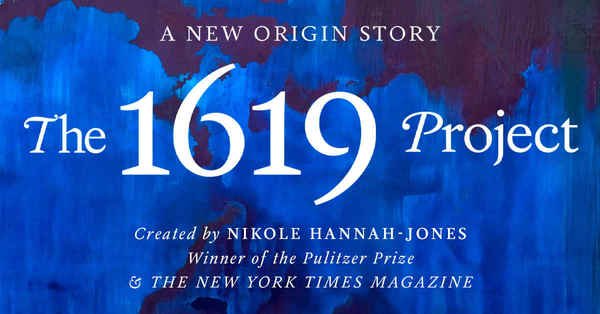
This is abundantly clear if we commit to learning the full and unexpurgated truth of our nation’s history. That’s why this week, I’m highlighting the publication of The 1619 Project: A New Origin Story, by Nikole Hannah-Jones, and inviting you to read the book with me. Are you interested?

Long-time readers of this newsletter know that I deeply respect Ms. Hannah-Jones and have featured almost every article she’s written over the past six years. But I never imagined that Ms. Hannah-Jones would be leading a grand public reconceptualization of our nation’s founding. She writes, “I see my work as forcing us to confront our hypocrisy, forcing us to confront the truth that we would rather ignore.”

The book arrived on my porch last Tuesday, and so far I’ve read only the preface, resisting the urge to devour the thing whole.

In the 17-page essay, entitled “Origins,” Ms. Hannah-Jones tells the story of how she first learned the significance of the Year 1619. In her predominantly white Iowa high school, she enrolled in a one-semester elective class, “The African American Experience,” taught by Mr. Ray Dial, her first and only Black teacher. “Sitting in that class each day,” she writes, “I felt as if I had spent my entire life struggling to breathe and someone had finally provided me with oxygen.” In one book she read, Ms. Hannah-Jones remembers the text “1619” leaping in three dimensions off the page, mesmerizing her and throwing her off-kilter.

Reflecting on this revelation, Ms. Hannah-Jones realizes the power of what she had discovered, as well as the reasons her previous teachers had hidden this knowledge from her. She writes:

Even as a teenager, I understood that the absence of 1619 from mainstream history was intentional. People had made the choice not to teach us the significance of the year. I was starting to figure out that the histories we learn in school or, more casually, through popular culture, monuments, and political speeches rarely teach us the facts but only certain facts.

Although she criticizes our country’s schools, textbooks, and history curriculum, Ms. Hannah-Jones understands that the bigger problem is our “outdated and vague sense of the past” that centers a “mythology of our founders as unimpeachable heroes and our founding as a divine event.”

What we need, she argues, is a new origin story, one that begins in 1619 rather than in 1776. She asks, “What would it mean to reframe our understanding of U.S. history by considering 1619 as our country’s origin point, the birth of our defining contradictions, the seed of so much of what has made us unique?”

Unfortunately, we know what this reframing would mean and has already meant. It’s led to sneering, mean-spirited backlash (and some healthy historiographical debates). It’s led to the 1776 Commission. It’s led to states banning The 1619 Project from classrooms and libraries.

What it’s not led to? People actually reading the work. Sometimes I wonder how many Americans have read the project’s original flagship essay. My inner cynic predicts that white progressives will buy the book for anti-racist cred, proudly displaying their $38 hardcover as a trophy on their bookshelf, perfect for their Zoom background, right next to Isabel Wilkerson’s Caste.

Despite my skepticism, I’m excited to read the book and share my thoughts with you, if you’re interested. As a former history teacher, an admirer of Ms. Hannah-Jones, an avid reader of well-written nonfiction, and a person who wants this country to be more inclusive and democratic, I look forward to engaging with the book’s central claim:

We argue that much about American identity, so many of our nation’s most vexing problems, our basest inclinations, and its celebrated and unique cultural contributions spring not from the ideals of 1776 but from the realities of 1619, from the contradictions and the ideological struggles of a nation founded on both slavery and freedom.

Loyal readers, what do you think of all this? Are you a Nikole Hannah-Jones stalwart like I am? Are you concerned with how we’re teaching history to our children and how we’re talking about history in our communities? I’d love to hear your thoughts.

Thank you for reading this week’s issue of The Highlighter. Did you enjoy it? Or do you want to go back to the normal format? Let me know by clicking on “Yes” or ”No” below.

To our new subscriber Travis, I hope you find the newsletter a solid addition to your email inbox. To our long-time subscribers (Quinnen! Quynh! Quinton!), you’re pretty great, too. VIP Peter, thank you for sharing the newsletter and getting the word out.

If you like The Highlighter, please help it grow. I appreciate your support. Here are a few ways you can help:

On the other hand, if you no longer want to receive this newsletter, please unsubscribe. See you next Thursday at 9:10 am PT!

#320: Back To Normal?

Lately I’ve noticed that I’m more tired than usual. (You too?) As far as I know, there’s no rational reason for this. After all, it’s not like living my life requires large amounts of energy. But still it’s something I’ve noticed.

My latest theory about the cause of my exhaustion is that I want things to be normal when they’re nothing but. When I see my friends and family, and when colleagues say things like “now that lockdown’s over,” I want to believe that we’re officially moving into the “after” stage of the pandemic. But we’re still very much in the “during.”

I remind myself that this is going to take time.

This week’s issue of The Highlighter focuses on the lasting effects of the pandemic on our mental health and the challenges of reintegrating back into our “normal” daily lives. The lead article, “I’m Failing My Students,” captures the emotions of many teachers as they try to do their best for young people. The middle two pieces clearly explain the magnitude of the problems we’re facing, lest we pretend everything’s fine. If you’re absolutely not interested in reading anything pandemic-related, which I respect, I highly recommend the last article, “How To Reintegrate,” about a soldier coming back from a tour of duty. It’s the best piece this week.

+ One of the most common things I hear from you is that you love to read, and you want to read more, but things get in the way. Is this you? Want to do something about it? If so, hit reply, let me know, and we’ll chat.

I’m Failing My Students

Tom Rademacher teaches Language Arts to eighth graders in Minnesota. Before the pandemic, he was on top of the world, being named the state’s teacher of the year, writing books, feeling confident and effective. But this year, as young people return from nearly two years of virtual school, “teaching is just harder.” Mr. Rademacher has run out of energy and patience. “I have less of me to give. I hate being bad at this.”

He writes: “All of us are tired. All of us are doing too much. It’s absurd to me that this year, after last year and after the year before it, we are doing anything other than healing. This should be a year of simple. This should be a year when every non-essential thing is stripped away and every arm we can manage is wrapped around our students to welcome them back into something that feels solid, feels stable, feels human.” (5 min)

Why ‘Getting Back To Normal’ May Actually Feel Terrifying

Twenty months later, we’re no longer on lockdown. But most of us don’t feel “back to normal.” What exactly is this in-between state we’re in? According to psychologists Marcantonio Spada and Ana Nikčević, our brains are coping with chronic stress by keeping our bodies alert and safe from danger. For some people, that means PTSD and severe anxiety and depression. For others, it means wanting to see your friends and family but staying home instead. (9 min)

+ You may need to register with your email address to gain access to this (free) article.

An Epidemic Of Fatigue

The effects of the pandemic on the mental health of young people are staggering. According to one study, two-thirds of young people in the United States have clinically significant symptoms of anxiety and depression. And the problem is not just an American one. In this article, French researcher Marie Jauffret-Roustide and her colleagues report that young adults in Europe are experiencing high levels of loneliness that may persist for years to come. Psychological despair is even worse for queer people and people of color, with the majority not having access to mental health services. (11 min)

How To Reintegrate

This first-person story of reintegration has nothing to do with the pandemic. But it poignantly captures the in-between nature of being in two places at once. Veteran Bronson Lemer, who served in Kosovo and Iraq, returns from a tour of duty after meeting a man who stirred his insides. While he comes out to a few friends, Mr. Lemer keeps his secret from his family and his military unit. Using the imperative, he writes, “Remember how it felt to want to become someone else. To want to be seen and heard and understood. To connect with someone on a real, genuine level. Wonder if you’ll ever find someone who truly sees you and understands how you feel. That is all you really want from this world.” (12 min)

Thank you for reading this week’s issue of The Highlighter. Did you enjoy it? Let me know by clicking on “Yes” or ”No” below. I like hearing from you.

To our three new subscribers (sorry that I didn’t catch your first names), I hope you find the newsletter a solid addition to your email inbox. To our long-time subscribers (Patricia! Patrick! Pat!), you’re pretty great, too. VIPs Michele and Sivan, thank you for sharing the newsletter and getting the word out.

If you like The Highlighter, please help it grow. I appreciate your support. Here are a few ways you can help:

On the other hand, if you no longer want to receive this newsletter, please unsubscribe. See you next Thursday at 9:10 am PT!

#319: Following The Conversation

Happy Thursday, loyal readers. I’m happy that you’re here.

If you didn’t receive last week’s issue, you’re not alone. For some reason, for about 300 of you, Gmail sent the newsletter to your spam folder. (Boo, Google.) To prevent this from happening again, you can train Google to deliver The Highlighter to your inbox. This quick video (2 min) has three tips that (hopefully) will work.

OK, that’s enough about that. Now let’s get to the good stuff.

One of my favorite things about The Highlighter is how we follow topics for a long period of time. Through reading outstanding longform articles (and for many of you, discussing them in Article Club), it’s like we dip into a conversation, see what’s going on, then consider how the dialogue develops and shifts over time.

That’s what today’s issue is all about. If you’re a longtime subscriber, no doubt you’ve read many pieces in this newsletter about The 1619 Project. This week’s lead article continues the conversation by offering perspective on the current controversy about critical race theory, reminding us that historians have always debated how to construct the past. The other pieces – about Ahmaud Arbery, the Census Bureau, and the coaching industry – are also excellent, building on topics of race and culture that our reading community has found important for a long time.

+ As always, I’d love to hear from you. Please hit reply and send me a note.

The 1619 Project And The Long Battle Over U.S. History

Nearly three years ago, when Nikole Hannah-Jones pitched The 1619 Project to The New York Times Magazine editor-in-chief Jake Silverstein, neither of them knew that the issue would transform the way we look at U.S. History and cause a backlash that would ban its use in public schools.

But now it all makes sense, argues Mr. Silverstein in this outstanding essay. If we want to understand why the narrative of our country’s founding is so controversial today, we need to look at historiography, the study of how historians interpret and form the narrative of our past.

Rather than rehashing the current brouhaha, or defending his magazine’s scholarship, Mr. Silverstein familiarizes us with the main eras of historiography, pointing out the contributions of key historians and emphasizing that history is always a conversation, a tug of war, always political, and never static.

Mr. Silverstein writes: “Devotion to the traditional origin story of the United States, and the hostile reaction that has greeted nearly every attempt to revise it, have prevented generations of Americans from learning how to accept this fundamental contradiction at our core — the painful twinning of slavery and democracy that began as far back as the summer of 1619. But as we have seen, in a democratic nation, history does not stand still. As our country has moved forward from its imperfect beginnings, haltingly expanding its audacious promise to enfranchise more and more of us, our history has transformed behind us, rearranging itself as the advance of our founding principles enables us to see more of our American ancestors as having had a legitimate, recoverable perspective on the events of their own day.” (37 min)

+ Eminent history professor Eric Foner is quoted in this essay. VIP Clare, a fan of historiography, interviewed him for The Highligher Podcast in 2017.

An Interview With Mitchell S. Jackson, Author Of The Pulitzer Prize-Winning Profile Of Ahmaud Arbery

It won’t be a surprise when the Pulitzer Prize-winning article, “Twelve Minutes and a Life,” shows up next month in The Highlighter’s Best of 2021 issue. Mitchell S. Jackson’s profile of Ahmaud Arbery was so exceptional that I invited him to participate in Article Club. Too bad his agent declined. But at least we have this awesome interview from the Longform podcast. Mr. Jackson talks about how he learned to write, how he built trust with Mr. Arbery’s family, how he organized the piece, and how he wants to do great work, rather than popular work. (60 min)

+ Mr. Mitchell’s article originally appeared in #298.

The Enumerator: Dispatches From A Broken Census Count In California

Journalist Jeremy Miller needed extra cash last year during the pandemic, so he signed up with the Census Bureau for $25 an hour. This first-person account chronicles his attempts to count working class residents of color in Richmond, California. He learns how a seemingly technical, bureaucratic endeavor can offer opportunities for human connection in a lonely and untrusting time – that is, as long as you say “sorry to bother you” and don’t remind people that their compliance is required by the government. (25 min)

+ This continues the conversation from #137.

I’m A Life Coach, You’re A Life Coach: The Rise Of An Unregulated Industry

I believe in the power of coaching. After all, I’ve worked with teachers as an instructional coach for 10+ years. But this article reveals the dark underbelly of parts (not all!) of the coaching industry – namely, that it’s a bit of the Wild West right now, with no code of ethics or oversight board, and if you’re a charismatic blowhard, like Brooke Castillo, founder of The Life Coach School, you can gain a cult-like following that makes you millions and hangs on your every word. “I want her,” one student said. “I want the real thing.” (21 min)

Thank you for reading this week’s issue of The Highlighter. Did you enjoy it? Let me know by clicking on “Yes” or ”No” below. I like hearing from you.

To our new subscribers Dan and Monica, I hope you find the newsletter a solid addition to your email inbox. To our long-time subscribers (Oz! Olivia! Omar!), you’re pretty great, too. VIPs Elise S and Meghan, thank you for sharing the newsletter and getting the word out.

If you like The Highlighter, please help it grow. I appreciate your support. Here are a few ways you can help:

On the other hand, if you no longer want to receive this newsletter, please unsubscribe. See you next Thursday at 9:10 am PT!