#268: 4 Things For Right Now

new-highlighter-nameplate.png

Loyal readers, I hope you are taking good care of yourself as our divided country awaits the result of our presidential election. It is a stressful, anxious time. Please reach out if you want to talk.

Some of you might be hankering for articles with perspectives on the election, and others might prefer the exact opposite. Though I’m sure thoughtful articles will emerge soon enough (as they did four years ago), this week, I’ve decided to try something different. Rather than sharing the usual fare of outstanding articles on race, education, and culture, I’m offering resources and organizations for you to check out instead. They’re good, solid projects involving good people. (You’re already part of one of them!) These resources are meant to inspire you to do something with the emotions that you’re possibly feeling, rather than spending your days and nights doomscrolling. I hope you find at least one of them valuable — and if you do, please let me know! I’d love to hear more.

Before you jump in: I’d like to appreciate loyal readers Trevor, Allison, Erin, Sage, and Lynn for reaching 200 issues. I’m grateful for your readership and your efforts to encourage other thoughtful people to try on this newsletter. Thank you!

Listen For A Change

If we listen more deeply to the stories of our most marginalized, we have the ability to transform ourselves and our communities. That’s the premise of Listen for a Change, which aims to break the cycle of discrimination by empowering voices through personal storytelling. Founded by loyal reader Thai Chu, the organization puts on storytelling events, conducts workshops on Instagram, and coaches high school students to celebrate their lived experiences and discover how best to tell their story.

Black Futures Lab

Built from the foundation that Black people are brilliant and diverse, the Black Futures Lab believes that imagination, innovation, and investment can resolve the challenges facing Black communities. Its Black Census Project, the largest survey of Black people conducted since Reconstruction, offers rich data to challenge policymakers. The Shirley Chisholm “Unbought and Unbossed” Black Politics Project organizes and mobilizes Black voters and promotes the newest generation of Black progressive political candidates. If you want to learn more, start with “Black to the Ballot,” which calls for an expansion of vote-by-mail.

+ Thank you to longtime loyal reader Ben for sharing this with me.

Barnraisers Project: White People Organizing Against White Supremacy

Many white people join groups for social justice that focus on reading (and little doing) or hanging out with like-minded white people in a competition of who’s wokest. The Barnraisers Project, founded by Milwaukee native Garrett Bucks, trains white people to build relationships and coalitions in order to move their white family, friends, and community from denial to defensiveness to action. Why? “To be blunt,” Mr. Bucks writes, “because it is white people’s unwillingness to change our mindsets, beliefs and actions that keep our country from living up to its aspirations.” Otherwise, “we’re going to stay stuck in a pattern of symbolic victories and reactionary backlash.”

The Highlighter Article Club

Even though I sometimes joke about reading clubs (see above), I believe strongly that reading can be transformative, especially with the right text, the right people, and the right emphasis on building connections. That’s what Article Club is about. Join us this month to read, annotate, and discuss Hafizah Geter’sTheater of Forgiveness,” one of the most powerful articles ever to appear in this newsletter. The piece explores the personal and cultural legacy of violence against Black bodies. I’m honored to collaborate with loyal reader Sarai Bordeaux to interview Ms. Geter and to facilitate our conversation.

+ Here’s the fastest way to sign up for the discussion.

There’s a lot going on, so thank you for reading The Highlighter this week! I appreciate it. Let me know what you thought about today’s issue by hitting reply or by clicking on the thumbs below. I’m grateful for your feedback.

Also, let’s welcome our reading community’s new subscriber MG. I hope that you find this newsletter a solid addition to your Thursday email inbox.

If you really like The Highlighter, please help it grow and get better. I appreciate your support. Here are a few ways you can help:

On the other hand, if this newsletter is cluttering your inbox, please unsubscribe. See you next Thursday at 9:10 am PT!

#267: America In Line

imrs.jpg

This time next week, loyal readers, we will have had the election, and who knows, maybe we’ll even know our next president. This week’s lead article, “America In Line,” captures the enthusiasm and anxiety of the moment, with interviews of Americans in six states ready to cast their votes. If you’re practicing a no-election-news pledge in order to save your sanity, like many of my friends, fast scroll down to “Mama’s Babies,” a heartwarming short film. Then take in this week’s pet photo before enjoying two pieces featuring the powers of our mind and the delights of this fall season.

+ I’m very proud of the reading community we’re building over at Article Club, where we read, annotate, and discuss one great article every month. We just concluded our 10th article, focusing on “Miranda’s Rebellion,” by Pulitzer Prize-winning reporter Stephanie McCrummen, who generously answered our questions in a podcast episode. If you’re interested in deepening your reading experience with other kind, thoughtful people, please let me know, and I’ll share with you the details and a sneak peek of November’s selection.

America In Line

More than 75 million Americans have already voted, a huge increase from the last presidential election. While many of us have chosen to mail or drop off our ballots, the voters featured in this article — from Houston, Albuquerque, Chattanooga, Sarasota, Atlanta and Columbus — opted for the old-fashioned route of waiting in line.

To pass the time, they listened to podcasts, texted their friends, scrolled through Twitter, read the newspaper, and if they were advanced, brought multiple phones, for battery’s sake. In Houston, Goya Escalante said she “wanted the satisfaction” of voting in person. “I want to feel America.” In Albuquerque, 18-year-old Alfred Achusim voted for the first time and said, “It’s a duty. It’s a privilege.” (20 min)

+ U.S. Government teachers, this article might be perfect weekend reading for your students. It does a good job exploring the diverse beliefs and experiences of Americans from key swing states.

Mama’s Babies

In this touching tribute, filmmaker Adrian Burrell tells the story of his 94-year-old grandmother, the “Queen of San Pablo,” who has lived in West Oakland since 1945, ever since migrating from Jim Crow Louisiana. Despite the losses of gentrification and the gravity of white supremacy, Grandma does not dwell on the negative. Rather, she focuses on family and on the joys of her 16 children, 58 grandchildren, 112 great-grandchildren, and 158 great-great-grandchildren. Mr. Burrell says, “Long after I’m gone, and even longer after my grandma, our people are going to have something to look back on.” (11 min)

+ This weekend, call your mom, dad, aunt, uncle, or grandparent, and ask them to tell you a story.

Shut Up, I’m Manifesting!

A long time ago, I was going through a rough patch, and a good friend reminded me that the only reality we experience is the one we create with our thoughts. Hogwash, I thought. But apparently, the process of manifesting has taken hold, especially among young people, who maintain that if you practice positive thinking and script your dreams, your crush will text you back, or you’ll land a great job, or Lorde will drop a new album. (Bonus points if you manifest on TikTok.) Don’t mind the research that says that reaching your goals takes effort. (14 min)

How America Invented The White Woman Who Just Loves Fall

Nobody knows whether kids will trick or treat this weekend or if families will convene for Thanksgiving, but once thing’s for sure: Fall is upon us, and that means white women will enjoy their pumpkin spice. In this playful-yet-serious article, Hazel Cillis connects the dots of this phenomenon all the way back to New England, to the myth of Thanksgiving, the role of 19th-century influencer Sara Josepha Hale, the rise of domesticity and agritourism, and later contributions by Martha Stewart and the romanticism of Gilmore Girls. You don’t like cinnamon, nutmeg, and cloves just because. (14 min)

You’ve reached the end of this week’s issue. Thank you for reading The Highlighter. Please congratulate yourself for getting some good reading done. Let me know what you thought about today’s issue by hitting reply or by clicking on the thumbs below. I’m grateful for your feedback.

Also, let’s welcome our community’s 7 new members, including Yudy, Gage, Shining, Emma, Fish, and Helene. I hope that you find this newsletter a solid addition to your Thursday email inbox. (Sivan, Martha, and Camille: Thank you for getting the word out!)

If you really like The Highlighter, please help it grow and get better. I appreciate your support. Here are a few ways you can help:

  • Send today’s issue to a friend and encourage them to subscribe. Please ask yourself: Who might like getting the newsletter?

  • Buy me a cookie so my sugar levels stay high enough to read. (Big thanks to Tali and an anonymous donor for your six!)

  • Formalize your support and become a VIP for $3 a month. (VIPs have been clamoring for The Highlighter Hoodie.)

On the other hand, if this newsletter is cluttering your inbox, please unsubscribe. See you next Thursday at 9:10 am PT!

#266: How The 1619 Project Took Over 2020

imrs (1).jpg

Happy Thursday! Thank you, loyal readers new and old, for opening today’s issue of the Highlighter. One tidbit about this newsletter is that each week starts fresh, which means I typically don’t save articles for future issues. If a piece doesn’t make the cut, that’s too bad. In general, I like this approach, because there’s an immediacy to the process, but the downside is that some weeks teem with outstanding articles, while other weeks leave me scrounging for days for pieces worthy of your time.

That’s all to say that I’m happy to report that high-quality writing was in abundance this week. I’m confident that you’ll appreciate all four pieces. Today’s lead article offers a measured account of The 1619 Project, its contributions to our culture, and the outcry that followed its publication last August. If historiography isn’t your thing, take in an inspiring profile of Angela Davis and a stimulating interview of Isabel Wilkerson. Both pieces will help center you. If they don’t, you can always resort to making yourself an elaborate paper planner, which promises to allay your anxiety. Please enjoy!

How The 1619 Project Took Over 2020

Last August, the night before The New York Times published The 1619 Project, Nikole Hannah-Jones asked, “What if I told you that the year 1619 is as important to the American story as the year 1776?” This provocative question framed a masterwork of journalism that won her a Pulitzer Prize and earned accolades from many teachers eager to have their students reconsider the prevailing narrative of our nation’s founding.

But the project also has faced a major backlash, first from a small group of prominent historians, who revealed an historical inaccuracy in the original text, then from a libertarian journalist, who frolicked in a Twitter tug of war with Ms. Hannah-Jones, and finally from our current President, who claims, basically, that students who learn about slavery will learn to hate America.

In case you haven’t been following this culture war blow by blow, this succinct article by Sarah Ellison does an outstanding job summarizing the controversy and explaining the significance of the debate. (20 min)

+ Teachers: I’d love to hear how you used The 1619 Project with your students this year.

The Greats: Angela Davis Still Believes America Can Change

Angela Davis: “The real criminals in this society are not all of the people who populate the prisons across the state, but those who have stolen the wealth of the world from the people. The elephant in the room is always capitalism. Even when we fail to have an explicit conversation about capitalism, it is the driving force of so much when we talk about racism. Capitalism has always been racial capitalism. The abolitionist imagination delinks us from that which is. It allows us to imagine other ways of addressing issues of safety and security. Most of us have assumed in the past that when it comes to public safety, the police are the ones who are in charge. When it comes to issues of harm in the community, prisons are the answer. But what if we imagined different modes of addressing harm, different modes of addressing security and safety?” (26 min)

+ Please ask me about the time Prof. Davis and I had an intimate conversation on the streets of San Francisco.

The Caste System In America: Isabel Wilkerson On Armchair Expert

The first Black woman to win the Pulitzer Prize, Isabel Wilkerson developed her thesis that American institutional racism is a rigid, inexorable caste system in the 15 years she conducted research for The Warmth of Other Suns, her classic book on the Great Migration. In this interview with Dax Shepard, Prof. Wilkerson is equally warm, thoughtful, and incisive, explaining in plain terms how our caste system grants or withholds status and privileges, assigned at birth, based on a person’s perceived rank in the hierarchy. If you haven’t read Caste yet, this conversation might get you over the hump. (68 min)

+ If you don’t have time right now to read another book, check out an excerpt, featured in Issue #250.

In A World Gone Mad, Paper Planners Offer Order And Delight

Are these chaotic times making your brain hurt? If so, you may want to log off your Google Calendar and get yourself an old-fashioned paper planner to regain your sanity and spur your creativity. You’ll join a community of millions of (mostly white) women who will help you block your time, meet your goals, and build colorful spreads (with or without stickers). But as Quinci LeGardye warns, don’t get too caught up or else you’ll fall down the Plan With Me rabbit hole, worry about how your hands look on video, analyze the racial inequities in the community, and spend way too much at The Happy Planner. (20 min)

+ Reader Annotations: Last week’s crowdsourced Padlet, “An Anonymous Teacher Speaks,” in which teachers complained of “toxic positivity,” struck a chord. A teacher who wished to remain anonymous wrote:

I want to get lost in the negativity. I don’t like that about myself. My coach and one of the school leaders love to say we can do hard things — and if anyone can do this, it’s us. What if we can’t? Or what if we are trying but it’s bad?

Thank you very much for sharing your thoughts. Loyal readers, if one of today’s articles resonated with you, please hit reply and tell me what you think. That’s what makes this reading community a strong one. Plus I’d appreciate it!

Unfortunately, all good things must come to end. Thank you for reading The Highlighter. Please congratulate yourself for getting some good reading done. Let me know what you thought about today’s issue by hitting reply or by clicking on the thumbs below. I’m grateful for your feedback.

Also, let’s welcome our community’s 3 new members Darren, Desiree, and Paul. (Thank you, Susan and Lynette, for getting the word out!) I hope that you find this newsletter a solid addition to your Thursday email inbox.

If you really like The Highlighter, please help it grow and get better. I appreciate your support. Here are a few ways you can help:

On the other hand, if this newsletter is cluttering your inbox, please unsubscribe. See you next Thursday at 9:10 am PT!

#265: The Store That Called The Cops On George Floyd

78865ff4-35d3-4308-865f-81671b9cef21.jpeg

Happy Thursday, loyal readers! Because of all your support, this newsletter keeps coming out week after week. Today’s issue did not come easily, but I’m happy that I kept looking for pieces worthy of your time and attention. I’m confident you’ll appreciate the lead article, which offers a different and important perspective of the killing of George Floyd. If you’re an educator, you’ll likely want to dive into (or avoid altogether) the second piece. Then after the fold, in typical Highlighter eclectic fashion, you’ll find a thoughtful article on the meaning of the mustache, followed by a stern warning on the danger of the grapefruit. Please enjoy!

+It’s been since June since we met up, so please join me next Thursday, October 22, for Highlighter Happy Hour #15. We’ll meet 5:30 - 6:30 pm PT on Zoom, connect with other thoughtful members of our reading community, and (maybe) talk about the lead article. Bring a beverage of your choice and participate in general merriment. All you need to do is hit reply and say, “I’m in!” Everyone is welcome and encouraged to swing by.

The Store That Called the Cops on George Floyd

On Memorial Day, a police officer killed George Floyd outside the CUP Foods at the corner of 38th Street and Chicago Avenue in southern Minneapolis.

This is the story of Malik, the 18-year-old clerk at the convenience store who called the cops that evening, accusing Mr. Floyd of passing a counterfeit bill. This is the story of co-owner Mahmoud Abumayyaleh, who closed the shop after receiving death threats and later commissioned a mural to honor Mr. Floyd. This is the story of English teacher Marcia Howard, the corner’s “community liaison for security,” whose GoPro, walkie-talkie, and eagle-eyed vision protect the store from vandalism and arson. And this is the story of Carmen Means, who believes CUP Foods played “a meaningful role in the lynching of George Floyd” and therefore should never reopen.

In this well-written piece, Aymann Ismail reports on the aftermath of Mr. Floyd’s killing from a variety of viewpoints, exploring the role of the community in reckoning with the tragedy. (27 min)

An Anonymous Teacher Speaks

Being a teacher is not easy. That’s definitely true this year, with distance learning, incessant Zoom calls, students with their cameras off, and no end in sight. What to do? Educator shea martin invited teachers to vent, posting their grievances on a shared Padlet. Emotions run hot. Teachers feel overwhelmed, under-appreciated, not valued and not seen, angry at school leaders and administrators, and frustrated with “toxic positivity.” Example: “If I hear ‘You can do hard things!’ one more time, I’m going to come unglued.” (20 min)

+ What are your thoughts after reading these posts?

My Mustache, My Self

Wesley Morris: “I knew before the summer’s Black Lives Matter protests that my mustache made me look like a bougie race man: a professional, seemingly humorless middle-class Negro. I live a street over from a thoroughfare where the protests happened almost nightly in June and July. One evening, I stood at a corner, moved, as thousands of people passed. Some protesters had their fists raised in a Black-power salute. So I raised mine. Not a gesture I would normally make. The Black-power salute is not a casual gesture. It’s weaponry. And that didn’t feel quite right. It always seemed like more Blackness than I’ve needed, maybe more than I had. I’m not Black-power Black. I’ve always been milder, more apprehensive than that. I was practically born with a mustache.” (26 min)

Grapefruit Is One Of The Weirdest (And Most Dangerous) Fruits On The Planet

Loyal reader Marni reminded me this week that “Mark, it has been way too long since you’ve featured fruit in The Highlighter.” Never fear, the grapefruit is here. Hailing from Barbados (not Asia, like all other citrus), the grapefruit caught popularity in the 1930s after shedding its original name (the “shaddock”) and getting connected with a new fad low-calorie diet. (Yes, that one.) Too bad that ingesting grapefruit can kill us. Its furanocoumarins block our body’s cytochrome P450 enzymes, thereby causing adverse reactions with many drugs, like Xanax, Ritalin, Zoloft, Lipitor, and Tylenol. Next Sunday brunch, be safe out there! (14 min)

Thank you very much for reading yet another issue of The Highlighter. Do you have thoughts or feelings about one of the articles today? Let me know by hitting reply or by clicking on the thumbs below. I’m grateful for your feedback.

Also, let’s welcome our community’s 3 new members, including Matt and Christine. I hope that you find this newsletter a solid addition to your Thursday email inbox.

If you really like The Highlighter, please help it grow and get better. I appreciate your support. Here are a few ways you can help:

On the other hand, if this newsletter is cluttering your inbox, please unsubscribe. See you next Thursday at 9:10 am PT!

#264: Abolition For The People

Happy Thursday, loyal readers, and thank you for opening today’s issue of The Highlighter. I grew up white, suburban, and excessively rule-abiding, and for those and many other structural reasons, I’ve never had a negative encounter with the police. That’s partly why reading “Abolition For The People,” this week’s lead essay collection, was so illuminating and helpful. Edited by Colin Kaepernick, the series — which will grow to 30 essays over the course of this month — calls not just for defunding the police but dismantling the carceral state altogether. I urge you to read it, especially if it might challenge your politics and worldview.

If prisons and the police do not spark your interest, check out this week’s other excellent articles, including Victoria Blanco’s ode to her grandmother, Erica L. Green’s report on the unfair discipline of Black girls in school, and Daniel Vock’s analysis that GreatSchools has exacerbated housing segregation. Please enjoy!

+ Big thanks to loyal readers Nicki, Court, Hansa, and Wendy. You’ve reached 100 issues! Thank you for making our reading community a strong one.

Abolition For The People

This collection of outstanding articles — by Colin Kaepernick, Dr. Angela Y. Davis, Dr. Simone Browne, Dr. Mark Anthony Neal, Kiese Laymon, Dr. Stuart Schrader, Talila “TL” Lewis, and kihana miraya ross — make a simple case: that we need to abolish prisons and the police and invest in a future that emphasizes justice and the needs of the community.

Definitely read Mr. Kaepernick’s introductory essay, which argues that “defunding the police” and other reforms will serve only to preserve and entrench a system that has surveilled and terrorized Black people for too long. He writes, “Another world is possible, a world grounded in love, justice, and accountability, a world grounded in safety and good health, a world grounded in meeting the needs of the people.”

The other pieces are extremely valuable, too, and cover a range of topics. Don’t worry: There’s no “right order” if you want to read several. (~60 min)

“Las Flores Son Para Los Vivos”

Victoria Blanco: “Abuelita was 83 years old when she told us about her desire to be buried next to her family in Juárez. When she had turned 78, her rheumatoid arthritis had swelled her right leg and arm to twice their size. The abuelita of my early youth, who crushed red chiles and stirred a pot until the chile colorado became thick and auburn, who pulled baking trays from the oven filled with her enchiladas and chiles rellenos, who called my brothers and me to dinner and coaxed us to eat more, was becoming quiet and distant. Telenovelas and pills carried her through the evenings until she fell asleep. Throughout my adolescence I heard her cries of pain at night. My mom, exhausted after a full day of work, would run to her mother’s bedside to find that pain made Abuelita moan in her sleep. I became used to hearing the night cries, but my mom was the one who went to her; she spent a decade making sure that her mother remained asleep, if not free of pain.” (18 min)

Student Discipline Rates Show Black Girls Are Disproportionally At Risk

At a rate even more disproportionate than Black boys, Black girls face more frequent and harsher punishment in school than their white peers. They’re five times more likely to be suspended than white girls and three times more likely to receive referrals to law enforcement. Erica L. Green reports that “adultification bias” among white educators explains the discrepancy and shares how a new lawsuit by the NAACP Legal Defense and Educational Fund demands legal recourse. (12 min)

+ Thank you to loyal reader Morenike for sharing this article with me.

Did GreatSchools Make Neighborhood Segregation Worse?

Educators already know that GreatSchools, which gives each public school a score based mostly on standardized tests, isn’t so great. It’s really not great when these scores are plastered on Redfin as code for school demographics. CEO Jon Deane is open to changing his company’s algorithm to be more fair but maintains that parents deserve access to information about neighborhood schools. Plus, he adds, he can’t personally prevent potential homeowners from being racist. (17 min)

+ Reader Annotations: Let’s start off with a kind word from VIP Angelina. She wrote, “With the chaos of fires, COVID, and distance learning, The Highlighter is one consistent joy in my life right now.” Thank you, Angelina! Loyal readers, if you feel similarly, go ahead, make your sentiments known.

Also, last week’s lead article, “Is Freedom White?” resonated with many readers and sparked strong reactions. Loyal reader Cindy found the piece provocative and shared this thoughtful reply:

I have often truly been perplexed by the enormous fear behind white men who think that giving me and other people who are not white the same equality and fairness is somehow going to subtract from their freedoms. It always felt like a toddler who was mad they had to share. I put it in the bucket of some deep pathetic fear that drives typical bully logic and justification to oppress. But this article really helped clarify the idea that their actual definition of freedom means exercising power over others. It was very enlightening, so thank you!

Thank you very much, Cindy, for sharing your ideas. Loyal readers, if an article moved you or got you thinking, I’d love to hear from you. All you need to do is hit reply!

Thank you very much for reading yet another issue of The Highlighter. Do you have thoughts or feelings about one of the articles today? Let me know by hitting reply or by clicking on the thumbs below. I’m grateful for your feedback.

Also, let’s welcome our community’s 3 new members: Carmen, Anoop, and Marta. (Caitlin, thank for getting the word out!) I hope that you find this newsletter a solid addition to your Thursday email inbox.

If you really like The Highlighter, please help it grow and get better. I appreciate your support. Here are a few ways you can help:

On the other hand, if this newsletter is cluttering your inbox, please unsubscribe. See you next Thursday at 9:10 am PT!
#263: Is Freedom White?

Jefferson_20Cowie_20George_20Wallace_20University_20of_20Alabama_20freedom_20white.jpg

Welcome to October, loyal readers! Thank you for opening today’s issue of The Highlighter. It’s a good one. Don’t worry: This week’s lead article is not clickbait; rather, it’s an outstanding essay that explains why white people feel threatened when people of color gain freedom. I recommend it highly, even if you’re not a history buff.

If you prefer less history, scroll down to read a strong argument to reopen schools, a clear justification for reparations, and a surprising connection between the wellness industry and QAnon. Please enjoy!

+ Sign up for Article Club this month and discuss “Miranda’s Rebellion,” one of our favorite articles so far this year. Pulitzer Prize-winning reporter Stephanie McCrummen (who also broke the Roy Moore story) will be answering our questions. In case you want to know what you’re getting yourself into, here’s a breakdown. If you join, you’ll get your first post this Sunday.

Is Freedom White?

Americans love freedom. But we don’t agree on a common definition. There are three types of freedom, according to sociologist Orlando Patterson: personal freedom (to do as we please), civic freedom (to participate in public life), and sovereign freedom (to exercise power over others). According to Jefferson Cowie, this third type of freedom — “the unrestrained capacity to dominate” — is the most dangerous, given our country’s racism.

Prof. Cowie writes, “Freedom was used to steal land from Native Americans, defend slavery, defeat Reconstruction, justify lynching, fight the New Deal, oppose civil rights, elect Trump, and label Black Lives Matter as seditious.”

The only way for all Americans to achieve equality, Prof. Cowie argues, is for white people to stop presuming that freedom means the right to dominate everyone else. (14 min)

The Students Left Behind By Remote Learning

Shemar is 12 years old, lives in East Baltimore, loves math, and hates remote learning. That’s because his Internet is spotty, his teacher quit, and his school doesn’t have enough laptops. Most of all, though, despite the hard work and dedication of teachers and school leaders, distance learning is just not as effective as the real thing. In this nuanced article, Alec MacGinnis makes the case that public schools should reopen as soon as possible, or else children will regress in their learning so much that “it will be virtually impossible to come back.” (39 min)

The Great White Heist

Michael Harriot: “The fantasy that we call the ‘American Dream’ isn’t solely funded by decency, hard work, or American exceptionalism. It comes from theft. Punishing a thief is not justice, it is retribution. For justice to exist, the victim must be made whole and their losses must be repaid. Justice demands restitution, and until there are reparations, there can be no justice. Until there are reparations, anyone who pledges their allegiance to the flag that stands for a country with ‘liberty and justice for all’ is a liar and a thief.” (10 min)

+ California will become the first state to consider reparations for descendants of enslaved people.

Eat, Pray, Conspiracy: How the Wellness World Embraced QAnon

If you’ve read this newsletter long enough, you know that I like to follow the pros and cons of the wellness industry. You may also know about my strange fascination with right-wing movements (like QAnon). But did you ever expect these two topics to intersect? Well, with the rise of #SaveTheChildren, all of a sudden Hala Khouri and other health practitioners, who find power in questioning science and the mainstream medical industry, are realizing how yoga, supplements, vaccines, masks, and child trafficking all lead to an overarching international conspiracy theory. “We want to wake up, we want to see the truth,” Ms. Khouri says. (10 min)

Thank you very much for reading yet another issue of The Highlighter. Do you have thoughts or feelings about one of the articles today? Let me know what you thought by hitting reply or by clicking on the thumbs below. I’m grateful for your feedback.

Also, let’s welcome our community’s 6 new members: Tom, Natasha, Elias, Yassine, Samurai, and Swordsman. I hope that you find this newsletter a solid addition to your Thursday email inbox.

If you really like The Highlighter, please help it grow and get better. I appreciate your support. Here are a few ways you can help:

On the other hand, if this newsletter is cluttering your inbox, please unsubscribe. See you next Thursday at 9:10 am PT!

#262: The Glorious RBG

51eaff2cb7c3b417885ee3588aae93f6ac-09-RGB.1x.rsocial.w1200.jpg

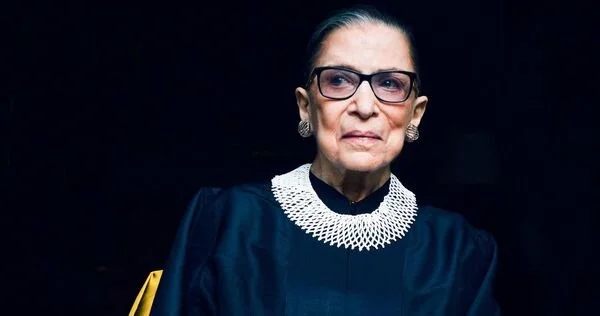
I’m one of those people who believed that Ruth Bader Ginsburg would live forever. You too? When she died last Friday, I was in shock, even before I began to realize how her absence would shape our country’s politics over the next few months. Today’s issue is dedicated to her legacy. I welcome you to take in one of the pieces and appreciate the contribution she made to our nation.

If you’ve already read everything RBG-related, this week’s other articles — focusing on the voting trends of African Americans, the fight to remove a Confederate monument in Maryland, and the selfish inclinations of American universities — are also excellent. I hope you take a look, and please enjoy!

+ I’d love your help getting the word out about the newsletter. That’s why I’ve made this email template that you can modify and send to your friends and colleagues. Please try it out — it’s a little like magic!

The Glorious RBG

Long before people tattooed her face on their bodies or followed her exercise routine (push-ups and planks), and before her famous dissent — with corresponding collar — in Shelby County v. Holder (2013), Ruth Bader Ginsburg fought for the liberation of women and men. Arguing that gender discrimination violated the Fourteenth Amendment’s Equal Protection clause, Ms. Ginsburg believed that “there’s something wrong with that view of the world, a man’s world with a small space in it for a woman, relegated to her own confined corner.”

This tribute to RBG by Irin Carmon, author of Notorious RBG, succinctly captures the Justice’s personal and professional life, offering glimpses into her childhood, her triumphs at the Court, her husband’s love, and her favorite beverage at the opera. (10 min)

+ More RBG: Linda Greenhouse’s obituary, Nina Totenberg’s account of their friendship, and Ms. Ginsburg’s dissent in Shelby County (2013).

The Black Monolith

Black people vote overwhelmingly for Democrats, but that doesn’t mean they’re all liberal (far from) or that trends can’t change (they have before). In this well-written article, Theodore R. Johnson explains how Reconstruction, the Great Migration, the Voting Rights Act, and the Southern strategy contributed to what appears to be Black people’s monolithic voting patterns. “Why do a vast majority of Black Americans, despite our diverse politics, vote the same?” Mr. Johnson asks. ”Because our rights are always on the ballot.” (21 min)

+ This is a great article for Government teachers.

My Local Confederate Monument

At the county courthouse in Easton, Maryland, a small town not far from the birthplace of Frederick Douglass, a monument commemorating Confederate soldiers still stands, even though the state never seceded and the majority of residents want the memorial removed. Author Casey Cep, who grew up on the Eastern Shore, explains how white people in her community, especially those serving on the county council, do not consider themselves racist, find “diversity training” offensive, disagree with the Black Lives Matter movement, and believe that removing the monument would amount to erasing history. (20 min)

The End Of The University

This scathing critique of higher education argues that colleges care more about profit than access and suggests that public universities have prospered by embracing neoliberal privatization. “If we could create a world where Black students were free to learn at free universities,” author Justin Cook writes, “we would have created a world where everyone else was finally able to do so as well.” Mr. Cook makes a strong case that higher education is “a convoluted system of affirmative action for affluent white people,” but his solution to the problem does not seem viable to me. What do you think? (27 min)

Thank you very much for reading yet another issue of The Highlighter. Let me know what you thought by hitting reply or by clicking on the thumbs below. I’m grateful for your feedback. (If you’re advanced: Leave me a short voice message!)

Also, let’s welcome our community’s 4 new members: Mikeie, Rayaan, Josh, and Dave. (Thank you, Elizabeth, for your good word!) I hope that you find this newsletter a solid addition to your Thursday email inbox.

If you really like The Highlighter, please help it grow and get better. I appreciate your support. Here are a few ways you can help:

On the other hand, if this newsletter is cluttering your inbox, please unsubscribe. See you next Thursday at 9:10 am PT!

#261: Climate Migration Will Reshape America

20mag-Climate2-Images-facebookJumbo.jpg

Happy Thursday, loyal readers, and thank you for opening today’s newsletter. I appreciate your readership, whether you’re new to The Highlighter (hi Dorothy!) or not-so-new (hi Heidi!). This week’s lead article, which focuses on the climate crisis in our country, describes in detail how warming will result not only in more (un)natural disasters but also in mass migration of Americans.

If gloomy science isn’t for you, I recommend today’s other pieces, including a powerful personal essay by Jaquira Díaz, an illuminating look at the challenges of voting-by-mail, and a worrisome investigation into the surveillance of Black Lives Matter activists. Please enjoy. I hope that you’ll find at least one article that piques your curiosity, and have a great week!

+ Article Club is in its ninth month (already?), and I invite you to check it out if you want to read more deeply and connect with fellow loyal readers. This month, we’re discussing “I Went to Disney World” (#254) by Graeme Wood. Find out more information here.

+ Thank you for all the kind emails about last week’s issue. If you like the newsletter and want to leave a kind word, please do!

Climate Migration Will Reshape America

The eerie orange skies in the Bay Area, the catastrophic wildfires out West, and the devastating hurricanes in the South have left many of us paralyzed with despair about the severe effects of climate change. But the worst is yet to come. In this solemn article, environmental reporter Abrahm Lustgarten explains that within the next 20 years, 13 million Americans will migrate, mostly from the South, to escape the dangers of global warming. The poor and elderly will be left behind.

Some predictions: Buffalo will feel like Tempe; 700,000 people will leave the Bay Area, New York will build a $100 billion sea wall, many beaches will disappear; Phoenix and Atlanta won’t have enough water; we’ll have another Dust Bowl; and the housing market will collapse.

Despite that frightening forecast, not all is doom and gloom. About half of Americans, for example, now rank climate as a top priority, a huge increase since 2016. That trend extends to conservatives, with one in three now believing that global warming “should be declared a national emergency.” The question remains: Are we going to do anything about it? (27 min)

America Is In Crisis. But Some Of Us Have Never Known Any Different.

Jaquira Díaz: “I am the Black daughter of a white woman, which means that in my family tree there are colonizers as well as colonized people, and I carry this violence in my body. I see it in the mirror every day. Whether or not people read me as Black, I’m a racialized person: I’m Latina; my first language is Spanish; I have an accent. I’m also a gay woman with a white transmasculine fiancé. The truth is, some of us have never felt safe. Some of us have always been navigating systems of power and oppression in our homes, in our workplaces, in our schools, so we were not surprised by the last presidential election, because while some of America woke up to reality in November 2016, or even just last month, the rest of us have been waking up in this America since we were born or arrived here.” (8 min)

Here’s VIP Elise proudly drinking her inaugural tea with her fancy new Highlighter mug. (She receives extra points for having Malala and Paul Tough’s books in the background.) Are you secretly jealous?

The Democracy Factory

If voting-by-mail fails in November, it won’t be the fault of the U.S. Postal Service or incompetent state and local elections boards. According to Jesse Barron in this well-reported article, the problem lies not with government but with private corporations like Runbeck Election Services, a Phoenix-based ballot printer. Can they print the ballots fast enough? Will the $500,000, 20-foot-long W+D BB700-S2 inserter put the right ballots in the right envelopes? Will the AgilisDuo machine verify voter signatures correctly? Mr. Barron says maybe. (18 min)

How San Francisco Police Surveillance Closed In On BLM Protests

Next time you’re out and about in San Francisco, know that the police have access to 2,400 cameras if they think you’ve committed a crime. But thanks to the Surveillance Oversight and Transparency Ordinance, passed last year, city departments can’t introduce new methods of surveillance without following specific procedures. Unfortunately, that didn’t stop the Union Square Business Improvement District from giving the police unfettered access to its 375 cameras during the Black Lives Matter protests in June, causing some activists to have second thoughts about exercising their First Amendment rights. (8 min)

Thank you very much for reading yet another issue of The Highlighter. Let me know what you thought by hitting reply or by clicking on the thumbs below. I’m grateful for your feedback.

Also, let’s welcome our community’s 8 new readers: Water, Tobi, Anne, DW, Jacky, Leslie, Dorothy, and Lynette. (Thank you, Marcella, for getting the word out!) I hope that you find this newsletter a solid addition to your Thursday email inbox.

If you really like The Highlighter, please help it grow and get better. I appreciate your support. Here are a few ways you can help:

On the other hand, if this newsletter is cluttering your inbox, please unsubscribe. See you next Thursday at 9:10 am PT!

#260: Raising A Black Family In White America

index-1599249513.jpg

Let’s begin this edition with some gratitude. This week, I received several kind notes from you, thanking me for continuing to publish this newsletter every Thursday despite our wild times and orange skies. I won’t lie: I’ve thought once or twice about taking a week off. But it’s clear that reading helps me process what’s happening out there, plus it’s an honor to share my favorite articles with you. I’m extremely appreciative that you show up week after week, trusting me with your reading time. Thank you!

Now comes the part where I tell you that every single piece this week is outstanding (true), that I highly recommend the lead article by Ijeoma Oluo (especially if you’re a parent), that even if you’re not a science person, you’ll enjoy “State Of The Species” (so much new knowledge!), that Florida should concern you (obviously), and that, as Ta-Nehisi Coates emphasizes, high-quality writing is a rare gift. Thank you again for being a loyal reader, and please enjoy.

Raising A Black Family In White America

Ijeoma Oluo: “Inspired by my conversation with my 12-year-old son Marcus, I’ve spent more time lately listening to young activists. They have every reason to be far angrier than I am. And they are angry. But they are so much more than that. They have seen us struggle, and the price we’ve paid for that struggle; they have seen the fire go out in our eyes, and they still decide that they, too, will try to change the world. After more than four centuries of brutality and oppression, how amazing is yet another generation that demands revolution?

“What an unfathomable tragedy to meet this wonderful gift with apathy and resignation. We have the chance to help our children in ways broader society didn’t help us or those who came before us. To receive their fierce love with equally fierce respect. To use our dollars, our votes, and our voices to dismantle policies that seek to harm them. To honor their commitment to fighting for justice. To teach them the heritage of Black resistance. To ensure that they feel they are part of something so much larger than themselves. To make clear that their lives matter.” (13 min)

+ Want to read more by Ijeoma Oluo? Try Issues #97, #128, #171, #181, and #188. But first, read Ms. Oluo shatter Rachel Dolezal back in Issue #89.

State Of The Species

Don’t worry, loyal readers: This isn’t an apocalyptic look at climate change and how we’re all doomed. Rather, it’s one of the best articles that I’ve read on the history of humans and our remarkable success as a species. If you’re a novice scientist, like I am, you’ll love Charles Mann’s clear explanation of how Homo sapiens prospered, despite many challenges (e.g., body lice, supervolcanic eruptions), because of its unparalleled ability to adapt. We’re very good at keeping on going. The only problem? Most successful species kill themselves off. Will we be next? (37 min)

Who Gets To Vote In Florida?

Two years ago, Florida passed Amendment 4, which reinstated voting rights for ex-felons, who the state had previously disenfranchised for life. Soon after, however, the state legislature passed a law requiring ex-felons to pay outstanding fees and fines, thereby suppressing 750,000 potential voters, about half of whom are Black. “I want them to fight for it,” state senator Mike Bennett said. “Do you ever read the stories about the people in Africa — the people in the desert, who literally walk two and three hundred miles so they can have an opportunity to do what we do?” Potential voter Betty Riddle said, “Not all the Republicans are bad. But they don’t want us to vote. Because they think they’re going to lose.” (41 min)

+ For more on voting rights and voter suppression, check out Issues #3, #26, #61, #63, and #137.

Ta-Nehisi Coates, On Breonna Taylor

Always thoughtful, Ta-Nehisi Coates is outstanding in this conversation with Evan Ratliff, in which he discusses guest editing the September edition of Vanity Fair and centering the words of Tamika Palmer, the mother of Breonna Taylor, in the cover story, “A Beautiful Life.” “Good things take time,” Mr. Coates said, explaining his contribution to protest the killing of George Floyd. “You gotta let things cook. You can’t insta-bake something like this.” (49 min)

Thank you very much for reading yet another issue of The Highlighter. Let me know what you thought by hitting reply or by clicking on the thumbs below. I’m grateful for your feedback.

Also, let’s welcome our community’s 6 new readers: Biz, Mark, Stacy, and three great anonymous people. I hope that you find this newsletter a solid addition to your Thursday email inbox.

If you really like The Highlighter, please help it grow and get better. I appreciate your support. Here are a few ways you can help:

On the other hand, if this newsletter has not brought you value, or if it’s just not working for you at this time, please unsubscribe. See you next Thursday at 9:10 am PT!

#259: On Witness And Respair

Happy Thursday, loyal readers, and thank you for opening today’s issue of The Highlighter. Back in March, when the pandemic hit and we began sheltering in place, articles about the coronavirus flooded my feed, but few included the depth of writing and perspective worthy of our reading community. That trend has shifted lately, and this week’s two lead articles — “On Witness and Respair” and “What Happened In Room 10?” — approach the pandemic in different, touching, heartbreaking ways. Plus, I have a general rule to read whatever Jesmyn Ward writes, so even though her piece will likely make you cry, I recommend it nonetheless.

If crying isn’t your thing this week, skip right to the pet photo (for tears of joy), then to an article about teacher trafficking (tears of anger), then finally to a piece on the dilemma of Black bookstore owners (tears of some-emotion-in-between). As always, my hope is that you’ll find at least one article that speaks to you, and if you like, please reach out and let me know what you think. Have a great week!

On Witness And Respair

Jesmyn Ward: “My Beloved died in January. He was a foot taller than me and had large, beautiful dark eyes and dexterous, kind hands. He fixed me breakfast and pots of loose-leaf tea every morning. He cried at both of our children’s births, silently, tears glazing his face. Before I drove our children to school in the pale dawn light, he would put both hands on the top of his head and dance in the driveway to make the kids laugh. He was funny, quick-witted, and could inspire the kind of laughter that cramped my whole torso. He traveled with me often on business trips, carried our children in the back of lecture halls, watchful and quietly proud as I spoke to audiences, as I met readers and shook hands and signed books. He indulged my penchant for Christmas movies, for meandering trips through museums, even though he would have much preferred to be in a stadium somewhere, watching football. One of my favorite places in the world was beside him, under his warm arm, the color of deep, dark river water.” (10 min)

What Happened In Room 10?

At the Life Care Center of Kirkland, Washington, where the first American outbreak of the coronavirus killed 46 people, 85-year-old Twilla and 98-year-old Helen shared Room 10. This big, well-written article poignantly tells their story, revealing not only our lack of preparation for the pandemic but also our lack of care for the elderly, who account for more than a quarter of total COVID-related deaths. You’ll root for Helen, rage against the nursing home industry, and wonder why we’re so callous toward our country’s most vulnerable. (71 min)

Trafficking In Teachers

What do some school districts do when faced with a teacher shortage? Instead of increasing pay or improving working conditions, they recruit teachers from overseas, most notably the Philippines, partnering with shady companies with patriotic names, like Teach USA and Teach Quest USA. These agencies take advantage of the country’s J-1 “cultural exchange” visa program, promising teachers the American Dream while stiffing them with exorbitant fees, temporary work, and no pathway to citizenship. Some victims are going to court, arguing that the exploitation and abuse they faced constitutes human trafficking. (33 min)

Linking Allies To Action In The Heart Of The Black-Bookstore Boom

When former teacher Onikah Asamoa-Caesar first thought of opening Fulton Street Books & Coffee in Tulsa, Oklahoma, she dreamed of building a community-gathering space for Black people. But then white people started buying thousands of books, prompting Ms. Asamoa-Caesar to wonder whether her bookstore had become a “center of intellectual triage for white people.” Here’s the story of how a Black bookstore owner works toward realizing her long-term vision while navigating a short-term clientele. (11 min)

+ Reader Annotations: Last week’s article, “Un-Adopted,” sparked strong emotions, including this response from loyal reader and VIP Angelina:

The adoption and “re-homing” of a child from another country who has autism really rubbed me the wrong way. I caught another article a few weeks back about the Stauffers and was enraged. Ridiculous these people: Children are not animals!

Thank you for sharing your thoughts, Angelina. You make our reading community better. Loyal readers, if an article this week moved you, please feel free to reach out by hitting reply.

Too bad, you’ve reached the end. Thank you very much for reading yet another issue of The Highlighter. Let me know what you thought by hitting reply or by clicking on the thumbs below. I’m grateful for your feedback.

Also, let’s welcome our community’s 4 new readers: Meaghan, JW, Jonny, and Rachel. I hope that you find this newsletter a solid addition to your Thursday email inbox.

If you really like The Highlighter, please help it grow and get better. I appreciate your support. Here are a few ways you can help:

On the other hand, if this newsletter has not brought you value, or if it’s just not working for you at this time, please unsubscribe. See you next Thursday at 9:10 am PT!