#223: The Best Articles Of 2019

Screen Shot 2021-01-06 at 9.51.01 AM.png

Thank you, Loyal Readers, for another great year! Our community of thoughtful readers continues to strengthen, and I am very grateful that you trust me to bring you outstanding articles week after week. Here’s 2019 by the numbers. Thank you!

  • 51 issues, 208 articles, ~67 hours of reading

  • 542 subscribers, 21 VIPs, 13 coffee connoisseurs

  • 4 HHHs, 172 joyful attendees, 4 grand prizes

  • 3 Pop-Up Article Clubs, 1 new Article Club

And now, it’s time to reveal the best articles of the year. Can you feel the excitement? Do we need a fancy award ceremony?

Before I announce the winners, here’s a bit about the selection process. From the 200+ articles, I chose 27 quarterfinalists (which I scanned again), then 11 semifinalists (which I read again). Then I consulted your favorite 10 articles of the year (a great list), just to make sure I wasn’t way off base. Finally, by brute force and sheer will, I landed on my favorite four articles of the year. I think they’re outstanding. My hope is that you’ll read them and enjoy them.

See you in the new year! I’m taking next week off.

America Wasn’t a Democracy Until Black Americans Made It One

In this brilliant essay, Nikole Hannah-Jones argues that 1619, not 1776, should mark the beginning of our nation’s history. Slavery, rather than the Declaration of Independence, more accurately explains the foundation of the United States. Despite their centuries-long subjugation, Black Americans have shaped our country’s experience, Ms. Hannah-Jones emphasizes. She writes, “Black Americans have been, and continue to be, foundational to the idea of American freedom. More than any other group in this country’s history, we have served, generation after generation, in an overlooked but vital role: It is we who have been the perfecters of this democracy.” (34 min)

Samantha, White Nationalist

Before Samantha joined the alt-right and became a white nationalist, she grew up in New Jersey and Florida, worked at Chipotle, and volunteered for the Obama campaign. Then Samantha met Richie, who cooked and danced and played the guitar. She fell in love. At first it didn’t matter that Richie quoted 4chan and made anti-Semitic remarks. But when he began arguing for racial purification and announced, “I’m a fascist,” that was too much. Samantha left Richie — that is, until she decided to look into some of his beliefs, to find out where he had gone wrong. Five days later, after watching YouTube videos and reading articles online, Samantha changed her mind: She wanted to become an advocate for the white race, too. (35 min)

Faith, Friendship, And Tragedy At A High School In Santa Fe, Texas

Ninth grader Jaelyn had straw-blond hair and turquoise eyes, believed in God, and was new to Santa Fe High School, located in a suburb of Houston. Long homeschooled, she had told her parents that God had “put it on her heart” to branch out and meet new people. Eleventh grader Sabika, who had black hair and mahogany eyes, believed in Allah, and also was new to Santa Fe. An exchange student from Pakistan, she had told her parents that she wanted be like Malala Yousafzai and have an impact on the world. This is the story of Jaelyn and Sabika’s friendship, the hope of young people, and the power of human connection across difference. You’ll cry at the end, no doubt, but please don’t let that deter you from reading this extraordinary article, so plainly and beautifully written. (44 min)

The Crane Wife

Ten days after calling off her wedding, author CJ Hauser travels to the gulf coast of Texas to study whooping cranes for an upcoming novel. On the trip, Ms. Hauser reflects on her failed relationship, realizes painful personal truths, and begins the healing process. Ms. Hauser writes, “It’s easy to say that I left my fiancé because he cheated on me. It’s harder to explain the truth.” This is a beautiful, raw, heart-wrenching essay. (16 min)

Were my favorite articles your favorite ones, too? Or would you like to stage a protest? Please vote using the thumbs below. Or hit reply and tell me your thoughts. Also, please welcome our reading community’s two new subscribers, including Rebecca. I hope that you find the newsletter a welcome addition to your email inbox.

If you like The Highlighter, please help it grow and get better. I appreciate your support. Here are a few ways you can help:

  • Forward this issue to a friend and urge them to subscribe,

  • Show your gratitude by buying me a coffee (thanks to the two anonymous folks who did so last week),

  • Go big and become a VIP member (thank you, Dina!).

On the other hand, if you don’t find value in receiving this newsletter, please unsubscribe. See you in two weeks — on Thursday, January 9, at 9:10 am!

#222: Status Update

Hi Loyal Readers! Let me start off by saying sorry for sending you the extra post on Monday, intended for the newsletter’s VIP members. I made a mistake and sent it to everyone! I’m embarrassed, of course, but I guess mistakes happen sometimes. I apologize for the confusion. If you ended up reading Monday’s post, or listening to my audio letter, now you have my reflections on how to make HHH even better. (Next one is March 5!)

OK, now back to regular programming. This week’s issue includes outstanding articles and podcast episodes on citizenship status, the politics of language, the examination of masculinity, and sassy mom merchandise. Please enjoy!

+ Starting next month, I’m launching Article Club, which you should join if you’re interested in reading more closely and connecting with other thoughtful readers. Check out my ideas for the club and let me know your own!

Status Update: Living With Uncertainty, Facing The Specter Of Deportation

As the Supreme Court considers this term whether to end DACA, nearly 9 million people in the United States live in families whose members have different citizenship statuses. This poignant Code Switch episode follows three high-achieving siblings living in Los Angeles: Miriam, who is a DACA recipient; Abigail, who is undocumented, and Joseventura, who is a U.S. citizen. You’ll hear the love they have for each other and their determination to stick together no matter what. Even if you’re not a podcast fan, you’ll appreciate this episode. (26 min)

A Language For All: Teens In Argentina Fight To Eliminate Gender In Language

While many Americans trip over using they-them pronouns, young people in Argentina are challenging rules of the Spanish language to include non-binary identities. Los chicos y las chicas is becoming les chiques. Friends are amigues and cousins are primes. Activist Natalia Mira says that language “is a product of a hegemonic, patriarchal, and sexist power,” and changing the plural -os to -es “generates a little crisis in your mind. It makes you stop and think about how we communicate.” (13 min)

Examining Masculinity Inside a Group Where Men Confront Their Feelings

Four issues ago, I featured an article that criticized Evryman and other men’s groups seeking to discover “a new masculinity” through “manhood-confirming adventures.” In this piece, writer Benjy Hansen-Bundy has a different experience sitting with other men and sharing his “unspeakables.” The process helps him challenge his homohysteria and reframe his sexual identity. It’s like CrossFit for your emotions, he says. (26 min)

The Quiet Protests of Sassy Mom Merch

Mom merch is getting sassy, says bestselling author Jia Tolentino. Her latest favorite is the saying, “This mom runs on coffee, wine, and Amazon Prime,” emblazoned on T-shirts and mugs in bridesmaid font. In a society that encourages an impossible and unhealthy ideal of womanhood, mommy influencers have struck back, reminding us that all this perfection is performative and inauthentic — or at least aided by two-day delivery. (6 min)

+ Ms. Tolentino can write about anything. Here’s her take on vaping, religion, affirmative action, and weighted blankets.

What a shame, you’ve reached the end of today’s newsletter. Did you like this week’s issue? I hope so. Please vote using the thumbs below. Also, please welcome our reading community’s three new members: Viva, Donna, and Chrysanthius. I hope that you find the newsletter a welcome addition to your Thursday email inbox.

If you like The Highlighter, please help it grow and get better. I appreciate your support. Here are a few ways you can help:

On the other hand, if your New Year’s resolution is to jettison all email, please unsubscribe. See you next Thursday at 9:10 am!

#221: In The Garden of Good And Evil

Hi there, Mark here. Thank you for opening today’s edition of The Highlighter. Before anything else, why don’t you hit reply and say hi? You’ll feel great, plus I’ll write you back something kind.

This week’s issue includes yet another outstanding video from a loyal reader. (Keep them coming!) Also you’ll read great articles on good and evil (and naiveté), higher education, Black women journalists, and calculator market monopolies. Please enjoy!

+ HHH is tonight! It would be great to see you. Please swing by. If you do, you’ll meet other great people, chat about the articles, build your empathy, and have a chance to win two crowd-pleasing grand prizes. We’re meeting at Room 389 beginning at 5:30 pm.

+ Looking to read more (and more closely) in the new year? Article Club is for you. A dedicated group of readers will focus on one article per month. If you want to have a deeper Highlighter experience, and to connect with other thoughtful readers, please sign up. (It’s free.) We’ll start up in January.

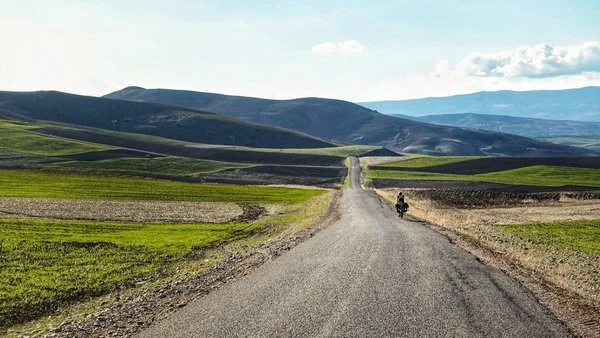
A Bike Ride Through the Garden of Good and Evil

“Evil is a make-believe concept,” 28-year-old Jay Austin wrote in his blog, on the 273rd day of an around-the-world bike ride with his girlfriend, Lauren Geoghegan, after a stranger saved their lives in the icy, blizzardy mountains of southern Spain. “By and large, humans are kind. Generous and wonderful and kind.” Three months later, the couple was murdered by terrorists in the Pamir Mountains of Tajikistan.

This is the story of two young Americans who quit their jobs and got on their bikes to see the world. They wanted to reduce their carbon footprint, seek adventure, and trust the universe. Their mission statement made things clear: “[We want] to be given hope, confirmation that the oft-maligned batch of humans that occupy this planet are largely good and kind.” (23 min)

+ This article reminded me of “The American Missionary And The Uncontacted Tribe,” (#207), which I highly recommend.

California Higher Education Reforms Are Tackling The Biggest Challenges

Here’s an uplifting article about the state of higher education in California! Who knew that could be true? It turns out that the Golden State has raised four-year graduation rates (19% to 28%), increased community college transfers, eliminated remedial classes (saving $1.3 billion a year), hired more advisers, built food pantries, and moved textbooks online. How? It’s simple: California is one of just four states that has increased its higher education budget since 2008. (17 min)

The Heroines of America’s Black Press

Esteemed journalist Nikole Hannah-Jones, who led The 1619 Project (#205) at The New York Times, credits the work of Ida B. Wells as instrumental in shaping the arc of her career. This article emphasizes that Ms. Wells did not act alone and profiles six lesser-known Black women journalists whose search for truth — amid the rise of the Ku Klux Klan, the height of Jim Crow, and the terror of lynching — paved the way for advances in racial justice, gender equality, and political reform. (23 min)

Big Calculator: How Texas Instruments Monopolized Math Class

Most advanced Math classes and the AP Calculus exam require the use of graphing calculators, which run $100-plus a pop, and which present equity challenges for teachers who work in low-income schools. This article explains how Texas Instruments hoards huge profits (each calculator costs $15 to produce) and has maintained a monopoly on the market. One way is by preventing Desmos, a free online alternative, from gaining traction. (14 min)

+ Reader Annotations: Loyal reader Matt appreciated last week’s lead article but disagreed with the author’s interpretation of Catholicism’s conception of happiness.

One line stood out to me and made me want to do some further research. The author states, “When the word ‘happy’ first entered the English lexicon, around the mid-14th century, it meant something closer to ‘lucky,’ since one’s status, health and happiness were wrapped up in the arbitrary decisions of the Catholic God.” That didn’t settle well with me, as I doubted that it was a true Catholic teaching on the nature of happiness. It seemed inaccurate to assert that the “Catholic God” made arbitrary decisions about who gets to be happy and who doesn’t. So I turned to Thomas Aquinas and the Catechism of the Catholic Church to see what was mentioned about happiness. The way I understand them, happiness is directly correlated to the pursuit of the divine (such as through faith, virtue, beatitudes, etc.), as opposed to something that is “arbitrarily decided” by the divine. Maybe I am misinterpreting what the author was aiming to say, but it felt like he was suggesting that a Catholic teaching is that God chooses some people to make happy and others not. If so, I would argue that to be incorrect.

Thank you, Matt, for sharing your thoughts and doing additional reading. You’re a good candidate for Article Club!

That’s it for this week! I hope you’re not (too) angry that today’s edition has ended. Did you like this week’s issue? Please vote using the thumbs below. Also, please welcome our reading community’s six new members: Zaretta, Jamilah, Luis, Newsletters Squad, Emily, and Shay. I hope that you find the newsletter a welcome addition to your Thursday email inbox.

If you like The Highlighter, please help it grow and get better. I appreciate your support. Here are a few ways you can help:

  • Forward this issue to a friend and urge them to subscribe,

  • Give your thanks by buying me a coffee — thank you, Elise, Lsgyc, and “Someone,” for your tasty coffees last week,

  • Support the newsletter long-term by becoming a VIP member.

On the other hand, if you thought this was going to be a newsletter about highlighters, please unsubscribe. See you next Thursday at 9:10 am!

#220: Happiness Makes Us Miserable

Happy Thanksgiving, loyal readers, and thank you for taking a break from the cornucopia (aka “horn of plenty”) and opening this week’s abbreviated issue of The Highlighter.

Today the newsletter features two great articles and two exciting announcements. You might think the start of the holiday season would spur me to include more joyous, uplifting articles. Not yet! Instead, you get pieces on the ruse of happiness and the rise of homelessness. They might not be cheery, but they’re worth your reading time (especially the second one).

Good thing I have two pieces of good news:

You’re invited to Highlighter Happy Hour #12 on Thursday, Dec. 5, beginning at 5:30 pm, at Room 389 in Oakland. So far, 23 loyal readers have secured their tickets. Get yours now!

I’m launching The Highlighter Article Club! If you want to read more in 2020, and you want to read more closely, and push your thinking and build your empathy, and connect with other thoughtful readers who want to do the same, you should join! We’ll focus on one article a month beginning in January. Here’s more information if you’re interested.

Happiness Makes Us Miserable

Being happy is in, and being anything else is out. In our era of positive psychology, if you’re not happy, that just means you’re not working hard enough to pursue peak experiences and curate your Instagram feed. This article explains how the definition of happiness has changed over the years, leading us to feel anxious and depressed for experiencing the normal range of human emotions. Sadness, after all, is only negative if we think it is. (13 min)

3 kids. 2 paychecks. No home.

Candido and Brenda live with their three children in a van parked outside the Natividad Medical Center in Salinas, California, an abundant agricultural area 100 miles south of San Francisco. Though they work full time, Candido and Brenda can’t find affordable housing in a town where rents have skyrocketed 60% over the past five years. Salinas Valley, where Cesar Chavez organized farm workers, is now more expensive than Chicago or Miami, and 8,000 children are homeless, more than San Francisco and San Jose combined. (23 min)

+ Reader Annotations: Loyal reader Genna appreciated “Spaces Without White People” and shared the following:

The lead article about people of color needing their own spaces and why was the first article, in a while, that I immediately opened and started reading. I feel the work I’m doing in the UNtraining really helps me understand the writer more. Your collection of articles is incredibly thought provoking and heart opening. Thank you for sharing with the world!

And thank you, Genna! I’m happy you liked last week’s lead article. Loyal readers, if you have something to say, say it! I’d love to hear from you. Hit reply or record your voice.

OK, that’s enough reading for now. It’s time to get back to eating. Did you like today’s issue? Vote your conscience using the thumbs below. Also, please welcome this week’s 4 new subscribers: AparnaBradSub, and Chelsea. I hope that you find the newsletter a welcome addition to your Thursday email inbox.

If you like The Highlighter, please help it grow and get better. I appreciate your support. Here are a few ways you can help:

  • Interrupt your Thanksgiving meal and tell your friends and family they can’t have any stuffing until they subscribe,

  • Use this email template to urge your colleagues to sign up,

  • Give your thanks by buying me a coffee — thank you, Michele, for your tasty coffee last week,

  • Become a VIP and enjoy my undying gratitude, plus bask in the glory that you’re the reason the mugs are so great.

On the other hand, if you no longer enjoy reading this newsletter, please unsubscribe. See you next Thursday at 9:10 am!

#219: Spaces Without White People

219.jpg

Happy Thursday, Loyal Readers! Today’s issue is two parts race, two parts economics. This week’s lead article, which I highly recommend, focuses on why people of color need and deserve their own spaces, separate from white people. The second piece discusses why some white people become radicalized into far-right ideologies and what can be done to change their beliefs.

If those two articles don’t interest you, and if you’re thinking of buying a home, especially in the Bay Area, check out the last two articles, which will confirm that it’s pretty much impossible, and how maybe it shouldn’t be a goal in the first place, particularly if you’re a millennial. Please enjoy!

+ It’s time: Highlighter Happy Hour #12 is coming soon! Join me and ~50+ fellow loyal readers at Room 389 on Thursday, December 5, beginning at 5:30 pm. It would be great to see you there! Please lock in the date and secure your free ticket now. (Prize if you do.)

Spaces Without White People

In mixed-race spaces, according to Ijeoma Oluo, white people cause harm by centering their voices, controlling the discourse, and protecting their comfort. That’s why people of color need spaces distinct from white people. In this outstanding essay, Kelsey Blackwell explains the healing that comes from meeting in racial affinity. She writes:

We need places in which we can gather and be free from the mainstream stereotypes and marginalization that permeate every other societal space we occupy. We need spaces where we can be our authentic selves without white people’s judgment and insecurity muzzling that expression. We need spaces where we can simply be—where we can get off the treadmill of making white people comfortable and finally realize just how tired we are.

Later in the piece, Ms. Blackwell challenges the argument that affinity spaces prevent opportunities for inclusion. She cautions white people from assuming that integration is the ultimate goal. Even at their best, mixed-race spaces are “engineered” — awkward, fake, and harmful. (20 min)

+ Want to read this article later? Save it to Pocket. It won’t get lost that way!

No Longer A Nazi: Making Amends For A Life Of Far-Right Radicalism

From the time she was 15 to the time she turned 20, Shannon Foley Martinez was a skinhead. She attended Klan rallies, dated neo-Nazis, and prepared herself for race war. Then a teacher helped her out of her hate. Since then, Ms. Martinez has worked to deradicalize white nationalists and members of hate groups. Along the way, she’s found that most radicals suffer from longstanding, unhealed trauma, and that the only pathway to transformation is through emotion, not ideology. (16 min)

Charli, who belongs to loyal reader Eva, reads The Highlighter on Sunday mornings with her favorite warm beverage. Want your pet to appear in The Highlighter? hltr.co/pets

Charli, who belongs to loyal reader Eva, reads The Highlighter on Sunday mornings with her favorite warm beverage. Want your pet to appear in The Highlighter? hltr.co/pets


Gimme Shelter: Living In The Bay Area

In 2016, the year of the Ghost Ship fire, investigative reporter Wes Enzinna lived in a 32-square-foot shack in West Oakland. A 33-year-old transplant from New York, Mr. Enzinna clearly describes the challenges of living in the Bay Area and the intractable gaps between the rich and the poor. But in his discussion of gentrification, he doesn’t mention his race, focusing instead on his working-class background. Given the length of this otherwise excellent piece, it’s a curious omission. (37 min)

+ If you read last week’s lead article, also from Harper’s Magazine, open this one in a new browser to avoid the paywall. Or subscribe!

American Dream, American Nightmare: The Obsession With Homeownership

Now that I (partly) own a home, I have opinions about homeownership. For instance: I like it. But for many millennials, buying a home is untenable, undesirable, and no longer associated with the American dream. If you’re paralyzed with debt, not planning on having kids, and worried about climate change, you may find homeownership “boring” and “mundane.” You might connect with 35-year-old Erik, who said, “I like that my life isn’t following a set pattern.” (20 min)

+ Reader Annotations: Last week’s lead article, “Men At Work,” caused a stir. VIP Michele wrote, “Holy moly! It’s incredible the lengths people will go to to avoid doing the real work of self- reflection and connecting themselves to a larger picture toward systemic change.” Loyal reader Lisa wrote, “Ooof, the Evryman piece was hard to read. And so hilarious in places. And sad.”

On “The Porch Pirate of Potrero Hill,” loyal reader Sophie wrote, “I used to live on Potrero Hill right around the time of the events surrounding Ms. Fairley. My roommates and I had NextDoor accounts and we had a lot of thoughts and feelings about how our neighbors characterized other residents and described the goings-on in the neighborhood. I think the article did an excellent job capturing the tone of the hill at that very moment in time.”

On “Dolly Parton’s America,” loyal reader Daniel wrote: “Being a life-long devotee of mid-20th-century country music, I was pleased to have my attention directed to the podcast regarding Dolly Parton. I would encourage you to reevaluate the label “abusive” as a descriptor of Porter Wagoner in the context of his work with Dolly Parton. It is easy, and perhaps satisfying, to view the on-stage/on-camera dynamic between Wagoner and Parton through a 21st century lens (as the contemporary journalist quoted on the podcast seems to have done). Indeed, hiring a female singer to be a “pretty little gal” on a TV show seems awkward (to say the least) by today’s standards, especially here in urban California. Viewed now, Wagoner certainly seems patronizing, and he appears to play into gender roles which were then much more mainstream. Regarding Parton’s departure from the Porter Wagoner Show, as Parton herself explains, it was understandable that Wagoner would be frustrated to lose his top protégé. Parton also concedes that the show belonged to Wagoner — it was his show and she was, in fact, hired to be something which, ultimately, she did not want to be. In the podcast, Wagoner seems to be depicted as something akin to the folkloric Rumpelstiltskin; Parton herself seems much more aware and magnanimous.”

Thank you for sharing your thoughts, Michele, Lisa, Sophie, and Daniel. I invite all of you to hit reply and tell me what you think! It pushes me and improves our reading community.

Must yet another issue of The Highlighter come to an end? It must. But there will be another one soon. In the meantime, use the thumbs below to tell me what you thought. Also, let’s please welcome this week’s 3 new subscribers, including Wade and Jeannette. I hope that you find the newsletter a welcome addition to your Thursday email inbox.

If you like The Highlighter, please help it grow and get better. I appreciate your support. Here are a few ways you can help:

  • Forward this issue to a friend and urge them to subscribe,

  • Show your appreciation by buying me a coffee — thank you, Jamie and Erin, for your coffees last week,

  • Become the 21st esteemed VIP member, support the newsletter’s growth, and collect gobs of my undying support.

On the other hand, if receiving this newsletter adds to your guilt that you’re not reading enough, please unsubscribe. See you next Thursday, for a truncated Thanksgiving issue, at 9:10 am.

#218: Men At Work

218.jpg

Sorry, Loyal Readers: Today’s issue unfortunately does not highlight the early-’80s Australian rock band that brought us the megahits “Down Under” and “Who Can It Be Now?” But this week’s lead article, which focuses on one (disturbing) approach to mitigate toxic masculinity, is outstanding, and I highly encourage you to carve out 41 minutes of your week to give the article your attention.

If you’ve had enough of men, feel free to enjoy pieces on gentrification and surveillance, bubble tea and identity, and Dolly Parton and magnificence.

And one more thing (in case I haven’t made this abundantly clear): Thank you very much for reading my newsletter. I appreciate that we’re building a strong community that believes in reading, reflecting, and connecting.

+ Question of the Week: When’s your favorite time of the week to read The Highlighter? Hit reply and let me know!

Men at Work

If you identify as a man, and you’re feeling despondent or purposeless, or you’re exhibiting signs of toxic masculinity, maybe it’s time for a retreat in the woods, away from your friends and family, where you and 50 (white) strangers can participate in “manhood-confirming adventures,” including holotropic breathwork and anger ceremonies.

No, I’m not a proponent of this behavior. But we know that men are hurting. They make up 79% of suicides and 80% of violent crime, and their life expectancy continues to decline.

That’s why Evryman and other men-centered self-help organizations have become increasingly popular. They promise a “new masculinity” by supporting men to connect with their feelings and build emotional intelligence. But Barrett Swanson wonders whether this approach does anything to ameliorate the structural causes of men’s malaise. (41 min)

+ Want to save this article to read later? Click here and save it to Pocket, which lets you read on any device, anytime. (I use Pocket to make this newsletter.) Let me know if you try it out!

+ Read more about toxic masculinity in Issues #111, #157, and #192.

The Porch Pirate of Potrero Hill

At first glance, this is a story of a woman who steals Amazon packages from stoops in San Francisco. But add in racism, gentrification, white liberals, economic inequity, and private surveillance, and you get a complex, multilayered case study that reveals our frayed social bonds and our inability to move past villain-victim, either-or thinking and toward resolution and reconciliation. (38 min)

+ Big thanks to loyal reader Christine for sending me this piece! Want to nominate an article?

How Bubble Tea Became a Complicated Symbol of Asian American Identity

No, I’m not (currently) a diehard aficionado of bubble tea, but my goddaughter Athena is, and so is everyone else. You are, too, right? Just when I thought this article was going to stick to explaining the history and popularity of boba, it hit overdrive and took off — exploring issues of nostalgia, Asian American identity, and the commodification of culture. The writing is out there at times, but overall, I appreciated gaining insight on boba’s impact. (Maybe now I’ll become a connoisseur.) (22 min)

Dolly Parton’s America: “I Will Always Leave You”

Looking for some badassery this week? Here’s some Dolly Parton for you. This inspiring podcast episode about Ms. Parton’s rise to fame is worth your listen, even if you’re not a country music fan. You’ll learn how Ms. Parton left abusive Porter Wagoner to become a megastar, plus how she wrote “Jolene” and “I Will Always Love You” the same night. If that’s not enough, there’s the back story of Whitney Houston’s version of the song, too. (55 min)

Where did today’s newsletter go? 😢 Don’t be devastated: Another one is coming soon. In the meantime, use the thumbs below to tell me what you thought. Also, let’s please welcome this week’s four new subscribers, including Meranda, Tom, and Tiffany. I hope that you find the newsletter a welcome addition to your Thursday email inbox.

If you like The Highlighter, please help it grow and get better. I appreciate your support. Here are a few ways you can help:

On the other hand, if you’ve tried to find time in your life to read, but it’s just not happening anytime soon, please unsubscribe. See you next Thursday at 9:10 am!

#217: Samantha, White Nationalist

217.jpg

Happy Thursday, loyal readers, and thank you for reading this week’s issue of The Highlighter. Today’s edition focuses on race and health. The first two articles — a profile of a white nationalist and an account of the Crazy Horse memorial — offer well-written portrayals of the dark and complex contours of American culture. They’re both worthy of your time. If you’re more interested in food and health, you’ll enjoy pieces on the history of cooking and the dangers of sugary beverages. Go ahead: It’s time to read!

+ Your generous responses to last month’s Loyal Reader Survey confirmed the strength of our reading community. You are serious, dedicated readers who appreciate well-written, thought-provoking articles on race, education, and culture. In addition, you value that the articles come from a variety of publications and provide perspectives you wouldn’t typically come across. Most important, you believe that reading helps us learn about our world, builds our empathy, and makes us better people. I believe that, too. Thank you again for sharing your thoughts. Over the next few weeks, I’ll let you know my next steps for the newsletter based on your suggestions.

+ Question of the Week: Which article has most impacted you this year, and why? Email me or leave me a voicemail.

Samantha, White Nationalist

Before Samantha joined the alt-right and became a white nationalist, she grew up in New Jersey and Florida, worked at Chipotle, and volunteered for the Obama campaign. Then Samantha met Richie, who cooked and danced and played the guitar. She fell in love. At first it didn’t matter that Richie quoted 4chan and made anti-Semitic remarks. But when he began arguing for racial purification and announced, “I’m a fascist,” that was too much. Samantha left Richie — that is, until she decided to look into some of his beliefs, to find out where he had gone wrong. Five days later, after watching YouTube videos and reading articles online, Samantha changed her mind: She wanted to become an advocate for the white race, too.

In this excellent chapter from Antisocial, Andrew Marantz (#115, #134) emphasizes that “there is no formula that can predict exactly who will succumb to fascism and who will not.” He adds: “We would like to imagine that, in the current year, the United States has developed a moral vocabulary that is robust and widespread enough to inoculate almost all of us against raw bigotry and malign propaganda. We would like to imagine that, but it would be wishful thinking.” (35 min)

Who Speaks for Crazy Horse?

Down the highway road from Mt. Rushmore, in the Black Hills of South Dakota, the world’s largest monument commemorates the life of Tasunke Witko, best known as Crazy Horse. But the reality is complicated and controversial. In this outstanding article, Brooke Jarvis tells the story of the memorial, arguing that “sites of theft and genocide have become monuments to patriotism, a symbol of resistance has become a source of revenue, and old stories of broken promises and appropriation recur.” (25 min)

The Instant Pot Understands The History Of Cooking As Women’s Labor

Truth is elusive in this challenging time of division, but one thing remains for certain: If you own an Instant Pot, you love it. So does food writer Bee Wilson, who argues that few kitchen appliances respect women as primary food preparers. At the root is “our collective failure to see the work of cooking as something important, and skilled, and worthy of our respect.” Unless, of course, it’s out at a restaurant, and the chef is a man. (23 min)

+ Want more from Ms. Wilson? Here and here!

The All-Out War On Sugary Beverages

Given my love of my mom’s cookies, I’ll never avoid sugar altogether. But arguably the best health decision I’ve ever made was when I decided, nearly 20 years ago, to stop drinking Coca-Cola cold turkey. Therefore it makes me happy that more and more cities and countries around the world are taxing sugary beverages. The jury is out about whether these efforts will lead to decreases in diabetes, heart disease, and obesity, but it’s a step in the right direction. (18 min)

+ Fruit juice has a lot of sugar, too. So do smoothies.

There’s no more of this week’s newsletter. 😢 Don’t be forlorn: Another one is coming very soon. In the meantime, use the thumbs below to tell me what you thought. Also, let’s please welcome this week’s four new subscribers, including Dave, Mara, and Ray. I hope that you find the newsletter a welcome addition to your Thursday email inbox.

If you like The Highlighter, please help it grow and get better. I appreciate your support. Here are a few ways you can help:

On the other hand, if you’ve discovered that email just isn’t your thing, please unsubscribe. See you next Thursday at 9:10 am!

#216: The Apology Letter

In the years after killing a man, John J. Lennon felt remorse and wanted to express his sorrow to his victim’s family. But his lawyer and priest told him no. It’s never a good idea to say you’re sorry. In this first-person essay, Mr. Lennon describes his process of exploring his guilt and making amends for the crime he committed. It’s not a simple, easy road. Only when he discovers writing — first through a creative writing program, and then through New York’s Apology Letter Bank — does Mr. Lennon truly consider his audience, deepen his introspection, and take responsibility for his actions.

#215: Walking While Black

Growing up in Jamaica, Garnette Cadogan loved to walk. The streets, filled with adventure, offered safety from his abusive stepfather. He writes, “Unlike at home, I could be myself without fear of bodily harm. Walking became so regular and familiar that the way home became home.”

When Mr. Cadogan moves to New Orleans to attend college, however, his love for walking quickly changes. People cross the street when he approaches; white women clutch their bags; young white men trade a nervous hello for safety. “What no one had told me was that I was the one who would be considered a threat,” he writes. After run-ins with the police, Mr. Cardogan finds himself thickening his accent, donning khakis, and employing other cop-proof survival tactics.

But years later, when Mr. Cadogan moves to New York — ostensibly a walker’s paradise — even those efforts, which tear at his dignity, are not enough. He writes, “Walking—the simple, monotonous act of placing one foot before the other to prevent falling—turns out not to be so simple if you’re Black.”

#214: Las Marthas

At first glance, this outstanding article is about a fancy high-society debutante ball and pageant, in which young women dress up in expensive 100-pound dresses and announce their presence to the world via curtsy, while celebrating colonial times and the life of first lady Martha Washington.

But peel back the onion and you’ll discover complex twists and turns that are quintessentially American. Like how the pageant got started by upper-class white families but most of the girls now are Mexican American. Like how the dresses sometimes cost more than the per-capita income of Laredo. Like how the festival values unity and friendship in a town where ICE agents detain migrants and separate families.

You’ll also appreciate how author Jordan Kisner explores nepantla, a Nahuatl word that means “in-betweenness.” Ms. Kisner discusses the transition to womanhood, the commodification of beauty, the expectation of assimilation, the loss of heritage, the passing as white, and the assumption of straightness.